
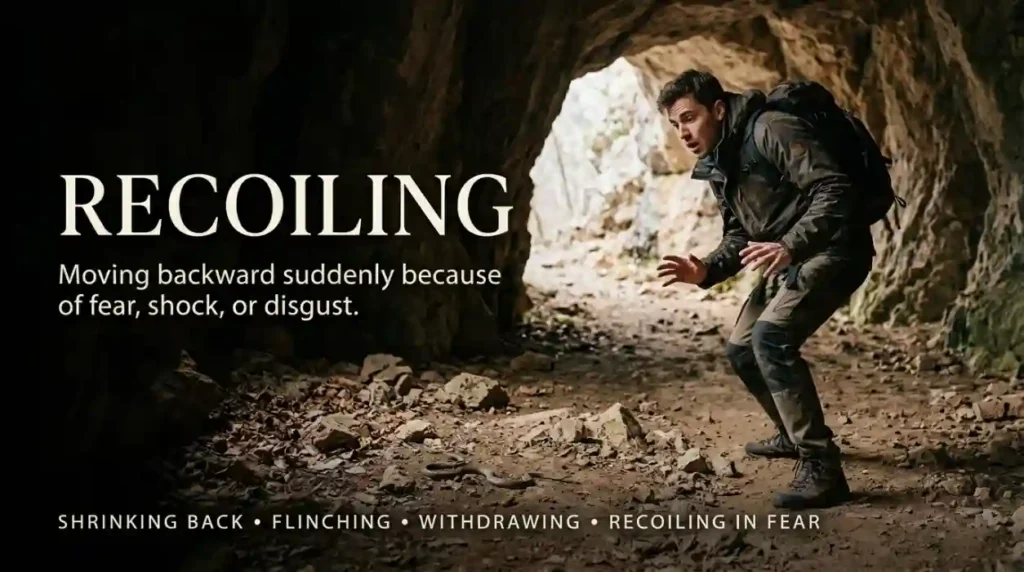
A synonym for recoiling is a word or phrase that describes pulling back, moving away suddenly, or reacting to fear, shock, pain, or disgust. Common alternatives include flinching, shrinking back, drawing back, retreating, and jerking away. The best choice depends on whether the reaction is physical or emotional.
Have you ever stepped back suddenly after seeing something frightening or unpleasant? This instinctive reaction is called recoiling. Depending on the situation, you might describe it as flinching, retreating, shrinking back, or pulling away.
The word recoiling can describe both physical movements and emotional reactions. A person may recoil from a sudden noise, an unexpected touch, or a disturbing idea. Each situation calls for a suitable alternative.
Learning a synonym for recoiling helps students strengthen their vocabulary, bloggers write engaging content, and writers describe actions more vividly. It also allows English learners to express fear, discomfort, surprise, or hesitation with greater precision.
Choosing the right synonym for recoiling depends on the context and the reaction’s intensity. Exploring each synonym for recoiling will help you avoid repetition, improve descriptive writing, and communicate your ideas more effectively.
What Does “Recoiling” Really Mean?
Recoiling means suddenly moving backward or away from something because of fear, pain, shock, disgust, or an instinctive reaction. It can also describe an emotional withdrawal from an idea, experience, or unpleasant situation.
Recoiling is the present participle of the verb recoil. Native English speakers commonly use it when describing a person who pulls away from something threatening, disturbing, or unexpected.
For example, a person might recoil from a snake, recoil at a cruel remark, or recoil in horror after witnessing an accident.
Part of Speech
- Verb: Recoil to move or react suddenly away from something.
- Present participle: Recoiling moving or reacting away from something.
- Noun: Recoil a sudden backward movement or reaction.
Connotative Meaning
Connotation is the emotional association or feeling a word carries beyond its basic dictionary meaning.
- Positive tone: Recoiling can suggest a healthy instinct to avoid danger or protect oneself.
- Negative tone: It may communicate fear, disgust, rejection, or strong discomfort.
- Neutral tone: In technical contexts, recoil can describe a backward movement caused by a physical force.
Etymology of Recoiling
The verb recoil entered English through French, with roots in the idea of moving backward or drawing back. Its deeper history is associated with Latin colligere, meaning “to gather together,” through Old French forms.
- Old English (450–1100): The modern word recoil was not an established everyday Old English term. Anglo-Saxon speakers used other expressions to describe retreating or drawing back.
- Middle English (1100–1500): The word entered English through Anglo-French and related French forms, developing the sense of moving backward.
- Modern English (1500–present): Recoil expanded to describe physical backward movement, instinctive reactions, emotional aversion, and the backward force of a weapon or mechanism.
Pronunciation, Syllables, and Word Structure
- US pronunciation: /rɪˈkɔɪlɪŋ/
- UK pronunciation: /rɪˈkɔɪlɪŋ/
- Syllables: re-coil-ing
- Root/base: recoil
- Prefix: None in the modern English word.
- Suffix: -ing is used to form the present participle and gerund.
Synonyms List
The following alternatives cover physical movement, fear, disgust, hesitation, and emotional withdrawal. Some are close synonyms, while others fit specific situations. Choose the word that matches the reaction you want to describe.
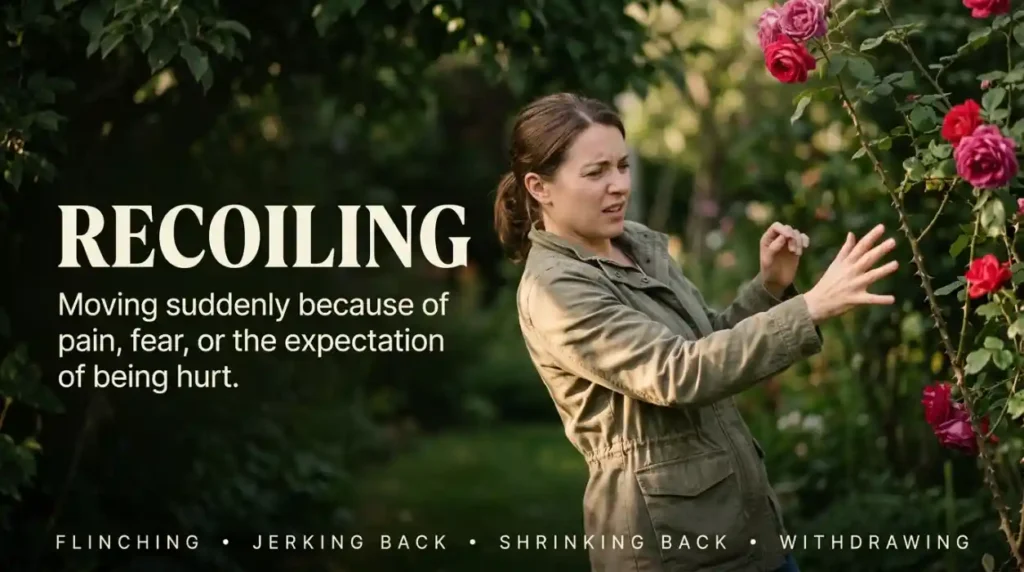
1. Flinching (Verb) — US: /ˈflɪntʃɪŋ/ | UK: /ˈflɪntʃɪŋ/
Meaning: Moving suddenly because of pain, fear, or the expectation of being hurt.
Tone/Register: Neutral; everyday English.
Examples:
- He kept flinching whenever the dentist touched the sore tooth.
- She was flinching at every loud bang outside.
2. Shrinking Back (Verb Phrase) — US: /ˈʃrɪŋkɪŋ bæk/ | UK: /ˈʃrɪŋkɪŋ bæk/
Meaning: Moving backward because something feels frightening, threatening, or unpleasant.
Tone/Register: Neutral; descriptive.
Examples:
- The child started shrinking back from the barking dog.
- He was shrinking back as the angry stranger approached.
3. Drawing Back (Verb Phrase) — US: /ˈdrɔɪŋ bæk/ | UK: /ˈdrɔːɪŋ bæk/
Meaning: Moving away from something, often because of surprise or discomfort.
Tone/Register: Neutral; conversational and literary.
Examples:
- Maya was drawing back from the cold metal railing.
- He began drawing back when the conversation turned hostile.
4. Jerking Away (Verb Phrase) — US: /ˈdʒɝːkɪŋ əˈweɪ/ | UK: /ˈdʒɜːkɪŋ əˈweɪ/
Meaning: Moving suddenly away from something through a quick, involuntary movement.
Tone/Register: Informal; vivid.
Examples:
- She was jerking away when the icy water touched her skin.
- The cat kept jerking away from the unfamiliar hand.
5. Receding (Verb) — US: /rɪˈsiːdɪŋ/ | UK: /rɪˈsiːdɪŋ/
Meaning: Moving farther away or gradually withdrawing from a place or point.
Tone/Register: Neutral; formal or descriptive.
Examples:
- The frightened deer was receding into the forest.
- His figure was receding into the evening mist.
6. Retreating (Verb) — US: /rɪˈtriːtɪŋ/ | UK: /rɪˈtriːtɪŋ/
Meaning: Moving away from danger, pressure, or an opposing force.
Tone/Register: Neutral to formal.
Examples:
- The hikers were retreating as the storm grew stronger.
- He was retreating from the argument before it escalated.
7. Backing Away (Verb Phrase) — US: /ˈbækɪŋ əˈweɪ/ | UK: /ˈbækɪŋ əˈweɪ/
Meaning: Moving backward to create distance from something uncomfortable or threatening.
Tone/Register: Conversational; neutral.
Examples:
- She was backing away from the aggressive dog.
- The visitors started backing away from the unstable wall.
8. Withdrawing (Verb) — US: /wɪðˈdrɔɪŋ/ | UK: /wɪðˈdrɔːɪŋ/
Meaning: Pulling away physically, socially, or emotionally from a situation.
Tone/Register: Neutral to formal.
Examples:
- He was withdrawing from the discussion after the criticism.
- The player was withdrawing from the contest because of an injury.
9. Shrinking (Verb) — US: /ˈʃrɪŋkɪŋ/ | UK: /ˈʃrɪŋkɪŋ/
Meaning: Drawing inward or becoming less prominent because of fear or embarrassment.
Tone/Register: Descriptive; literary.
Examples:
- She was shrinking under the manager’s harsh stare.
- The nervous student kept shrinking away from the microphone.
10. Cringing (Verb) — US: /ˈkrɪndʒɪŋ/ | UK: /ˈkrɪndʒɪŋ/
Meaning: Pulling inward or showing discomfort, embarrassment, fear, or disgust.
Tone/Register: Informal to neutral.
Examples:
- He was cringing at the thought of hearing his old speech.
- I was cringing when the comedian made an offensive joke.
11. Wincing (Verb) — US: /ˈwɪnsɪŋ/ | UK: /ˈwɪnsɪŋ/
Meaning: Showing pain or discomfort through a brief facial expression or bodily movement.
Tone/Register: Neutral; everyday English.
Examples:
- She was wincing as the nurse cleaned the cut.
- He kept wincing whenever his injured knee moved.
12. Rebounding (Verb) — US: /rɪˈbaʊndɪŋ/ | UK: /rɪˈbaʊndɪŋ/
Meaning: Moving backward or bouncing away after striking a surface or encountering resistance.
Tone/Register: Neutral; physical or technical.
Examples:
- The rubber ball was rebounding off the concrete floor.
- The object was rebounding after hitting the barrier.
13. Shying Away (Verb Phrase) — US: /ˈʃaɪɪŋ əˈweɪ/ | UK: /ˈʃaɪɪŋ əˈweɪ/
Meaning: Avoiding something because of fear, uncertainty, discomfort, or reluctance.
Tone/Register: Neutral; conversational.
Examples:
- She was shying away from difficult questions during the interview.
- He kept shying away from opportunities to lead the team.
14. Pulling Back (Verb Phrase) — US: /ˈpʊlɪŋ bæk/ | UK: /ˈpʊlɪŋ bæk/
Meaning: Moving away physically or reducing involvement in a situation.
Tone/Register: Neutral; widely used.
Examples:
- He was pulling back when the horse suddenly raised its head.
- The company was pulling back from its original plan.
15. Springing Back (Verb Phrase) — US: /ˈsprɪŋɪŋ bæk/ | UK: /ˈsprɪŋɪŋ bæk/
Meaning: Moving quickly backward or returning to an earlier position with sudden force.
Tone/Register: Neutral; vivid.
Examples:
- She was springing back when the cabinet door swung open.
- The goalkeeper was springing back to avoid the flying ball.
16. Leaping Back (Verb Phrase) — US: /ˈliːpɪŋ bæk/ | UK: /ˈliːpɪŋ bæk/
Meaning: Jumping backward suddenly in response to fear, surprise, or danger.
Tone/Register: Neutral; descriptive.
Examples:
- He was leaping back after spotting a snake on the path.
- The audience was leaping back as sparks flew from the machine.
17. Reeling (Verb) — US: /ˈriːlɪŋ/ | UK: /ˈriːlɪŋ/
Meaning: Staggering or feeling overwhelmed by a sudden shock or powerful experience.
Tone/Register: Neutral; expressive.
Examples:
- She was reeling from the shocking news.
- The team was reeling after its unexpected defeat.
18. Staggering (Verb) — US: /ˈstæɡərɪŋ/ | UK: /ˈstæɡərɪŋ/
Meaning: Moving unsteadily, often because of shock, weakness, or a physical impact.
Tone/Register: Neutral; descriptive.
Examples:
- He was staggering backward after the sudden collision.
- The exhausted runner was staggering toward the finish line.
19. Cowering (Verb) — US: /ˈkaʊərɪŋ/ | UK: /ˈkaʊərɪŋ/
Meaning: Bending down or making oneself smaller out of fear.
Tone/Register: Strongly descriptive; often negative.
Examples:
- The puppy was cowering beneath the table during the thunderstorm.
- The character was cowering in the corner as footsteps approached.
20. Recoiling in Horror (Verb Phrase) — US: /rɪˈkɔɪlɪŋ ɪn ˈhɔːrər/ | UK: /rɪˈkɔɪlɪŋ ɪn ˈhɒrə/
Meaning: Pulling away or reacting strongly because something is terrifying or deeply disturbing.
Tone/Register: Dramatic; literary.
Examples:
- She was recoiling in horror at the sight of the wreckage.
- He was recoiling in horror after opening the abandoned room.
21. Shuddering (Verb) — US: /ˈʃʌdərɪŋ/ | UK: /ˈʃʌdərɪŋ/
Meaning: Trembling or shaking involuntarily because of fear, disgust, cold, or a strong emotion.
Tone/Register: Neutral; expressive.
Examples:
- She was shuddering at the memory of the frightening incident.
- He was shuddering as the icy wind swept through the doorway.
22. Trembling (Verb) — US: /ˈtrɛmblɪŋ/ | UK: /ˈtrɛmblɪŋ/
Meaning: Shaking slightly or uncontrollably because of fear, cold, nervousness, or excitement.
Tone/Register: Neutral; descriptive.
Examples:
- The witness was trembling while recounting the accident.
- His hands were trembling after the close encounter.
23. Startling (Verb) — US: /ˈstɑːrtlɪŋ/ | UK: /ˈstɑːtlɪŋ/
Meaning: Causing someone to react suddenly with surprise or alarm.
Tone/Register: Neutral.
Examples:
- The sudden alarm was startling everyone in the office.
- Her unexpected appearance was startling the entire group.
24. Jerking Back (Verb Phrase) — US: /ˈdʒɝːkɪŋ bæk/ | UK: /ˈdʒɜːkɪŋ bæk/
Meaning: Moving backward abruptly in response to a sudden stimulus.
Tone/Register: Conversational; vivid.
Examples:
- He was jerking back when the hot steam escaped.
- She kept jerking back whenever the balloon popped.
25. Flinching Away (Verb Phrase) — US: /ˈflɪntʃɪŋ əˈweɪ/ | UK: /ˈflɪntʃɪŋ əˈweɪ/
Meaning: Pulling away with a quick, involuntary movement because of pain or fear.
Tone/Register: Neutral.
Examples:
- The child was flinching away from the buzzing insect.
- She was flinching away as the doctor approached the bruise.
26. Shying (Verb) — US: /ˈʃaɪɪŋ/ | UK: /ˈʃaɪɪŋ/
Meaning: Moving away suddenly or showing nervous avoidance, especially in response to something unexpected.
Tone/Register: Neutral; often associated with animals.
Examples:
- The horse was shying at the flapping umbrella.
- The young dog was shying from unfamiliar visitors.
27. Evading (Verb) — US: /ɪˈveɪdɪŋ/ | UK: /ɪˈveɪdɪŋ/
Meaning: Avoiding something or moving out of its way to escape contact or responsibility.
Tone/Register: Neutral to formal.
Examples:
- The cyclist was evading a car that entered the lane.
- The politician was evading questions about the decision.
28. Dodging (Verb) — US: /ˈdɑːdʒɪŋ/ | UK: /ˈdɒdʒɪŋ/
Meaning: Moving quickly to avoid being hit or caught, or avoiding an issue.
Tone/Register: Informal to neutral.
Examples:
- She was dodging the branches along the narrow trail.
- He was dodging questions about the missed deadline.
29. Avoiding (Verb) — US: /əˈvɔɪdɪŋ/ | UK: /əˈvɔɪdɪŋ/
Meaning: Staying away from something unpleasant, risky, or unwanted.
Tone/Register: Neutral; everyday English.
Examples:
- He was avoiding the broken steps near the entrance.
- She was avoiding a conversation that might cause tension.
30. Rebuffing (Verb) — US: /rɪˈbʌfɪŋ/ | UK: /rɪˈbʌfɪŋ/
Meaning: Rejecting an offer, suggestion, or advance in a firm or dismissive way.
Tone/Register: Formal; often negative.
Examples:
- The director was rebuffing repeated requests for an explanation.
- She was rebuffing his invitation without causing a scene.
31. Repulsing (Verb) — US: /rɪˈpʌlsɪŋ/ | UK: /rɪˈpʌlsɪŋ/
Meaning: Causing strong disgust or pushing something away through resistance.
Tone/Register: Formal; strong emotional or physical meaning.
Examples:
- The foul odor was repulsing everyone in the room.
- The defensive force was repelling the attacking group.
32. Shrinking Away (Verb Phrase) — US: /ˈʃrɪŋkɪŋ əˈweɪ/ | UK: /ˈʃrɪŋkɪŋ əˈweɪ/
Meaning: Gradually moving away or becoming less engaged because of fear, shame, or discomfort.
Tone/Register: Descriptive; often literary.
Examples:
- He was shrinking away from the attention of the crowd.
- The child was shrinking away when strangers tried to speak.
33. Recoiling From (Verb Phrase) — US: /rɪˈkɔɪlɪŋ frəm/ | UK: /rɪˈkɔɪlɪŋ frəm/
Meaning: Moving or reacting away from a particular person, object, idea, or experience.
Tone/Register: Neutral; descriptive.
Examples:
- She was recoiling from the unpleasant smell in the kitchen.
- He was recoiling from the idea of betraying his friend.
34. Turning Away (Verb Phrase) — US: /ˈtɝːnɪŋ əˈweɪ/ | UK: /ˈtɜːnɪŋ əˈweɪ/
Meaning: Turning one’s body or attention away from something unwanted or upsetting.
Tone/Register: Neutral; conversational.
Examples:
- She was turning away from the disturbing scene.
- He was turning away as the emotional conversation began.
35. Backpedaling (Verb) — US: /ˈbækˌpɛdəlɪŋ/ | UK: /ˈbækˌpɛdəlɪŋ/
Meaning: Retreating from a previous statement, position, or commitment.
Tone/Register: Informal; often critical.
Examples:
- The spokesperson was backpedaling after the announcement was confusing.
- He was backpedaling on his promise once the costs became clear.
36. Retreating Emotionally (Verb Phrase) — US: /rɪˈtriːtɪŋ ɪˈmoʊʃənəli/ | UK: /rɪˈtriːtɪŋ ɪˈməʊʃənəli/
Meaning: Becoming emotionally distant in response to pressure, conflict, or discomfort.
Tone/Register: Neutral; psychological or descriptive.
Examples:
- She was retreating emotionally after the painful disagreement.
- He was retreating emotionally instead of discussing his worries.
37. Recoiling at (Verb Phrase) — US: /rɪˈkɔɪlɪŋ æt/ | UK: /rɪˈkɔɪlɪŋ æt/
Meaning: Reacting with strong dislike, shock, or disgust to something.
Tone/Register: Neutral to expressive.
Examples:
- They were recoiling at the cruelty shown in the video.
- I was recoiling at the thought of eating spoiled food.
38. Shaking Back (Verb Phrase) — US: /ˈʃeɪkɪŋ bæk/ | UK: /ˈʃeɪkɪŋ bæk/
Meaning: Not a standard synonym for recoiling; the phrase may describe a backward movement only in a specific physical context.
Tone/Register: Context-dependent; uncommon.
Examples:
- The loose handle was shaking back and forth in the wind.
- The mechanism was shaking back after each impact.
39. Startled (Verb/Adjective) — US: /ˈstɑːrtəld/ | UK: /ˈstɑːtəld/
Meaning: Suddenly surprised or alarmed by an unexpected event.
Tone/Register: Neutral; everyday English.
Examples:
- She was startled by the unexpected knock at midnight.
- He looked startled when the lights suddenly went out.
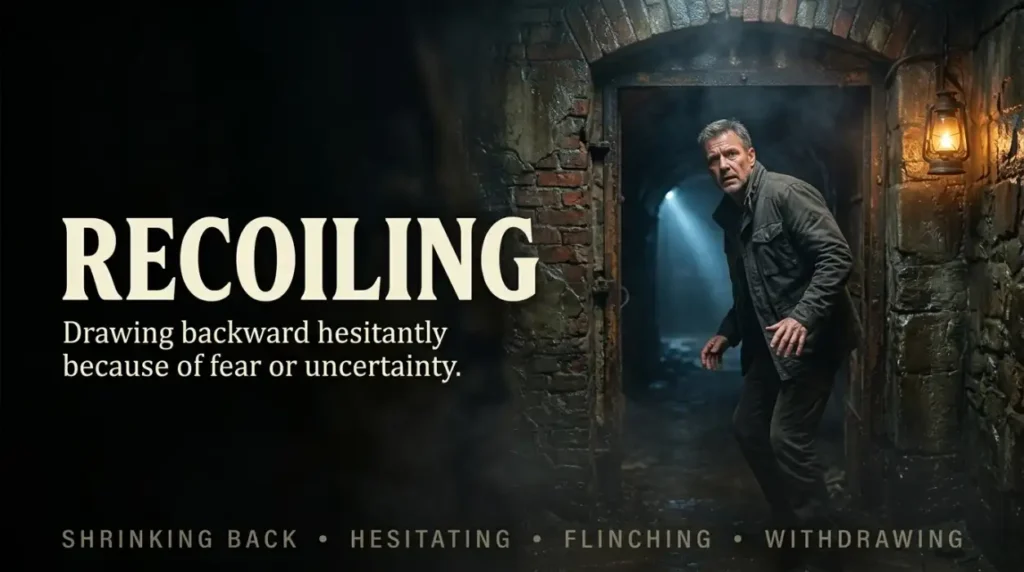
40. Shying Back (Verb Phrase) — US: /ˈʃaɪɪŋ bæk/ | UK: /ˈʃaɪɪŋ bæk/
Meaning: Drawing backward hesitantly because of fear or uncertainty.
Tone/Register: Descriptive; less common than shying away.
Examples:
- The pony was shying back from the noisy cart.
- The nervous speaker was shying back from the front row.
41. Shrinking in Fear (Verb Phrase) — US: /ˈʃrɪŋkɪŋ ɪn ˈfɪr/ | UK: /ˈʃrɪŋkɪŋ ɪn ˈfɪə/
Meaning: Drawing inward or making oneself smaller because of intense fear.
Tone/Register: Dramatic; descriptive.
Examples:
- The character was shrinking in fear as the door creaked open.
- The little boy was shrinking in fear during the thunderstorm.
42. Recoiling in Disgust (Verb Phrase) — US: /rɪˈkɔɪlɪŋ ɪn dɪsˈɡʌst/ | UK: /rɪˈkɔɪlɪŋ ɪn dɪsˈɡʌst/
Meaning: Pulling away because something causes a strong feeling of revulsion.
Tone/Register: Strong; descriptive.
Examples:
- She was recoiling in disgust from the rotten leftovers.
- He was recoiling in disgust at the graphic images.
43. Shying Off (Verb Phrase) — US: /ˈʃaɪɪŋ ɔːf/ | UK: /ˈʃaɪɪŋ ɒf/
Meaning: Avoiding or becoming reluctant to approach something.
Tone/Register: Informal; context-dependent.
Examples:
- The horse was shying off whenever the gate rattled.
- The investor was shying off risky ventures during the downturn.
44. Recoiling in Alarm (Verb Phrase) — US: /rɪˈkɔɪlɪŋ ɪn əˈlɑːrm/ | UK: /rɪˈkɔɪlɪŋ ɪn əˈlɑːm/
Meaning: Moving or reacting backward because something suddenly appears dangerous.
Tone/Register: Formal to literary.
Examples:
- The guard was recoiling in alarm when the window shattered.
- She was recoiling in alarm at the sudden movement in the grass.
45. Pulling Away (Verb Phrase) — US: /ˈpʊlɪŋ əˈweɪ/ | UK: /ˈpʊlɪŋ əˈweɪ/
Meaning: Moving away from contact or distancing oneself from a person or situation.
Tone/Register: Neutral; everyday English.
Examples:
- The toddler was pulling away when his hands were washed.
- She was pulling away from a friendship that had become unhealthy.
46. Shaking Off (Verb Phrase) — US: /ˈʃeɪkɪŋ ɔːf/ | UK: /ˈʃeɪkɪŋ ɒf/
Meaning: Removing something by shaking or trying to free oneself from an unwanted influence.
Tone/Register: Informal; context-dependent.
Examples:
- He was shaking off the rain before entering the house.
- She was shaking off her nervousness before the presentation.
47. Warding Off (Verb Phrase) — US: /ˈwɔːrdɪŋ ɔːf/ | UK: /ˈwɔːdɪŋ ɒf/
Meaning: Resisting or keeping something threatening away.
Tone/Register: Neutral to formal.
Examples:
- The hiker was warding off the curious stray dog with a walking stick.
- She was warding off unwanted questions during the meeting.
48. Backing Off (Verb Phrase) — US: /ˈbækɪŋ ɔːf/ | UK: /ˈbækɪŋ ɒf/
Meaning: Moving away or reducing pressure after recognizing resistance or danger.
Tone/Register: Informal; conversational.
Examples:
- The stranger was backing off when she firmly said no.
- The coach was backing off after noticing the athlete’s exhaustion.
49. Shying From (Verb Phrase) — US: /ˈʃaɪɪŋ frəm/ | UK: /ˈʃaɪɪŋ frəm/
Meaning: Avoiding an activity, responsibility, or experience because of reluctance or fear.
Tone/Register: Neutral; often used in writing.
Examples:
- He was shying away from responsibility after the mistake.
- The journalist was not shying from difficult questions.
Usage note: Shying away from is the more common form in many everyday contexts.
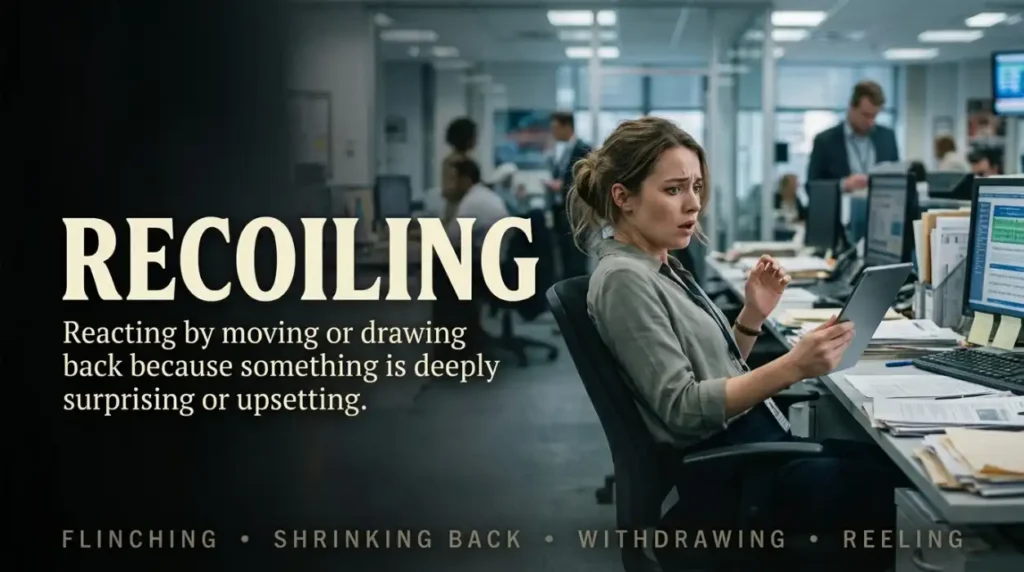
50. Recoiling in Shock (Verb Phrase) — US: /rɪˈkɔɪlɪŋ ɪn ʃɑːk/ | UK: /rɪˈkɔɪlɪŋ ɪn ʃɒk/
Meaning: Reacting by moving or drawing back because something is deeply surprising or upsetting.
Tone/Register: Expressive; descriptive.
Examples:
- He was recoiling in shock after hearing the unexpected confession.
- The family was recoiling in shock at the sudden announcement.
Vocabulary tip:
For direct replacements in most sentences, start with flinching, drawing back, shrinking back, pulling away, or retreating. Use the longer expressions when the cause of the reaction matters.
Synonyms by Tone
The emotional tone of a synonym changes how readers understand a reaction. A person who flinches may be startled, while someone who cowers appears deeply frightened.
Positive or Protective Tone
These words can describe a sensible reaction to danger or an effort to maintain personal boundaries.
- Backing away: Creating distance from a possible threat.
- Pulling back: Stopping contact or reconsidering involvement.
- Withdrawing: Stepping away from an uncomfortable situation.
- Warding off: Protecting oneself against an unwanted approach.
Neutral Tone
These alternatives focus mainly on movement or a visible reaction.
- Flinching
- Drawing back
- Jerking away
- Retreating
- Pulling away
- Turning away
- Leaping back
- Receding
Negative or Fearful Tone
These words often communicate fear, shame, disgust, or emotional distress.
- Cowering
- Cringing
- Shrinking in fear
- Reeling
- Recoiling in disgust
- Recoiling in horror
- Trembling
- Shuddering
Playful or Informal Tone
These expressions work well in casual conversations and lively storytelling.
- Backing off
- Dodging
- Jerking back
- Shying away
- Pulling away
Tone matters because similar actions can communicate different feelings. Select a word that reflects the character’s actual response rather than choosing an alternative simply to avoid repetition.
“Recoiling” vs. Close Alternatives
| Word | Main difference | Best use |
|---|---|---|
| Recoiling | Moving or reacting away because of fear, shock, pain, or disgust | Strong physical or emotional reactions |
| Flinching | Making a quick, involuntary movement | Pain, sudden sounds, or anticipated impact |
| Cringing | Showing discomfort, embarrassment, or aversion | Awkward moments or unpleasant experiences |
| Retreating | Moving away from danger, pressure, or opposition | Conflicts, threats, and deliberate withdrawal |
| Shuddering | Shaking because of fear, disgust, cold, or emotion | Describing a bodily response |
For example, a person may flinch when a door slams, recoil after seeing something horrifying, cringe at an embarrassing remark, and retreat from an approaching threat.
These words overlap, but they do not always replace one another naturally.
How Recoiling Changes by Context
Daily Conversation
In everyday speech, simple expressions such as pulling away, flinching, and backing away sound natural.
Example: “I pulled away when the hot cup touched my hand.”
This sentence is direct and easy to understand. It describes the action without adding unnecessary drama.
Writing and Blogging
Writers can use recoiling, shrinking back, or jerking away to create clearer mental images.
Example: “The character recoiled from the strange sound behind the door.”
The verb communicates both movement and an instinctive reaction. It is useful in articles, stories, reviews, and descriptive passages.
Professional or Academic English
In formal writing, withdrawing, retreating, and avoiding may fit better when discussing decisions or behavior.
Example: “The participant withdrew from the discussion after the disagreement.”
Use recoiling when a strong reaction is important. Avoid it when the situation involves ordinary disagreement without a noticeable emotional response.
Creative and Informal Writing
Fiction writers can choose vivid expressions such as cowering, leaping back, or recoiling in horror.
Example: “She leaped back as the shadow moved across the wall.”
These alternatives help build suspense and show a character’s reaction instead of merely explaining the emotion.
Common Mistakes Learners Make
Using Every Synonym Interchangeably
Not every alternative describes the same action. Flinching often involves a brief involuntary movement, while retreating can involve a deliberate decision to move away.
Choose the word that fits the physical action and emotional context.
Confusing Recoiling With Rejection
Recoiling may suggest rejection, but it usually emphasizes an instinctive or strong reaction. Rejecting means refusing to accept something and does not necessarily involve movement or disgust.
Overusing Dramatic Expressions
Phrases such as recoiling in horror and cowering in fear create intense imagery. They can sound exaggerated when the situation is minor.
Use simpler words for everyday discomfort and stronger expressions for genuinely intense reactions.
Ignoring Grammar
The verb recoil is commonly followed by from when identifying the source of a reaction.
- Natural: “She recoiled from the smell.”
- Natural: “He recoiled in disgust.”
- Natural: “They recoiled at the suggestion.”
The preposition depends on the intended meaning and sentence structure.
Formal vs. Informal Register
Withdraw and recede may suit formal or descriptive writing. Back off and jerk away are more conversational. Cringe works in both casual speech and descriptive writing, depending on context.
In spoken English, choose the most natural expression. In academic writing, prefer precision over dramatic language.
Real-Life Mini Scenarios Using Recoiling
Workplace
An employee recoils at an insulting comment during a meeting. Drawing back can describe a visible reaction, while withdrawing may describe leaving the discussion.
Social situations
Someone recoils from an unwanted touch. Pulling away communicates the physical action clearly.
Media and pop culture
A character recoils in horror after discovering a frightening secret. This phrase makes the scene more dramatic.
Writing and storytelling
A detective recoils at the sight of a damaged photograph. Flinching would suggest a quicker physical response, while recoiling can convey shock or disgust.
Practice Exercise
Choose the best answer for each situation. Think about the movement, emotion, and tone before selecting an option.
1. Which word best describes a sudden movement caused by anticipated pain?
- A. Withdrawing
- B. Flinching
- C. Receding
- D. Backpedaling
2. Someone moves backward after seeing a dangerous snake. Which expression fits best?
- A. Leaping back
- B. Withdrawing
- C. Rebuffing
- D. Rebounding
3. Which word describes pulling inward because of embarrassment?
- A. Retreating
- B. Dodging
- C. Cringing
- D. Receding
4. A person deliberately moves away from an escalating argument. Which word fits best?
- A. Trembling
- B. Flinching
- C. Shuddering
- D. Retreating
5. Which expression best describes a strong reaction to a disgusting smell?
- A. Recoiling in disgust
- B. Backpedaling
- C. Rebounding
- D. Receding
6. A horse suddenly moves away from a noisy object. Which word is particularly suitable?
- A. Rebuffing
- B. Shying
- C. Withdrawing
- D. Evading
7. Which expression means avoiding a difficult responsibility?
- A. Rebounding
- B. Wincing
- C. Shying away
- D. Leaping back
8. Someone shakes involuntarily after a frightening experience. Which word fits best?
- A. Dodging
- B. Retreating
- C. Backpedaling
- D. Trembling
9. Which word describes rejecting a proposal firmly?
- A. Rebuffing
- B. Flinching
- C. Reeling
- D. Shuddering
10. A person quickly moves away when hot steam escapes. Which expression is most precise?
- A. Receding
- B. Jerking back
- C. Withdrawing
- D. Backpedaling
Reflection Task:
Write two original sentences using different synonyms for recoiling. In one sentence, describe a physical reaction. In the other, describe an emotional reaction.
Answer key:
1-B, 2-A, 3-C, 4-D, 5-A, 6-B, 7-C, 8-D, 9-A, 10-B
Frequently Asked Questions
1. What is the closest synonym for recoiling in a sentence?
The closest synonym depends on the sentence. Drawing back and pulling away often work when someone moves away from an object or person. Flinching is better for a sudden, involuntary reaction to pain or fear. When the reaction expresses intense disgust or shock, recoiling may be the most accurate choice.
2. What is the difference between recoiling and flinching?
Recoiling usually involves moving or reacting away from something unpleasant, threatening, or shocking. Flinching is generally a brief, involuntary movement caused by pain, fear, or an expected impact. Someone can flinch without moving away, while recoiling often suggests a stronger withdrawal from the source of discomfort.
3. Can recoiling describe an emotional reaction rather than physical movement?
Yes. Recoiling can describe a strong emotional response to an idea, suggestion, memory, or experience. For example, someone might recoil at the suggestion of betraying a friend. In this context, the word communicates aversion or rejection rather than a clearly visible backward movement.
4. What is a good synonym for recoiling in creative writing?
Shrinking back, jerking away, cowering, and recoiling in horror can work well in creative writing. The best option depends on the scene. Use jerking away for sudden action, cowering for intense fear, and shrinking back when a character appears intimidated or reluctant to approach something.
5. Is recoiling a positive or negative word?
Recoiling is generally associated with negative emotions, such as fear, disgust, pain, or shock. However, the action itself can be protective. A person who recoils from a dangerous object may be responding sensibly to a threat. The emotional tone depends on the context rather than the movement alone.
6. How do you use recoiling in academic or professional writing?
Use recoiling when describing a strong reaction to a disturbing event, an objectionable idea, or a perceived threat. In more neutral professional contexts, withdrawing, retreating, or avoiding may be more precise. Select the word that accurately describes the behavior instead of using dramatic language for an ordinary disagreement.
7. What is the noun form of recoiling?
The noun related to recoiling is recoil. It can refer to a sudden backward movement or a strong reaction against something. For example, “The recoil surprised him” describes a physical movement, while “Her recoil from the proposal was immediate” describes a strong reaction. The intended meaning depends on context.
8. How can I improve my vocabulary with synonyms for recoiling?
Start by learning a few common alternatives, including flinching, pulling away, drawing back, and retreating. Write your own sentences and compare how each word changes the meaning. Reading stories and observing how speakers describe fear, discomfort, and surprise can also help you use these expressions naturally.
Conclusion
Choosing the right synonym for recoiling makes your English more precise and expressive. Words such as flinching, shrinking back, and pulling away describe different reactions clearly.
For students, bloggers, and content writers, these alternatives reduce repetition and make descriptions more engaging. They also help everyday speakers express feelings and actions with greater confidence.
Remember that context matters. A sudden movement, a feeling of disgust, and a deliberate retreat may require different words, even when all involve moving away.
Keep practicing these synonyms in emails, essays, stories, and daily conversations. Try writing a few original sentences today and discover which words help you express your ideas most naturally.
Recommended External Reference
For further vocabulary study, consult the Merriam-Webster Dictionary to check definitions, pronunciations, and usage distinctions between recoil and its related words.
You can also explore related vocabulary topics on your own site, such as synonyms for fear, disgust, and retreat, to build a broader understanding of emotional and physical reactions.
Oxford Learner’s Dictionaries: Recoil Meaning, Synonyms, and Usage Examples. It explains how recoil describes moving away from something frightening or unpleasant and reacting with strong dislike or fear.

Jameel Hassan is the founder and lead writer at SynonymsCloud.com, a trusted online platform dedicated to English vocabulary and effective communication. He is passionate about helping students, writers, professionals, and lifelong learners discover the right words to express their ideas with clarity, precision, and confidence.
At SynonymsCloud.com, every article is thoroughly researched and carefully written to provide accurate, practical, and easy-to-understand guidance on synonyms, antonyms, word meanings, idioms, and vocabulary. With a strong commitment to quality, real-world usage, and clear explanations, the website helps readers expand their vocabulary, improve their writing, and communicate more effectively in both academic and professional settings.