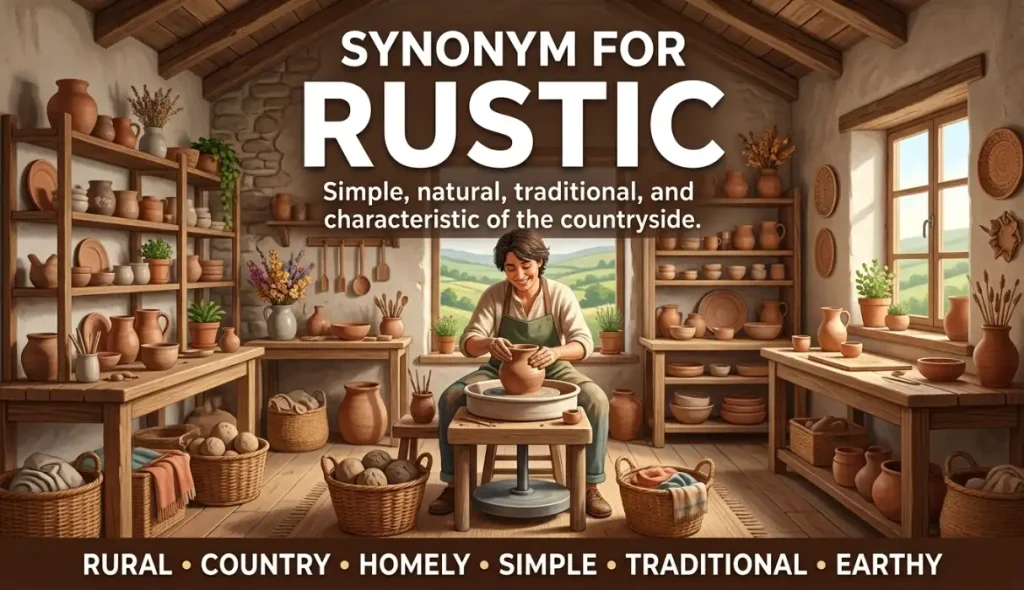
The best synonyms for rustic include rural, bucolic, pastoral, country-style, and unpolished. Use rural for geographical locations, bucolic or pastoral for scenic and idyllic countryside settings, and unpolished or crude when describing unrefined physical textures or materials.
A synonym for rustic is a popular search query when you want to describe country-style settings, simple rural life, or unpolished charm without repeating the same adjective across your text. Imagine writing a lifestyle blog post about a cozy cabin getaway and using the same countryside term in every single paragraph.
Writers search for a synonym for rustic to add descriptive depth and precise context to travel guides, interior design articles, and fiction stories. Expanding your vocabulary helps you express natural country aesthetics and unrefined character with absolute clarity.
This specific concept appears constantly in architectural magazines, travel blogs, literature, and home decor journals. Knowing alternative terms keeps your writing engaging for modern readers.
Students, bloggers, content writers, and daily English users find this vocabulary exploration very useful. Precise word choices prevent writing from sounding repetitive. Using a synonym for rustic ensures your articles truly shine.
Core Meaning: What Does “Rustic” Really Mean?
Rustic is an adjective that means relating to the countryside, rural areas, or plain and simple country life. It denotes an unpolished, unpretentious quality often associated with wooden cabins and natural landscapes.
Connotative Meaning
- Positive tone: Represents cozy comfort, natural beauty, authentic simplicity, and peaceful escapism.
- Negative tone: Implies backward conditions, lack of modern comforts, rough poverty, or crude design.
- Neutral tone: Used in objective descriptions of geographical country regions or traditional farm architecture.
Etymology
- Source Language: Latin rusticus (from rus, meaning country or open land).
- Old English (450–1100): Early Germanic crews used native country terms like landisc or feldlic before Latin influence expanded.
- Middle English (1100–1500): Borrowed from Old French and Latin to describe country folk and agricultural living conditions.
- Modern English (1500–Present): Standardized into the adjective rustic for literature, architecture, and lifestyle contexts.
Pronunciation & Syllables
- US: /ˈrʌstɪk/
- UK: /ˈrʌstɪk/
- Syllables: rus-tic (2 syllables)
- Affixation Pattern: Derived adjective with root and suffix.
- Root: rust (country land)
- Prefix: None
- Suffix: -ic
SynonymsList
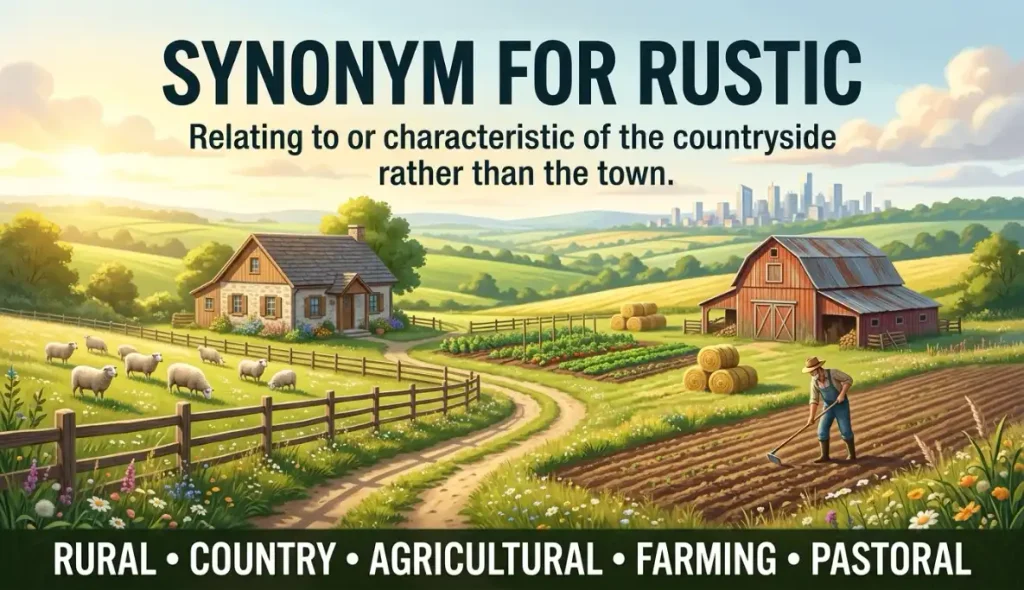
Rural (Adjective) — US: /ˈrʊrəl/ | UK: /ˈrʊrəl/
- Meaning: Relating to or characteristic of the countryside rather than the town.
- Tone/Register: Standard / Formal
- Example: They enjoyed quiet weekends in a charming rural village.
- Example: Agricultural policies support local rural farming communities.
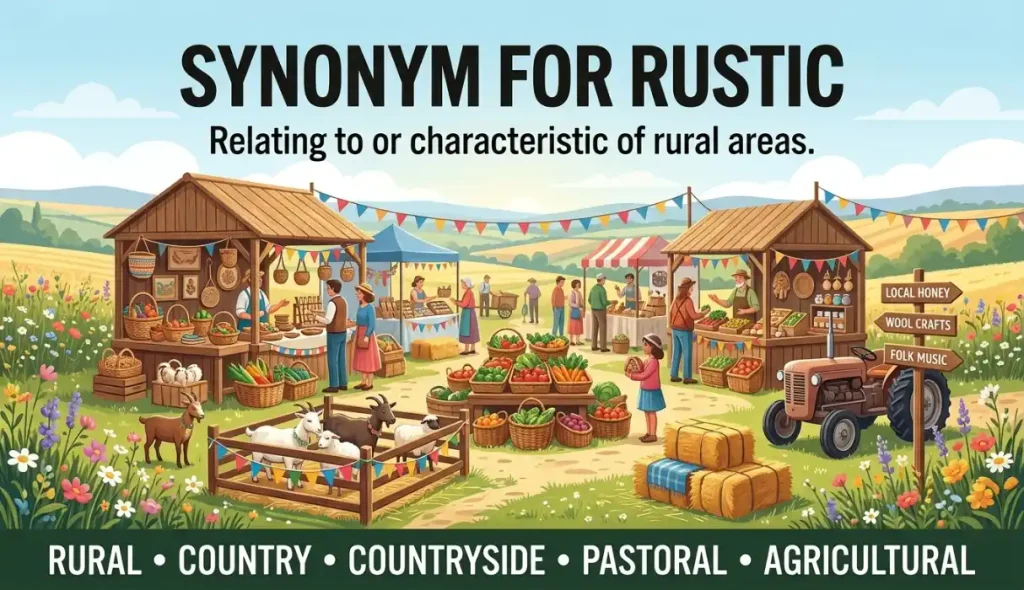
Country (Adjective) — US: /ˈkʌntri/ | UK: /ˈkʌntri/
- Meaning: Relating to or characteristic of rural areas.
- Tone/Register: Common / Standard
- Example: She lived in a peaceful country cottage for years.
- Example: They drove along scenic country roads during autumn.
Pastoral (Adjective) — US: /ˈpæstərəl/ | UK: /ˈpɑːstərəl/
- Meaning: Associated with country life; portraying country life as charming and idyllic.
- Tone/Register: Literary / Formal
- Example: Painters captured pastoral landscapes with grazing sheep.
- Example: The poem celebrated quiet pastoral traditions of farmers.
Bucolic (Adjective) — US: /bjuːˈkɒlɪk/ | UK: /bjuːˈkɒlɪk/
- Meaning: Relating to the pleasant aspects of the countryside and country life.
- Tone/Register: Literary / Formal
- Example: Tourists sought out bucolic retreats away from busy cities.
- Example: The hotel overlooked a serene bucolic valley.
Country-style (Adjective) — US: /ˈkʌntri staɪl/ | UK: /ˈkʌntri stʌɪl/
- Meaning: Styled in a traditional, unpretentious rural manner.
- Tone/Register: Standard / Common
- Example: The kitchen featured warm country-style wooden cabinets.
- Example: Guests dined on hearty country-style roasted potatoes.
Provincial (Adjective) — US: /prəˈvɪnʃəl/ | UK: /prəˈvɪnʃəl/
- Meaning: Concerning a province of a country or region; outside the capital.
- Tone/Register: Formal / Academic
- Example: He preferred slow-paced provincial life over big cities.
- Example: Local artisans sold traditional provincial pottery items.
Unpolished (Adjective) — US: /ʌnˈpɑːlɪʃt/ | UK: /ʌnˈpɒlɪʃt/
- Meaning: Not having a smooth or shiny surface; lacking refinement.
- Tone/Register: Descriptive / Standard
- Example: The workshop floor featured unpolished stone tiles.
- Example: Her initial sketch remained delightfully unpolished.
Unrefined (Adjective) — US: /ˌʌnrɪˈfaɪnd/ | UK: /ˌʌnrɪˈfʌɪnd/
- Meaning: Not processed or purified; lacking social grace or sophistication.
- Tone/Register: Formal / Critical
- Example: Miners extracted unrefined copper ore from the earth.
- Example: He spoke with unrefined honesty during debates.
Unpretentious (Adjective) — US: /ˌʌnprɪˈtɛnʃəs/ | UK: /ˌʌnprɪˈtɛnʃəs/
- Meaning: Not attempting to impress others with an appearance of greater importance.
- Tone/Register: Standard / Positive
- Example: They stayed at an unpretentious family-run mountain lodge.
- Example: The restaurant offered simple, unpretentious food.
Simple (Adjective) — US: /ˈsɪmpəl/ | UK: /ˈsɪmpəl/
- Meaning: Easily understood or done; presenting no difficulty.
- Tone/Register: Common / Standard
- Example: They built a simple wooden shelter in the woods.
- Example: She preferred a quiet, simple lifestyle.
Plain (Adjective) — US: /pleɪn/ | UK: /pleɪn/
- Meaning: Not decorated or elaborate; simple or ordinary.
- Tone/Register: Common / Direct
- Example: The cabin featured plain wooden dining chairs.
- Example: He wore a plain woolen sweater.
Unadorned (Adjective) — US: /ˌʌnəˈdɔːrnd/ | UK: /ˌʌnəˈdɔːnd/
- Meaning: Not embellished with decorations or details.
- Tone/Register: Literary / Formal
- Example: The minimalist bedroom had unadorned timber walls.
- Example: Historians read unadorned farming journals.
Crude (Adjective) — US: /kruːd/ | UK: /kruːd/
- Meaning: In a natural or raw state; lacking finish or refinement.
- Tone/Register: Descriptive / Informal
- Example: Campers built a crude bench from fallen tree branches.
- Example: The wooden carving was wonderfully crude.
Early (Adjective) — US: /ˈɜːrli/ | UK: /ˈɜːli/
- Meaning: Belonging to an early stage of human history or basic design.
- Tone/Register: Historical / Scientific
- Example: Settlers lived in early log cabins without electricity.
- Example: The cottage featured early stone fireplaces.
Rough (Adjective) — US: /rʌf/ | UK: /rʌf/
- Meaning: Having an uneven or irregular surface; not smooth.
- Tone/Register: Common / Standard
- Example: The table was made from rough pine planks.
- Example: Workers built walls from rough field stones.
Coarse (Adjective) — US: /kɔːrs/ | UK: /kɔːs/
- Meaning: Rough or loose in texture or grain.
- Tone/Register: Standard / Descriptive
- Example: She wore a heavy coat of coarse wool.
- Example: Builders used coarse sand for masonry work.
Untamed (Adjective) — US: /ʌnˈteɪmd/ | UK: /ʌnˈteɪmd/
- Meaning: Not domesticated or cultivated; wild.
- Tone/Register: Literary / Expressive
- Example: A narrow path wound through the untamed forest.
- Example: They camped near untamed mountain rivers.
Wild (Adjective) — US: /waɪld/ | UK: /wʌɪld/
- Meaning: Living or growing in its natural state; uncultivated.
- Tone/Register: Standard / Common
- Example: Wild flowers grew around the cabin porch.
- Example: Deer roamed freely across wild meadow lands.
Natural (Adjective) — US: /ˈnætʃərəl/ | UK: /ˈnatʃərəl/
- Meaning: Existing in or derived from nature; not made by humankind.
- Tone/Register: Standard / Common
- Example: The interior design emphasized natural wood tones.
- Example: They used natural stone for patio paving.
Organic (Adjective) — US: /ɔːrˈɡænɪk/ | UK: /ɔːˈɡanɪk/
- Meaning: Derived from living matter; characteristic of the smooth flow of nature.
- Tone/Register: Scientific / Modern
- Example: The architecture had an organic feel, matching the trees.
- Example: Designers chose organic cotton textiles for cushions.
Earthy (Adjective) — US: /ˈɜːrθi/ | UK: /ˈəːθi/
- Meaning: Resembling or characteristic of soil or earth; down-to-earth.
- Tone/Register: Descriptive / Common
- Example: The room smelled of earthy cedar wood.
- Example: He appreciated her earthy, practical wisdom.
Homey (Adjective) — US: /ˈhoʊmi/ | UK: /ˈhəʊmi/
- Meaning: Comfortable and cozy; suggestive of home.
- Tone/Register: Informal / Warm
- Example: The inn had a warm, homey atmosphere.
- Example: A fireplace added a homey touch to the lounge.
Cozy (Adjective) — US: /ˈkoʊzi/ | UK: /ˈkəʊzi/
- Meaning: Snug, comfortable, and warm.
- Tone/Register: Common / Warm
- Example: They read books in a cozy mountain cabin.
- Example: Blankets kept guests warm on chilly nights.
Snug (Adjective) — US: /snʌɡ/ | UK: /snʌɡ/
- Meaning: Comfortable, warm, and cozy; well protected.
- Tone/Register: Standard / Common
- Example: The small cabin felt snug against winter snow.
- Example: Sailors slept in snug wooden bunks.
Homely (Adjective) — US: /ˈhoʊmli/ | UK: /ˈhəʊmli/
- Meaning: Simple and unpretentious; characteristic of home life.
- Tone/Register: British / Traditional
- Example: They served homely meals of stew and bread.
- Example: The cottage had a charmingly homely decor.
Vernacular (Adjective) — US: /vərˈnækjələr/ | UK: /vəˈnakjʊlə/
- Meaning: Using a language or style characteristic of a particular region.
- Tone/Register: Architectural / Formal
- Example: Architects preserved vernacular wooden framing techniques.
- Example: The town displayed traditional vernacular architecture.
Traditional (Adjective) — US: /trəˈdɪʃənəl/ | UK: /trəˈdɪʃənəl/
- Meaning: Existing in or as part of a tradition; long-established.
- Tone/Register: Standard / Formal
- Example: Villagers maintained traditional farming methods.
- Example: The lodge featured traditional oak beam ceilings.
Folk (Adjective) — US: /foʊk/ | UK: /fəʊk/
- Meaning: Originating among the common people of a nation or region.
- Tone/Register: Cultural / Standard
- Example: Artisans sold hand-painted folk pottery mugs.
- Example: Musicians played traditional folk tunes on fiddles.
Historic (Adjective) — US: /hɪˈstɔːrɪk/ | UK: /hɪˈstɒrɪk/
- Meaning: Famous or important in history; providing historical charm.
- Tone/Register: Formal / Standard
- Example: They restored a historic stone milling barn.
- Example: The village preserved historic timber frame houses.
Old-fashioned (Adjective) — US: /ˌoʊld ˈfæʃənd/ | UK: /ˌəʊld ˈfaʃənd/
- Meaning: In or characteristic of a style no longer current; traditional.
- Tone/Register: Common / Descriptive
- Example: The kitchen had old-fashioned cast iron stoves.
- Example: They drank cider from old-fashioned wooden mugs.
Vintage (Adjective) — US: /ˈvɪntɪdʒ/ | UK: /ˈvɪntɪdʒ/
- Meaning: Characterizing high quality from a past era.
- Tone/Register: Standard / Popular
- Example: The cabin featured vintage wooden ski gear.
- Example: Antique shops sold vintage country furniture.
Retro (Adjective) — US: /ˈrɛtroʊ/ | UK: /ˈrɛtrəʊ/
- Meaning: Imitating or characteristic of a past style or fashion.
- Tone/Register: Informal / Trendy
- Example: They decorated the lodge with retro cabin lamps.
- Example: The bar played retro country vinyl records.
Antiquated (Adjective) — US: /ˈæntɪkweɪtɪd/ | UK: /anˈtɪkwetɪd/
- Meaning: Old-fashioned or outdated.
- Tone/Register: Formal / Critical
- Example: The cabin relied on antiquated water pumps.
- Example: Engineers replaced antiquated heating systems.
Archaic (Adjective) — US: /ɑːrˈkeɪɪk/ | UK: /ɑːˈkeɪɪk/
- Meaning: Very old or old-fashioned; belonging to an ancient period.
- Tone/Register: Formal / Historical
- Example: Historians studied archaic agricultural tools.
- Example: The script used archaic regional spellings.
Outdated (Adjective) — US: /aʊtˈdeɪtɪd/ | UK: /aʊtˈdeɪtɪd/
- Meaning: Out of fashion; no longer current.
- Tone/Register: Standard / Common
- Example: The chalet had outdated floral wallpaper.
- Example: They removed outdated wooden fixtures.
Uncultivated (Adjective) — US: /ʌnˈkʌltəˌveɪtɪd/ | UK: /ʌnˈkʌltɪveɪtɪd/
- Meaning: Not used for growing crops; growing in a natural state.
- Tone/Register: Formal / Descriptive
- Example: Uncultivated meadows surrounded the forest cabin.
- Example: Wild grasses grew across uncultivated hillsides.
Uninhabited (Adjective) — US: /ˌʌnɪnˈhæbɪtɪd/ | UK: /ˌʌnɪnˈhabɪtɪd/
- Meaning: Without inhabitants; uninhabited.
- Tone/Register: Formal / Standard
- Example: Hikers explored an uninhabited mountain valley.
- Example: The old stone cabin remained uninhabited for years.
Isolated (Adjective) — US: /ˈaɪsəˌleɪtɪd/ | UK: /ˈʌɪsəleɪtɪd/
- Meaning: Far away from other places, buildings, or people; remote.
- Tone/Register: Standard / Common
- Example: They rented an isolated cabin near the lake.
- Example: Snow blocked the isolated mountain road.
Remote (Adjective) — US: /rɪˈmoʊt/ | UK: /rɪˈməʊt/
- Meaning: Situated far from the main centers of population; distant.
- Tone/Register: Formal / Standard
- Example: The farmhouse sat in a remote rural valley.
- Example: Explorers traveled deep into remote forests.
Secluded (Adjective) — US: /sɪˈkluːdɪd/ | UK: /sɪˈkluːdɪd/
- Meaning: Not seen or frequented by many people; sheltered and private.
- Tone/Register: Literary / Formal
- Example: A secluded cabin offered complete peace.
- Example: They relaxed in a secluded garden patio.
Solitary (Adjective) — US: /ˈsɑːləˌtɛri/ | UK: /ˈsɒlɪtəri/
- Meaning: Done or existing alone; solitary.
- Tone/Register: Literary / Formal
- Example: A solitary cabin stood on the snowy hill.
- Example: He enjoyed solitary walks through country paths.
Lone (Adjective) — US: /loʊn/ | UK: /ləʊn/
- Meaning: Having no companions; single.
- Tone/Register: Literary / Standard
- Example: A lone pine tree shaded the wooden porch.
- Example: Smoke rose from a lone cabin chimney.
Lonely (Adjective) — US: /ˈloʊnli/ | UK: /ˈləʊnli/
- Meaning: Sad because one has no friends or company.
- Tone/Register: Emotional / Common
- Example: The old cabin looked slightly lonely in winter.
- Example: She felt lonely during stormy mountain nights.
Unspoiled (Adjective) — US: /ʌnˈspɔɪld/ | UK: /ʌnˈspɔɪld/
- Meaning: Not spoiled or damaged; remaining beautiful and pure.
- Tone/Register: Positive / Descriptive
- Example: They hiked through unspoiled mountain forests.
- Example: The cabin overlooked an unspoiled alpine lake.
Pristine (Adjective) — US: /ˈprɪstiːn/ | UK: /ˈprɪstiːn/
- Meaning: In its original condition; unspoiled.
- Tone/Register: Formal / Positive
- Example: Snow covered the pristine mountain landscape.
- Example: The timber cabin maintained pristine oak floors.
Synonyms by Tone
- Positive / Charming: Pastoral, Bucolic, Cozy, Unspoiled, Homey.
- Neutral / Descriptive: Rural, Country, Traditional, Vernacular, Natural.
- Negative / Crude: Crude, Early, Antiquated, Outdated, Rough.
Mini Comparison
Rustic vs. Rural vs. Bucolic
- Rustic: Refers to the unpolished, simple, and charming style or quality associated with country life and wooden architecture.
- Rural: A neutral, geographical term that describes areas outside towns and cities.
- Bucolic: A literary adjective highlighting the pleasant, peaceful, and idyllic aspects of pastoral countryside living.
Rustic Decor, Antonyms, and Related Meanings
The word rustic can describe more than a countryside location. It is also widely used for interior design, furniture, materials, architecture, and a simple country-inspired aesthetic. Understanding its related forms and opposites can help you choose the right word for each context.
What Is Another Word for Rustic Decor?
Rustic decor refers to an interior style that emphasizes natural materials, simple designs, earthy textures, and a relaxed country atmosphere.
Depending on the specific style, alternatives for rustic decor include:
- Country-style decor: a traditional rural-inspired interior style
- Farmhouse decor a warm style associated with farmhouses and country living
- Cottage-style decor a cozy, informal interior with traditional elements
- Natural decor a style emphasizing wood, stone, plants, and other natural materials
- Earthy decor an interior using natural textures and earth-inspired elements
- Traditional decor a classic style based on established design traditions
- Vernacular design architecture or design reflecting local traditions and materials
For example:
The cabin uses farmhouse decor with reclaimed wood and simple furniture.
In this context, farmhouse, country-style, and cottage-style may be more precise than simply repeating rustic.
What Is the Antonym of Rustic?
The opposite of rustic depends on which meaning of the word you intend.
When rustic means simple or country-style, possible contrasts include:
- Modern: associated with contemporary design and current styles
- Contemporary reflecting present-day design and aesthetics
- Urban associated with cities rather than rural areas
- Sophisticated highly refined or developed
- Polished finished smoothly or presented in a refined manner
- Elegant stylish, refined, and graceful
- Luxurious characterized by comfort, quality, or expense
- Refined developed to a high degree of sophistication
For example:
The restaurant has a rustic interior.
A contrasting description could be:
The restaurant has a modern, polished interior.
There is no single antonym that works in every sentence. Modern contrasts with rustic in design, while urban contrasts with rustic when discussing geographical character.
Rustic Synonyms and Antonyms
A quick comparison can make the distinction clearer:
| Meaning of Rustic | Possible Synonyms | Possible Contrasts |
|---|---|---|
| Countryside-related | Rural, country, pastoral | Urban, metropolitan |
| Simple country style | Country-style, farmhouse, traditional | Modern, contemporary |
| Rough or unfinished | Unpolished, crude, rough | Polished, refined, finished |
| Natural and earthy | Natural, earthy, organic | Artificial, sleek, synthetic |
| Simple and unpretentious | Plain, unpretentious, homely | Sophisticated, luxurious, elaborate |
The correct antonym therefore depends on the sense of rustic being used.
What Is Another Word for Old Wood?
If you are describing old wood in a rustic design or architectural context, the best term depends on its condition and appearance.
Useful alternatives include:
- Aged wood: wood that has become old over time
- Weathered wood: wood changed by exposure to weather
- Reclaimed wood: previously used wood recovered for a new purpose
- Antique wood: old wood associated with historical objects or furniture
- Distressed wood: wood intentionally given an aged or worn appearance
- Worn wood: wood showing signs of use or age
- Timber: a general term for wood used in construction, especially in British English
For example:
The cabin featured walls made from weathered wood.
If the wood has been salvaged from an old building, reclaimed wood is more precise.
What Is a Synonym for “Rusticity”?
Rusticity is the noun form related to rustic. It describes the quality or character of being rustic, especially a simple, rural, natural, or unrefined appearance.
Depending on context, related words include:
- Simplicity
- Country character
- Rural character
- Naturalness
- Unpretentiousness
- Rural charm
- Country charm
- Roughness
- Unrefined character
For example:
The rusticity of the wooden cabin gave it a warm and natural atmosphere.
In interior design writing, rural charm, country character, or natural simplicity may express the intended meaning more clearly.
What Does “Rusticate” Mean?
Rusticate is a different word from rustic and should not automatically be treated as a synonym.
As a verb, rusticate can mean to go or send someone to the countryside. In architectural contexts, it can also refer to treating masonry so that its surface has a rough or textured appearance.
For example:
The family decided to rusticate in the countryside during the summer.
In architecture:
The building used rusticated masonry around the entrance.
Therefore, words such as rural, country, or rustic are not always direct substitutes for rusticate because they belong to different grammatical categories and can have different meanings.
What Does “Rustic” Mean in Tamil?
In Tamil, rustic can have different translations depending on context.
When it means related to the countryside or rural life, suitable Tamil expressions can convey the idea of:
- Rural / relating to the village
- About the countryside or folk tradition
When rustic means simple, rough, or unrefined, the appropriate Tamil wording can change according to the sentence.
For example, rustic decor may be understood as meaning a countryside-style or rural-inspired decoration.
Because translations depend on context, there is not always one Tamil word that matches every meaning of rustic.
What Is the Spanish Synonym for “Rústico”?
The Spanish word rústico corresponds closely to rustic in English. Depending on context, related Spanish terms may include:
- rural rural
- campestre countryside-related or pastoral
- tradicional traditional
- sencillo simple
- tosco rough or coarse
- natural: natural
For example:
Estilo rústico means rustic style.
Depending on the intended meaning, estilo rural, estilo campestre, or estilo tradicional may describe a similar idea.
However, these words are not exact replacements in every situation. Rural emphasizes location, while rústico can also describe appearance, materials, simplicity, or design.
Rustic, Rusticity, and Rusticate: Quick Difference
| Word | Part of Speech | Main Meaning |
|---|---|---|
| Rustic | Adjective | Rural, country-style, simple, or unrefined |
| Rusticity | Noun | The quality or character of being rustic |
| Rusticate | Verb | To go/send someone to the countryside or create a rough architectural finish |
Knowing these differences helps prevent incorrect substitutions when writing about rural life, architecture, interior design, or traditional materials.
Context-Based Usage
- Daily Conversation: Use everyday words like country or cozy when chatting about simple weekend cabin trips.
- Writing or Blogging: Elevate travel guides and home design articles by replacing basic words with pastoral, bucolic, or unspoiled.
- Professional or Academic Tone: Opt for formal vocabulary such as vernacular, provincial, or traditional in architectural research.
- Creative or Informal Use: Lean into atmospheric terms like crude, early, or isolated to build vivid narrative settings.
Common Mistakes & Native Usage
- Confusing Rustic with Rural: Rural describes a geographical location, whereas rustic describes an aesthetic style or unpolished charm.
- Overusing Negative Terms: Avoid using derogatory words like crude when praising the charming, intentional design of luxury mountain cabins.
- Register Mismatch: Do not use overly casual slang when discussing formal architectural preservation reports.
Real-Life Mini Scenarios
- Workplace: Architects designed a vernacular timber lodge that blended seamlessly with forest surroundings.
- Social Situations: Friends gathered at a cozy mountain cabin for a relaxing autumn weekend.
- Media / Pop Culture: Travel magazines featured bucolic European villages surrounded by rolling green hills.
- Writing or Storytelling: The novelist described an isolated stone farmhouse nestled deep within the valley.
Conclusion
Expanding your vocabulary with precise alternatives transforms how you write travel guides, interior design pieces, and fiction stories. Exploring different words helps you convey exact nuances of country charm and natural living across various publishing formats.
Integrating these terms into your daily messages makes your communication engaging and memorable. Thoughtful word choices elevate your articles far above standard, repetitive phrasing. Take time to practice these dynamic words in your emails, essays, and everyday conversations today.
Embracing a richer vocabulary unlocks new levels of confidence and clarity in your writing journey, ensuring your synonym for rustic searches always lead to exceptional creative results.
Practice Exercise
- Which synonym best describes relating to the countryside rather than the town?
- A) Rural
- B) Cloud
- C) Fog
- D) Noise
- What is the best literary term for relating to the pleasant, idyllic aspects of country life?
- A) Bucolic
- B) Brick
- C) Stone
- D) Wall
- Which adjective associates with pastoral country life and traditional farming charm?
- A) Pastoral
- B) Steel
- C) Glass
- D) Iron
- If you want a formal architectural word to describe regional building styles, which option works best?
- A) Vernacular
- B) Modern
- C) Urban
- D) Industrial
- Which word is most appropriate for describing a cabin that is cozy, warm, and comfortable?
- A) Cozy
- B) Frigid
- C) Icy
- D) Frozen
- What term describes unspoiled natural landscapes remaining undamaged by modern development?
- A) Unspoiled
- B) Polluted
- C) Ruined
- D) Damaged
- Which word captures something in a natural or raw state with an unpolished wooden finish?
- A) Crude
- B) Polished
- C) Glossy
- D) Smooth
- How would an author describe a cottage far away from towns and crowds?
- A) Isolated
- B) Crowded
- C) Busy
- D) Noisy
- Which term describes belonging to an early stage of human history without modern facilities?
- A) Early
- B) Advanced
- C) Futuristic
- D) High-tech
- What is a suitable formal term for concerning a province outside the capital?
- A) Provincial
- B) Global
- C) International
- D) National
Reflection Task:
Write one original sentence using the synonym bucolic to describe a peaceful countryside retreat.
Answer Key:
1: A | 2: A | 3: A | 4: A | 5: A | 6: A | 7: A | 8: A | 9: A | 10: A
FAQs
Why do travel bloggers search for alternatives to rustic?
Travel bloggers search for alternatives because repeating terms like rustic makes vacation guides and cabin reviews sound monotonous. Swapping basic terms for precise semantic variants improves overall literary style.
Is there a difference between rustic and rural in modern English?
Yes, rural is a neutral geographical term for countryside locations, whereas rustic specifically describes an unpolished, charming design aesthetic.
How does understanding word connotation improve interior design writing?
Understanding connotation helps authors select adjectives that reflect emotional depth accurately, distinguishing between cozy pastoral charm and crude poverty.
Can I use casual words like old-fashioned in professional architectural reports?
Informal expressions like old-fashioned sound too casual for scholarly or historical texts. Professional writing prefers objective terms like vernacular, traditional, or provincial.
What is the quickest way to remember new vocabulary for writing?
The most effective retention strategy is writing original personal sentences mirroring real-life travel or home design scenarios, helping you master tone, context, and register with ease.

Jameel Hassan is the founder and lead writer at SynonymsCloud.com, a trusted online platform dedicated to English vocabulary and effective communication. He is passionate about helping students, writers, professionals, and lifelong learners discover the right words to express their ideas with clarity, precision, and confidence.
At SynonymsCloud.com, every article is thoroughly researched and carefully written to provide accurate, practical, and easy-to-understand guidance on synonyms, antonyms, word meanings, idioms, and vocabulary. With a strong commitment to quality, real-world usage, and clear explanations, the website helps readers expand their vocabulary, improve their writing, and communicate more effectively in both academic and professional settings.