
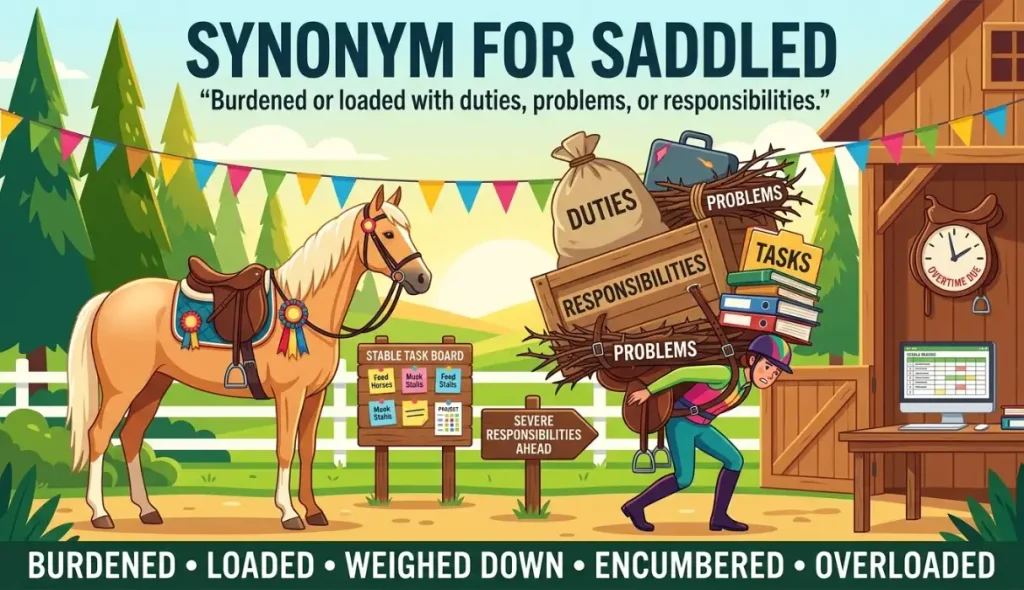
The best synonyms for saddled are burdened, encumbered, overburdened, overloaded, and taxed. Use burdened for general heavy responsibilities, encumbered for restricted movement or progress, and overloaded when referring to excessive tasks or operational capacity limits.
A synonym for saddled is useful when you need to describe someone burdened with responsibilities, tasks, or unexpected duties. Using alternatives can make your writing clearer and more engaging, especially in professional, academic, and everyday contexts.
Writers often use different expressions to add nuance to descriptions of heavy obligations. Words such as burdened, loaded, encumbered, and overwhelmed can show how responsibilities affect a person. Each alternative can create a slightly different meaning or emotional tone.
Students, bloggers, and content writers can use these alternatives to avoid repetition and make their vocabulary more precise. For example, a manager may feel burdened by extra paperwork, while an employee may become overwhelmed by additional duties. Choosing the right synonym helps readers understand the situation quickly.
Understanding a synonym for saddled also improves professional reports, essays, stories, and conversations. Instead of repeating the same expression, you can select a word that matches the exact context. Strong vocabulary choices make your writing sound more natural, varied, and effective.
Core Meaning: What Does “Saddled” Really Mean?
Saddled is a past-participle adjective derived from the verb saddle, meaning to put a saddle on a horse, or figuratively, to burden someone with an onerous responsibility or duty. It denotes being weighed down or encumbered by an obligation.
Connotative Meaning
- Positive tone: Rarely positive, though it can imply being entrusted with important leadership duties or fully prepared for a journey.
- Negative tone: Implies unfair burdens, crushing work stress, unwanted duties, and heavy operational obligations.
- Neutral tone: Used when objectively describing a horse fitted with riding gear or a person assigned standard administrative tasks.
Etymology
- Source Language: Old English sadol (referring to a rider’s seat on a horse, tracing back to Germanic roots).
- Old English (450–1100): Used primarily in literal equestrian contexts to describe horse riding equipment.
- Middle English (1100–1500): Expanded to include the figurative sense of putting a load or responsibility upon someone.
- Modern English (1500–Present): Standardized into both literal equestrian use and the common figurative idiom of being weighed down by duties.
Pronunciation & Syllables
- US: /ˈsæd.əld/
- UK: /ˈsad.əld/
- Syllables: sad-dled (2 syllables)
- Affixation Pattern: Derived past participle with root and suffix.
- Root: saddle (equestrian seat/load)
- Prefix: None
- Suffix: -ed
Synonyms List

Burdened (Adjective) — US: /ˈbɜːr.dənd/ | UK: /ˈbəː.dənd/
- Meaning: Heavily loaded down with worries, responsibilities, or difficult duties.
- Tone/Register: Formal / Serious
- Example: She felt heavily burdened by unexpected financial responsibilities.
- Example: Managers burdened staff with too many urgent reports.
Encumbered (Adjective) — US: /ɪnˈkʌm.bərd/ | UK: /ɪnˈkʌm.bəd/
- Meaning: Restricted or burdened by something that makes free action difficult.
- Tone/Register: Formal / Academic
- Example: Travelers moved slowly, encumbered by heavy luggage bags.
- Example: The project stalled, encumbered by endless bureaucratic rules.
Overburdened (Adjective) — US: /ˌoʊ.vɚˈbɜːr.dənd/ | UK: /ˌəʊ.vəˈbəː.dənd/
- Meaning: Given too much work, responsibility, or weight to handle easily.
- Tone/Register: Professional / Standard
- Example: Overburdened healthcare workers labored through long night shifts.
- Example: The team was overburdened with simultaneous client requests.
Overloaded (Adjective) — US: /ˌoʊ.vɚˈloʊ.dɪd/ | UK: /ˌəʊ.vəˈləʊ.dɪd/
- Meaning: Loaded with too much weight, data, or operational tasks.
- Tone/Register: Common / Technical
- Example: The overloaded delivery van struggled up steep hills.
- Example: His overloaded schedule left zero time for breaks.
Taxed (Adjective) — US: /tækst/ | UK: /takst/
- Meaning: Subjected to heavy physical, mental, or resource demands.
- Tone/Register: Professional / Standard
- Example: Her patience was severely taxed by the loud noise.
- Example: Company resources were heavily taxed during peak season.
Strained (Adjective) — US: /streɪnd/ | UK: /streɪnd/
- Meaning: Showing tension, pressure, or excessive effort under strain.
- Tone/Register: Emotional / Descriptive
- Example: They maintained a strained silence during the meeting.
- Example: His strained budget barely covered monthly rent.
Oppressed (Adjective) — US: /əˈprɛst/ | UK: /əˈprɛst/
- Meaning: Subjected to harsh, heavy authority or continuous mental pressure.
- Tone/Register: Formal / Serious
- Example: Citizens felt oppressed by unfair economic restrictions.
- Example: She felt oppressed by the gloomy weather.
Weighted (Adjective) — US: /ˈweɪ.tɪd/ | UK: /ˈweɪ.tɪd/
- Meaning: Held down or made heavy by physical weight or responsibilities.
- Tone/Register: Descriptive / Standard
- Example: His footsteps sounded heavy and weighted with worry.
- Example: The committee decision was heavily weighted in favor.
Laden (Adjective) — US: /ˈleɪ.dən/ | UK: /ˈleɪ.dən/
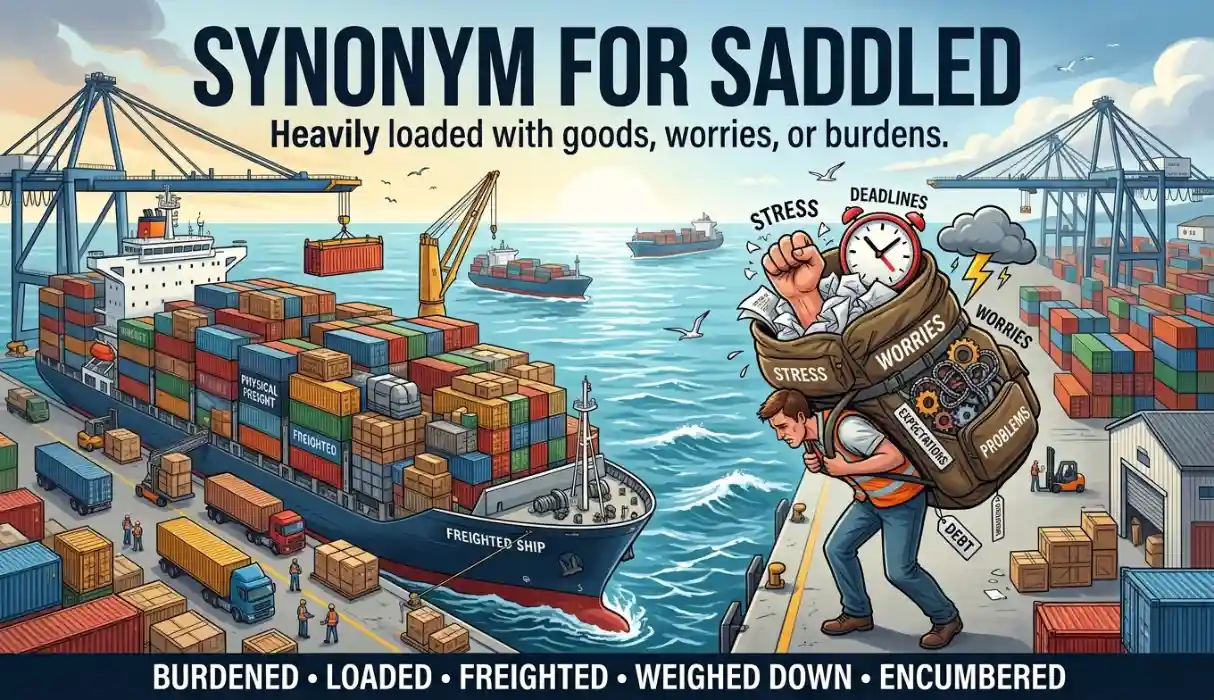
- Meaning: Heavily loaded or freighted with physical goods or worries.
- Tone/Register: Literary / Formal
- Example: Apple trees were laden with ripe autumn fruit.
- Example: They walked back, laden with heavy shopping bags.
Cumbered (Adjective) — US: /ˈkʌm.bərd/ | UK: /ˈkʌm.bəd/
- Meaning: Hindered or troubled by unnecessary obstacles or items.
- Tone/Register: Literary / Archaic
- Example: The old path was cumbered with fallen branches.
- Example: She felt cumbered by trivial domestic chores.
Hampered (Adjective) — US: /ˈhæm.pərd/ | UK: /ˈham.pəd/
- Meaning: Hindered or impeded in movement or progress.
- Tone/Register: Formal / Standard
- Example: Rescue efforts were hampered by severe snowstorms.
- Example: His writing was hampered by a lack of references.
Hindered (Adjective) — US: /ˈhɪn.dərd/ | UK: /ˈhɪn.dəd/
- Meaning: Created difficulties resulting in delay or obstruction.
- Tone/Register: Standard / Formal
- Example: Progress was hindered by unexpected technical bugs.
- Example: Athletes were hindered by muddy track conditions.
Impeded (Adjective) — US: /ɪmˈpiː.dɪd/ | UK: /ɪmˈpiː.dɪd/
- Meaning: Delayed or prevented someone or something by obstruction.
- Tone/Register: Formal / Technical
- Example: Traffic flow was impeded by road construction work.
- Example: Vision was impeded by thick morning fog.
Restricted (Adjective) — US: /rɪˈstrɪk.tɪd/ | UK: /rɪˈstrɪk.tɪd/
- Meaning: Confined within specific bounds or limited capacity.
- Tone/Register: Standard / Formal
- Example: Access to the archives remained restricted to staff.
- Example: Drivers faced restricted parking during festivals.
Constrained (Adjective) — US: /kənˈstreɪnd/ | UK: /kənˈstreɪnd/
- Meaning: Severely restricted in freedom of action or expression.
- Tone/Register: Academic / Formal
- Example: Budgets were constrained by recent economic cuts.
- Example: Her speech felt constrained by formal protocols.
Bound (Adjective) — US: /baʊnd/ | UK: /bʌʊnd/
- Meaning: Tied or secured with ropes, or morally obligated.
- Tone/Register: Standard / Formal
- Example: Employees felt bound by strict confidentiality terms.
- Example: Packages were securely bound with thick twine.
Tethered (Adjective) — US: /ˈtɛð.ərd/ | UK: /ˈtɛð.əd/
- Meaning: Tied with a rope or chain to a particular place.
- Tone/Register: Descriptive / Literal
- Example: Horses were tethered safely near the wooden fence.
- Example: Workers stayed tethered to safety harnesses.
Chained (Adjective) — US: /tʃeɪnd/ | UK: /tʃeɪnd/
- Meaning: Fastened or secured securely with metal links.
- Tone/Register: Literal / Dramatic
- Example: Bicycles were chained securely to metal racks.
- Example: The storage gate remained chained shut.
Shackled (Adjective) — US: /ˈʃæk.əld/ | UK: /ˈʃak.əld/
- Meaning: Bound with shackles; figuratively restricted in freedom.
- Tone/Register: Literary / Dramatic
- Example: Prisoners walked forward, shackled at the ankles.
- Example: He felt shackled by outdated company policies.
Fettered (Adjective) — US: /ˈfɛt.ərd/ | UK: /ˈfɛt.əd/
- Meaning: Restrained with chains, typically around the ankles.
- Tone/Register: Literary / Formal
- Example: Artists refused to be fettered by rigid conventions.
- Example: Explorers moved without being fettered by rules.
Handcuffed (Adjective) — US: /ˈhænd.kʌft/ | UK: /ˈhand.kʌft/
- Meaning: Secured with metal wrist cuffs; metaphorically restricted.
- Tone/Register: Descriptive / Direct
- Example: Suspects were handcuffed before entering the vehicle.
- Example: Innovation was handcuffed by endless approvals.
Tied (Adjective) — US: /taɪd/ | UK: /tʌɪd/
- Meaning: Attached or fastened with string, cord, or obligations.
- Tone/Register: Common / Standard
- Example: Packages were neatly tied with ribbon.
- Example: Her schedule was tied up with meetings.
Committed (Adjective) — US: /kəˈmɪt.ɪd/ | UK: /kəˈmɪt.ɪd/
- Meaning: Pledged or bound to a certain course or policy.
- Tone/Register: Professional / Positive
- Example: The team remained committed to project goals.
- Example: She was deeply committed to volunteer work.
Obligated (Adjective) — US: /ˈɑːb.ləˌɡeɪ.tɪd/ | UK: /ˈɒb.lɪˌɡeɪ.tɪd/
- Meaning: Bound legally or morally to a course of action.
- Tone/Register: Formal / Legal
- Example: Doctors felt obligated to report health issues.
- Example: Buyers were obligated to sign disclosures.
Bounden (Adjective) — US: /ˈbaʊn.dən/ | UK: /ˈbʌʊn.dən/
- Meaning: Binding or obligatory as a duty.
- Tone/Register: Archaic / Formal
- Example: It was his bounden duty to protect family.
- Example: Citizens fulfilled their bounden civic responsibilities.
Responsible (Adjective) — US: /rɪˈspɑːn.sə.bəl/ | UK: /rɪˈspɒn.sə.bəl/
- Meaning: Having an obligation to do something or care for someone.
- Tone/Register: Standard / Professional
- Example: Senior engineers were responsible for safety checks.
- Example: She proved responsible with handling company funds.
Accountable (Adjective) — US: /əˈkaʊn.tə.bəl/ | UK: /əˈkʌʊn.tə.bəl/
- Meaning: Required or expected to justify actions or decisions.
- Tone/Register: Professional / Business
- Example: Team leaders remained accountable for project budgets.
- Example: Politicians are accountable to voting citizens.
Liable (Adjective) — US: /ˈlaɪ.ə.bəl/ | UK: /ˈlʌɪ.ə.bəl/
- Meaning: Responsible by law; legally answerable.
- Tone/Register: Legal / Formal
- Example: Companies are liable for workplace safety standards.
- Example: Drivers are liable for vehicle insurance costs.
Answerable (Adjective) — US: /ˈæn.sər.ə.bəl/ | UK: /ˈɑːn.sər.ə.bəl/
- Meaning: Responsible to someone for actions or decisions.
- Tone/Register: Formal / Professional
- Example: Directors are answerable to the board of trustees.
- Example: He felt answerable for the department’s failure.
Entrusted (Adjective) — US: /ɪnˈtrʌs.tɪd/ | UK: /ɪnˈtrʌs.tɪd/
- Meaning: Assigned the responsibility of doing something safely.
- Tone/Register: Formal / Professional
- Example: She was entrusted with confidential client records.
- Example: Curators were entrusted with ancient artifacts.
Charged (Adjective) — US: /tʃɑːrdʒd/ | UK: /tʃɑːdʒd/
- Meaning: Entrusted with a task or responsibility.
- Tone/Register: Formal / Legal
- Example: The committee reviewed the policies.
- Example: Officers maintained public order.
Assigned (Adjective) — US: /əˈsaɪnd/ | UK: /əˈsʌɪnd/
- Meaning: Allocated a duty, task, or specific position.
- Tone/Register: Standard / Professional
- Example: Journalists covered the election news.
- Example: Students completed assigned reading chapters.
Allocated (Adjective) — US: /ˈæl.əˌkeɪ.tɪd/ | UK: /ˈal.əˌkeɪ.tɪd/
- Meaning: Distributed for a particular purpose or to specific people.
- Tone/Register: Business / Formal
- Example: The organization allocated funds for community park repairs.
- Example: The moderator allocated time for audience questions.
Appointed (Adjective) — US: /əˈpɔɪn.tɪd/ | UK: /əˈpɔɪn.tɪd/
- Meaning: Decided or officially assigned to a role or duty.
- Tone/Register: Formal / Professional
- Example: The company appointed her head of marketing strategy.
- Example: The appointed time for arrival arrived quickly.
Designated (Adjective) — US: /ˈdɛz.ɪɡˌneɪ.tɪd/ | UK: /ˈdɛz.ɪɡˌneɪ.tɪd/
- Meaning: Officially given a specified status or responsibility.
- Tone/Register: Formal / Standard
- Example: Visitors parked in designated guest areas.
- Example: Management designated him as safety coordinator.
Commissioned (Adjective) — US: /kəˈmɪʃ.ənd/ | UK: /kəˈmɪʃ.ənd/
- Meaning: Ordered or authorized a piece of work or role.
- Tone/Register: Formal / Professional
- Example: Museums commissioned local artists for sculptures.
- Example: Officers received their commissions upon graduation.
Tasked (Adjective) — US: /tæskt/ | UK: /taskt/
- Meaning: Given a specific job or duty to perform.
- Tone/Register: Professional / Standard
- Example: Managers tasked engineers with repairing generators.
- Example: Supervisors tasked interns with updating databases.
Burdened down (Adjective phrase) — US: /ˈbɜːr.dənd daʊn/ | UK: /ˈbəː.dənd daʊn/
- Meaning: Overwhelmed by excessive physical weight or mental stress.
- Tone/Register: Idiomatic / Descriptive
- Example: Porters felt burdened down by heavy crates.
- Example: She walked home, burdened down by worry.
Pressed (Adjective) — US: /prɛst/ | UK: /prɛst/
- Meaning: Urgently approached or troubled by time or demands.
- Tone/Register: Common / Standard
- Example: Could you please send the text or sentence you want me to work on?
- Example: He felt pressed to make a quick decision.
Pushed (Adjective) — US: /pʊʃt/ | UK: /pʊʃt/
- Meaning: Urged or forced to work hard or meet limits.
- Tone/Register: Informal / Common
- Example: Sales teams faced pressure to reach their targets.
- Example: We face resource shortages this quarter.
Hard-pressed (Adjective) — US: /ˌhɑːrdˈprɛst/ | UK: /ˌhɑːdˈprɛst/
- Meaning: Facing severe difficulties, lack of time, or resources.
- Tone/Register: Standard / British
- Example: Hospitals struggled to cope during flu season.
- Example: Small businesses felt hard-pressed by taxes.
Stressed (Adjective) — US: /strɛst/ | UK: /strɛst/
- Meaning: Experiencing mental or emotional strain or tension.
- Tone/Register: Common / Informal
- Example: Students felt stressed before final exams.
- Example: Workers took breaks when feeling stressed.
Harried (Adjective) — US: /ˈhær.iːd/ | UK: /ˈhar.iːd/
- Meaning: Beset by problems or harassed by repeated demands.
- Tone/Register: Descriptive / Professional
- Example: The harried manager answered multiple phone calls.
- Example: Parents felt harried during morning school rushes.
Beset (Adjective) — US: /bɪˈsɛt/ | UK: /bɪˈsɛt/
- Meaning: Troubled persistently or harassed by difficulties.
- Tone/Register: Literary / Formal
- Example: The startup was beset by technical glitches.
- Example: Travelers were beset by stormy weather.
Plagued (Adjective) — US: /pleɪɡd/ | UK: /pleɪɡd/
- Meaning: Caused continual trouble or distress to someone.
- Tone/Register: Descriptive / Serious
- Example: Continuous delays plagued the project.
- Example: Persistent doubts plagued him.
Afflicted (Adjective) — US: /əˈflɪk.tɪd/ | UK: /əˈflɪk.tɪd/
- Meaning: Burdened or troubled by illness, pain, or distress.
- Tone/Register: Formal / Medical
- Example: Patients afflicted with fever received treatment.
- Example: Severe drought afflicted communities.
Troubled (Adjective) — US: /ˈtrʌb.əld/ | UK: /ˈtrʌb.əld/
- Meaning: Feeling anxiety, concern, or distress.
- Tone/Register: Emotional / Common
- Example: She looked troubled after reading the letter.
- Example: Investors grew troubled by market drops.
Distressed (Adjective) — US: /dɪˈstrɛst/ | UK: /dɪˈstrɛst/
- Meaning: Suffering from anxiety, sorrow, or pain.
- Tone/Register: Emotional / Formal
- Example: Callers sounded distressed during emergency dispatch.
- Example: Historic buildings appeared distressed and worn.
Burdened (Adjective) — US: /ˈbɜːr.dənd/ | UK: /ˈbəː.dənd/
- Meaning: Carrying heavy responsibilities on behalf of others.
- Tone/Register: Literary / Expressive
- Example: Team leaders acted as burdened guides through crises.
- Example: Volunteers felt burdened by community expectations.
Besieged (Adjective) — US: /bɪˈsiːʒd/ | UK: /bɪˈsiːʒd/
- Meaning: Surrounded by enemies or overwhelmed by requests.
- Tone/Register: Dramatic / Formal
- Example: Customer queries overwhelmed the support desks.
- Example: Reporters surrounded the official.
Synonyms by Tone
- Positive / Professional: Committed, Entrusted, Designated, Appointed, Allocated.
- Neutral / Standard: Burdened, Overloaded, Tasked, Assigned, Responsible.
- Negative / Heavy: Overburdened, Oppressed, Shackled, Beset, Plagued.
Mini Comparison
Saddled vs. Burdened vs. Overloaded
- Saddled: It describes someone taking on an unwanted, heavy-duty responsibility, much like carrying a heavy load.
- Burdened: A direct, serious term describing someone weighed down by emotional or physical responsibilities.
- Overloaded: Focuses strictly on capacity limits, such as tasks exceeding normal work limits or equipment limits.
Context-Based Usage
- Daily Conversation: Use everyday words like overloaded or stressed when chatting about busy weekend chores.
- Writing or Blogging: Elevate career articles and personal memoirs by replacing basic words with overburdened, encumbered, or shackled.
- Professional or Academic Tone: Opt for formal vocabulary such as accountable, responsible, or designated in corporate reports.
- Creative or Informal Use: Lean into dramatic terms like fettered, plagued, or beset to build vivid narrative tension.
Common Mistakes & Native Usage

- Confusing Saddled with Assigned: Assigned is a neutral or positive work allocation, whereas saddled usually implies an unwanted burden.
- Overusing Negative Terms: Avoid using dramatic words like shackled when describing normal administrative tasks.
- Register Mismatch: Do not use casual slang when discussing legal liability or corporate accountability reports.
Real-Life Mini Scenarios
- Workplace: The junior analyst felt overburdened with complex financial spreadsheets before the audit.
- Social Situations: Friends felt overloaded with planning the community charity festival.
- Media / Pop Culture: Tech journalists described corporations as shackled by outdated legacy software.
- Writing or Storytelling: The protagonist walked through the rainy streets, burdened by dark secrets.
Conclusion
Expanding your vocabulary with precise alternatives transforms how you write career essays, personal memoirs, and professional reports. Exploring different words helps you convey exact nuances of heavy responsibility and work obligations across various publishing formats.
Integrating these terms into your daily messages makes your communication engaging and memorable. Thoughtful word choices elevate your articles far above standard, repetitive phrasing. Take time to practice these dynamic words in your emails, essays, and everyday conversations today.
Embracing a richer vocabulary unlocks new levels of confidence and clarity in your writing journey, ensuring your synonym for saddled searches always lead to exceptional creative results.
Practice Exercise
- Which synonym best describes being heavily loaded down with difficult duties or worries?
- A) Burdened
- B) Light
- C) Free
- D) Empty
- What is the best formal term for being restricted or burdened by obstacles?
- A) Encumbered
- B) Swift
- C) Clear
- D) Open
- Which adjective describes someone given too much work or responsibility to handle easily?
- A) Overburdened
- B) Underworked
- C) Idle
- D) Lazy
- If you want a professional business word to describe being required to justify decisions, which option works best?
- A) Accountable
- B) Careless
- C) Ignorant
- D) Absent
- Which word is most appropriate for describing a schedule loaded with too many tasks?
- A) Overloaded
- B) Empty
- C) Blank
- D) Void
- What term describes being bound with metal links or figuratively restricted in freedom?
- A) Shackled
- B) Released
- C) Freed
- D) Unbound
- Which word captures being given a specific job or duty to perform in the office?
- A) Tasked
- B) Dismissed
- C) Fired
- D) Quit
- How would an author describe a project troubled continuously by unexpected delays?
- A) Plagued
- B) Blessed
- C) Perfect
- D) Smooth
- Which term describes feeling anxiety, concern, or emotional distress?
- A) Troubled
- B) Peaceful
- C) Calm
- D) Serene
- What is a suitable formal term for officially assigned to a role or duty?
- A) Appointed
- B) Expelled
- C) Removed
- D) Exited
Reflection Task:
Write one original sentence using the synonym overburdened to describe a busy professional during tax season.
Answer Key:
1: A | 2: A | 3: A | 4: A | 5: A | 6: A | 7: A | 8: A | 9: A | 10: A
FAQs
Why do career bloggers search for alternatives to saddled?
Career bloggers search for alternatives because repeating terms like saddled makes workplace advice and productivity guides sound monotonous. Swapping basic terms for precise semantic variants improves overall literary style.
Is there a difference between saddled and burdened in modern English?
Yes, burdened is a direct term for emotional or physical weight, whereas saddled often implies an unwanted responsibility handed down by someone else.
How does understanding word connotation improve professional writing?
Understanding connotation helps authors select adjectives that reflect emotional depth accurately, distinguishing between neutral task assignment and crushing operational stress.
Can I use dramatic words like shackled in formal corporate reports?
Dramatic expressions like shackled sound too informal or melodramatic for corporate audits. Professional writing prefers objective terms like constrained, restricted, or accountable.
What is the quickest way to remember new vocabulary for writing?
The most effective retention strategy is writing original personal sentences mirroring real-life workplace or career scenarios, helping you master tone, context, and register with ease.

Jameel Hassan is the founder and lead writer at SynonymsCloud.com, a trusted online platform dedicated to English vocabulary and effective communication. He is passionate about helping students, writers, professionals, and lifelong learners discover the right words to express their ideas with clarity, precision, and confidence.
At SynonymsCloud.com, every article is thoroughly researched and carefully written to provide accurate, practical, and easy-to-understand guidance on synonyms, antonyms, word meanings, idioms, and vocabulary. With a strong commitment to quality, real-world usage, and clear explanations, the website helps readers expand their vocabulary, improve their writing, and communicate more effectively in both academic and professional settings.