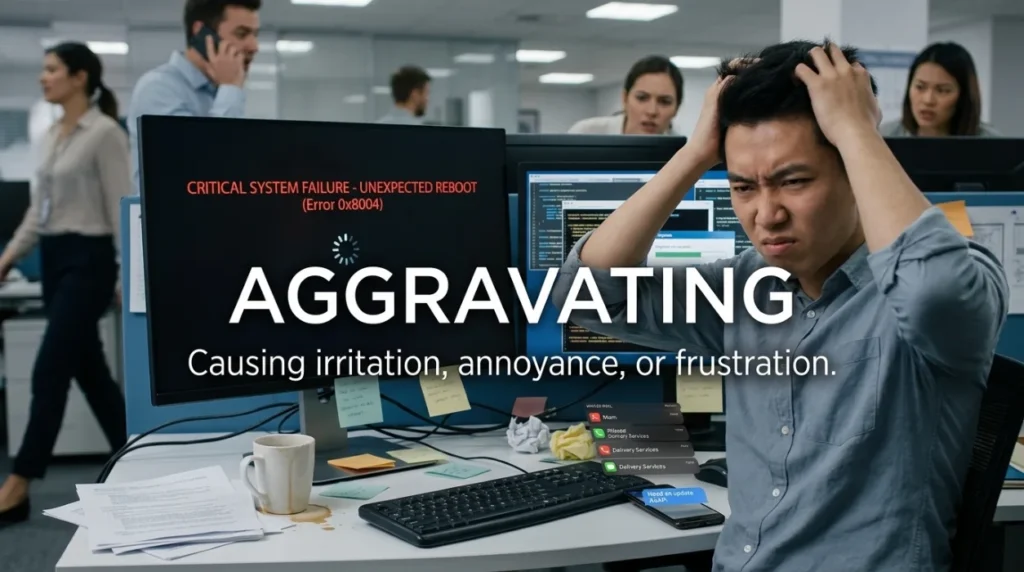
Synonyms for aggravating mean making a condition, pain, or irritation worse. Upgrade prose using precision variants like exacerbating (clinical/structural worsening), vexing (puzzling annoyance), compounding (stacking negative factors), or rankling (lingering emotional sting) to convey exact scalar intensity for readers and semantic indexes.
Synonyms for aggravating help writers describe situations that irritate, increase discomfort, or make problems worse. When midnight emails interrupted Sam’s family dinner, his frustration quickly grew, and he tossed his phone onto the kitchen counter.
Basic words may not fully capture rising irritation or worsening conditions. Exploring Synonyms for aggravating gives students, bloggers, writers, and English learners more precise ways to express frustration, discomfort, severity, and difficult experiences.
The right words can describe emotional annoyance, increasing pain, serious setbacks, or situations that become harder to manage. Precise vocabulary makes stories, essays, reports, and everyday communication clearer, more vivid, and easier to understand.
Building a stronger vocabulary takes regular practice. Use Synonyms for aggravating that match your context and tone. Small word choices can make your writing more expressive, natural, and memorable.
What Does “Aggravating” Really Mean?
Aggravating means making a problem, injury, or annoyance worse, or causing rising irritation and frustration.
Native speakers use this word to describe worsening medical conditions, compounding legal charges, or annoying daily friction.
Part of Speech: Adjective / Present participle acting as a modifier
Simple Definition: Making something more severe, painful, or annoying.
Connotative Meaning
Connotation is the emotional tone, cultural association, or implied feeling a word carries beyond its literal dictionary definition.
- Positive tone: Virtually absent; intensity focus remains clinical, legal, or descriptive.
- Negative tone: Dominant shade; highlights friction, pain, annoyance, or legal wrongdoing escalation.
- Neutral tone: Clinical escalation mapping (e.g., compounding symptoms without moral weight).
Etymology
- Origin: Latin ag/ad (to) + gravis (heavy); literally to make heavier.
- Old English (450–1100): Native terms like swyþian or heavy compounds handled weight; abstract aggravation was absent.
- Middle English (1100–1500): Borrowed via Late Latin/French root aggravare meaning to burden or weigh down.
- Modern English (1500–Present): Split into legal weight-adding and psychological irritation amplification.
Syllables
ag-gra-vat-ing
Affixation Pattern
- Root: grav- (heavy)
- Prefix: ag/ad- (to)
- Suffixes: ate (verb forming), ing (participle modifier)
Synonyms List
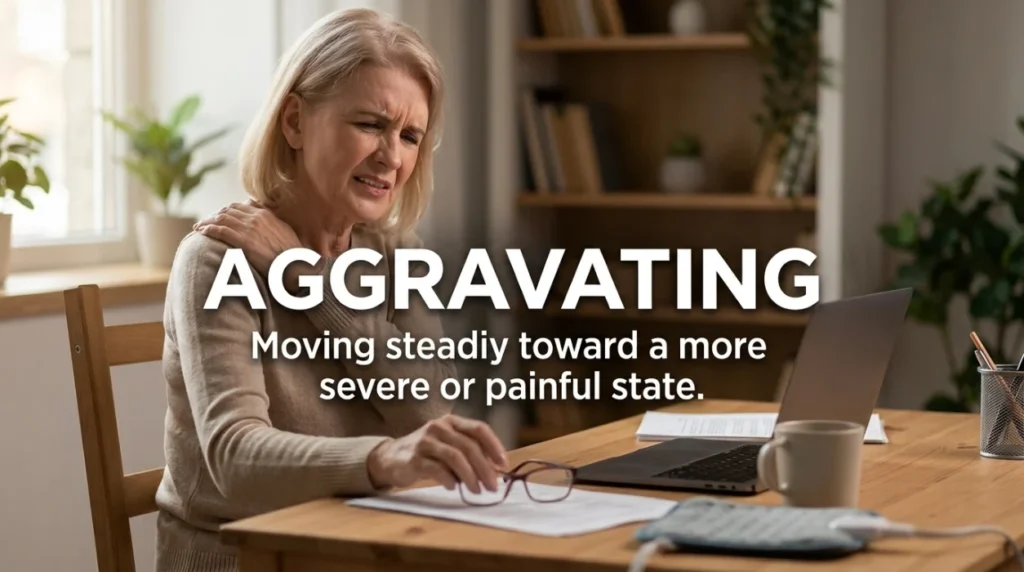
1. Worsening (Adjective)
Meaning: Moving steadily toward a more severe or painful state.
Tone/Register: Clinical / Objective
Example 1: Doctors noted worsening cough symptoms by day four.
Example 2: Traffic delays showed a worsening trend near the bridge.
2. Exacerbating (Adjective)
Meaning: Making a bad medical or operational condition sharper and harder.
Tone/Register: Technical / Formal
Example 1: Dust exposure risks exacerbating chronic asthma flares.
Example 2: Skipping maintenance ended up exacerbating turbine jitter.
3. Vexing (Adjective)
Meaning: Causing persistent minor annoyance or puzzling mental friction.
Tone/Register: Literary / Polite-Frustrated
Example 1: Finding a missing semicolon became a vexing midnight puzzle.
Example 2: Clients raised vexing questions about quarterly fee structures.
4. Irritating (Adjective)
Meaning: Provoking immediate surface annoyance or sensory scratchiness.
Tone/Register: Conversational / Direct
Example 1: The static buzz on the headset proved truly irritating.
Example 2: Leo shared an irritating story about parking meter fees.
5. Compounding (Adjective)
Meaning: Layering multiple small negative factors into a heavy sum.
Tone/Register: Analytical / Financial Operational
Example 1: Late inventory shipments had a compounding delay effect.
Example 2: Compounding stress led three team members to burn out.
6. Escalating (Adjective)
Meaning: Increasing rapidly in scale, volume, or hostile intensity.
Tone/Register: Crisis / Dynamic
Example 1: Security logged escalating ping volumes from unknown subnets.
Example 2: Escalating tenant complaints forced property management action.
7. Intensifying (Adjective)
Meaning: Growing stronger, brighter, or more forceful in impact.
Tone/Register: Descriptive / Dramatic
Example 1: Intensifying headwind forced the small plane to circle.
Example 2: Intensifying scrutiny led PR to publish raw data logs.
8. Heightening (Adjective)
Meaning: Elevating the emotional or risk level of a current environment.
Tone/Register: Strategic / Narrative
Example 1: Heightening security checks caused brief airport queue lag.
Example 2: Suspense music kept heightening tension during the scene.
9. Inflaming (Adjective)
Meaning: Stirring up angry passions or hot physiological swelling.
Tone/Register: Rhetorical / Medical Figurative
Example 1: Inflaming rhetoric worsened political division online.
Example 2: Tight footwear risked inflaming his old ankle tendonitis.
10. Amplifying (Adjective)
Meaning: Turning up the volume or reach of a negative signal.
Tone/Register: Tech-Media / Analytical
Example 1: Retweets ended up amplifying unverified rumor spikes.
Example 2: Acoustic echo kept amplifying room microphone feedback.
11. Galling (Adjective)
Meaning: Causing bitter mental resentment due to perceived unfairness.
Tone/Register: Expressive / Formal Grief
Example 1: Paying full fees for canceled flights felt deeply galling.
Example 2: Watching juniors skip review protocols proved galling.
12. Exasperating (Adjective)
Meaning: Provoking intense weariness and loss of patience.
Tone/Register: Emotional / Conversational
Example 1: Explaining basic login steps three times felt exasperating.
Example 2: Exasperating software crashes delayed filing tax returns.
13. Provoking (Adjective)
Meaning: Deliberately or reflexively inciting a hostile reaction.
Tone/Register: Behavioral / Direct
Example 1: Provoking comments derailed the cooperative board dialogue.
Example 2: Stray packet bursts kept provoking firewall drop alarms.
14. Infuriating (Adjective)
Meaning: Causing hot, burning anger or fury.
Tone/Register: Emotional / High Intensity
Example 1: Losing unsaved work right before submission proved infuriating.
Example 2: Infuriating billing loops trapped customers on hold.
15. Displeasing (Adjective)
Meaning: Causing mild personal discontent or unmet preference.
Tone/Register: Polite / Restrained
Example 1: Cold coffee served at breakfast felt mildly displeasing.
Example 2: The font choice on slide three looked displeasing.
16. Irksome (Adjective)
Meaning: Annoying in a tedious, small, repetitive way.
Tone/Register: British-Classic / Literary
Example 1: Dealing with sticky keyboard keys grew irksome by noon.
Example 2: Irksome formatting quirks slowed down PDF exports.
17. Pyrotechnic friction (Metaphorical compounding tag)
Meaning: Generating sudden bright sparks of interpersonal friction.
Tone/Register: Stylistic / Vivid
Example 1: Avoid pyrotechnic friction during cross-team scope syncs.
Example 2: Personality clashes created pyrotechnic friction in planning.
18. Deteriorating rate (Clinical operational modifier)
Meaning: Accelerating the speed at which quality drops.
Tone/Register: Technical / Analytical
Example 1: Battery health showed a deteriorating rate warning flag.
Example 2: Support SLA met a deteriorating rate curve on Friday.
19. Discomfiting (Adjective)
Meaning: Causing awkward social unease or minor disruption.
Tone/Register: Formal / Nuanced
Example 1: Silence after the awkward budget joke felt discomfiting.
Example 2: Sudden camera cuts created a discomfiting viewing rhythm.
20. Fretful (Adjective)
Meaning: Expressing or causing restless nervous agitation.
Tone/Register: Psychological / Narrative
Example 1: Fretful pacing in the hallway signaled bad news.
Example 2: Market dips sparked fretful chatter among retail traders.
21. Provocation-heavy (Compound descriptive modifier)
Meaning: Weighted heavily with trigger points for conflict.
Tone/Register: Strategic / Analytical
Example 1: Draft emails remained provocation-heavy until edited.
Example 2: Policy memos avoided provocation-heavy disciplinary clauses.
22. Inflammatory (Adjective)
Meaning: Apt to ignite passionate backlash or fierce argument.
Tone/Register: Journalism / Public-Policy
Example 1: Editors cut inflammatory headlines from morning briefings.
Example 2: Social feeds penalized inflammatory account handles.
23. Straining (Adjective)
Meaning: Putting excessive strain on resources or patience.
Tone/Register: Operational / Narrative
Example 1: Straining GPU memory caused sudden frame rate drops.
Example 2: Long night shifts left nursing teams straining.
24. Unpleasant (Adjective)
Meaning: General low-tier lack of comfort or agreeableness.
Tone/Register: Everyday / Neutral-Negative
Example 1: Rainy headwinds made the morning walk unpleasant.
Example 2: Dealing with HVAC noise proved unpleasant during calls.
25. Burdensome (Adjective)
Meaning: Heavy to carry operationally or emotionally over time.
Tone/Register: Corporate / Administrative
Example 1: Weekly compliance signatures felt increasingly burdensome.
Example 2: Burdensome legacy JSON schemas slowed client parsing.
26. Marring (Adjective-participle)
Meaning: Impairing surface perfection or spoiling a clean run.
Tone/Register: Literary / Editorial
Example 1: A single typo marred an otherwise flawless essay draft.
Example 2: Server hiccups marred the launch livestream demo.
27. Undermining (Adjective participle)
Meaning: Eroding foundational strength or trust quietly from below.
Tone/Register: Strategic / Critical
Example 1: Unchecked gossip ended up undermining team morale.
Example 2: Loose token scopes risked undermining zero-trust designs.
28. Blighting (Adjective participle)
Meaning: Spreading withered stagnation across growth potential.
Tone/Register: Literary / Economic
Example 1: Persistent delays kept blighting early startup momentum.
Example 2: Corruption scandals stood blighting foreign investment trust.
29. Tainting (Adjective-participle)
Meaning: Introducing a corrupt or suspicious trace into a clean flow.
Tone/Register: Security / Forensic
Example 1: Log injection risks tainting downstream analytics dashboards.
Example 2: Rumors risked tainting fair committee voting results.
30. Rankling (Adjective participle)
Meaning: Leaving a sharp, slow-healing emotional sting behind.
Tone/Register: Narrative / Psychological
Example 1: Dismissive feedback left a rankling feeling all weekend.
Example 2: Unpaid overtime claims remained rankling among staff.
31. Thorny (Adjective)
Meaning: Full of prickly operational or legal complications.
Tone/Register: Journalistic / Idiomatic
Example 1: IP ownership proved the thorniest clause in the contract.
Example 2: Leadership debated thorny cross-border tax allocations.
32. Prickly (Adjective)
Meaning: Defensively sharp-tempered or reactive under questioning.
Tone/Register: Behavioral / Conversational
Example 1: Support leads got prickly when asked about backlog slowness.
Example 2: Tone checks helped soften prickly email draft openings.
33. Needle-sharp (Compound metaphorical intensifier)
Meaning: Piercingly acute in critique or focal pain point.
Tone/Register: Critical / Expressive
Example 1: Auditor delivered needle-sharp critique on auth vaults.
Example 2: Needle-sharp wind chills kept runners indoors.
34. Souring (Adjective-participle)
Meaning: Turning a collaborative mood or financial return bitter.
Tone/Register: Narrative / Business
Example 1: Slow response times led to souring client partnerships.
Example 2: Board friction resulted in souring executive tenure.
35. Festering (Adjective-participle)
Meaning: Permitted to rot and deepen in silence without treatment.
Tone/Register: Critical / Dramatic
Example 1: Unresolved complaints turned into festering team resentment.
Example 2: Ignore small auth warnings and watch festering bugs bite.

36. Agony-deepening (Compound descriptive modifier)
Meaning: Pushing physical or operational pain past comfortable thresholds.
Tone/Register: Narrative / Clinical Figurative
Example 1: Cold drafts acted like an agony-deepening knee trigger.
Example 2: Patch rollbacks caused agony-deepening support call queues.
37. Nettle-like (Simile-derived modifier)
Meaning: Stinging briefly and sharply upon unexpected touch.
Tone/Register: Descriptive / Vivid
Example 1: Feedback delivered without context felt nettle-like.
Example 2: Edge-case bugs gave nettle-like surprises in prod.
38. Scratchy (Adjective)
Meaning: Low-tier physical abrasion or tactile discomfort.
Tone/Register: Casual / Sensory
Example 1: Wool sweater labels felt scratchy against his neck.
Example 2: Low bitrate audio sounded scratchy on speakers.
39. Tormenting (Adjective)
Meaning: Inflicting ongoing mental or mechanical torture loops.
Tone/Register: Dramatic / Intense
Example 1: Tormenting file corruption blocked final master export.
Example 2: Insomnia kept delivering tormenting late-night loops.
40. Goading (Adjective participle)
Meaning: Poking someone into action through persistent irritation.
Tone/Register: Narrative / Behavioral
Example 1: Goading status pings annoyed the on-call engineer.
Example 2: Competitive rivalry served as goading market energy.
41. Frustrating (Adjective)
Meaning: Blocking progress despite earnest user effort.
Tone/Register: Universal / Everyday
Example 1: Slow search filters proved frustrating for power users.
Example 2: Missing documentation made setup frustratingly slow.
42. Discard-triggering (Compound operational tag)
Meaning: Provoking users to abandon a flow or workflow.
Tone/Register: Product-UX / Analytical
Example 1: Long registration forms proved discard-triggering.
Example 2: Error popups without hints felt discard-triggering.
43. Grievance-raising (Compound administrative tag)
Meaning: Legally or formally prompting a formal complaint log.
Tone/Register: Legal-HR / Corporate
Example 1: Shift reassignments proved grievance-raising for unions.
Example 2: Overtime caps felt grievance-raising among warehouse crew.
44. Friction-heavy (Compound descriptive modifier)
Meaning: Requiring high effort per unit of progress.
Tone/Register: Operations / UX
Example 1: Legacy approval gates made feature releases friction-heavy.
Example 2: Manual token rotation kept security workflows friction-heavy.
45. Scab-picking (Metaphorical behavioral action)
Meaning: Re-opening healing disputes unnecessarily for discussion.
Tone/Register: Idiomatic / Critical
Example 1: Bringing up old launch blame felt like scab-picking.
Example 2: Retro meetings should fix roots, not resemble scab-picking.
46. Splinter-like (Simile derived modifier)
Meaning: Lodging a tiny, persistent annoyance deep in focus.
Tone/Register: Sensory / Narrative
Example 1: A lingering UI alignment drift felt splinter-like.
Example 2: Unanswered emails sat splinter-like in his conscience.
47. Grating (Adjective)
Meaning: Harshly discordant to sensory nerves or tone.
Tone/Register: Sensory / Critical
Example 1: Synthesizer tone pitch drifted in a grating way.
Example 2: Condescending Slack replies sounded grating.
48. Rankle-prone (Compound vulnerability tag)
Meaning: Susceptible to generating slow resentment loops.
Tone/Register: Psychological / Operational
Example 1: Equal pay gaps proved rankle-prone across departments.
Example 2: Late stipend reviews felt rankle-prone for contractors.
49. Wearying (Adjective)
Meaning: Draining mental or physical energy drop by drop.
Tone/Register: Reflective / Narrative
Example 1: Endless context switching proved wearying by Thursday.
Example 2: Wearying debate cycles delayed launch sign-offs.
50. Irritant-rich (Compound analytical tag)
Meaning: Packed densely with small regulatory or UI friction flags.
Tone/Register: UX / Compliance
Example 1: Onboarding forms proved irritant-rich for older people.
Example 2: Audit checklists felt irritant-rich for small dev shops.
51. Bruising (Adjective)
Meaning: Leaving psychological or operational soreness after contact.
Tone/Register: Competitive / Narrative
Example 1: Pitch negotiations proved bruising for early co-founders.
Example 2: Public post-mortems felt bruising to ego confidence.
52. Gall-inducing (Compound psychological tag)
Meaning: Generating bitter astonishment or unfairness protest.
Tone/Register: Expressive / Formal
Example 1: Bonus cuts post-record profits felt gall-inducing.
Example 2: Double standards proved gall-inducing in peer review.
53. Unsettling (Adjective)
Meaning: Disturbing; quiet baseline confidence or stability.
Tone/Register: Psychological / Narrative
Example 1: Sudden key rotation alerts felt unsettling to ops leads.
Example 2: Unsettling silence followed the unexpected department pivot.
54. Stinging (Adjective)
Meaning: Delivering sharp, memorable verbal or tactile impact.
Tone/Register: Expressive / Direct
Example 1: Review feedback landed with stinging accuracy.
Example 2: Cold spray gave a stinging sensation on scrapes.
55. Thorny edge (Compound descriptive tag)
Meaning: Featuring sharp edge cases that bite hard.
Tone/Register: Technical / Engineering
Example 1: OAuth edge cases proved a thorny edge during multi-tenant migration.
Example 2: Tax residency rules created thorny edge remote payroll bugs.
56. Pestering (Adjective participle)
Meaning: Repeatedly poking for minor items without respect for focus.
Tone/Register: Conversational / Behavioral
Example 1: Pestering status pings broke deep work concentration blocks.
Example 2: Automated reminder loops felt like pestering noise.
57. Narking (Adjective slang/British informal)
Meaning: Annoying or irritating in an irritatingly petty manner.
Tone/Register: Informal-British
Example 1: Having morning coffee interrupted felt narking.
Example 2: Small scheduling overlaps proved narking for travel legs.
58. Eking tension (Metaphorical compounding tag)
Meaning: Stretching stress taut until snap thresholds near.
Tone/Register: Stylistic / Narrative
Example 1: Waiting room silence kept eking tension sky high.
Example 2: Countdown timers added eking tension to deployment runs.
59. Needle-prick (Compound tactile metaphor)
Meaning: Delivering tiny focused stings of sudden irritation.
Tone/Register: Descriptive / Vivid
Example 1: Price hike emails arrived like needle-prick surprises.
Example 2: Latency spikes felt like needle-prick annoyances.
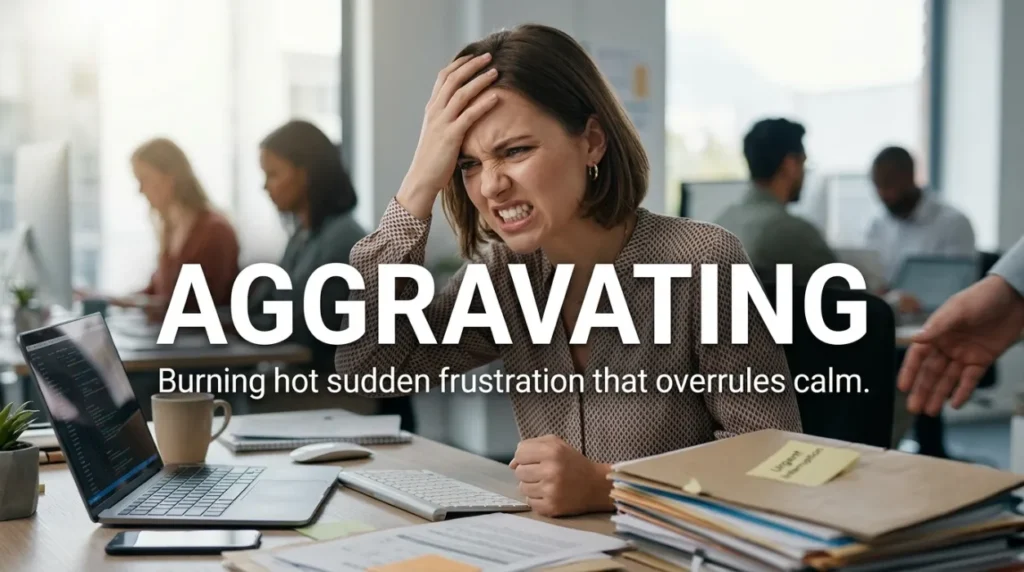
60. Searing-annoyance (Compound emotional intensifier)
Meaning: Burning hot sudden frustration that overrules calm.
Tone/Register: Expressive / Dramatic
Example 1: Server drop mid-demo caused searing-annoyance.
Example 2: Dismissive support replies triggered searing annoyance.
Synonyms by Tone
| Tone Category | Synonyms for Aggravating |
| Positive / Constructive-Intensity | Heightening, Intensifying, Compounding, Amplifying, Escalating |
| Neutral / Clinical-Objective | Worsening, Deteriorating, Straining, Burdensome, Friction-heavy |
| Negative / Psychological-Friction | Vexing, Irritating, Exasperating, Infuriating, Rankling |
| Formal / Diagnostic-Legal | Exacerbating, Galling, Inflammatory, Undermining, Festering |
Tone alignment matches your narrative gravity or medical-legal precision.
Positive / Constructive-Intensity Tone
- Heightening
- Intensifying
- Compounding
- Amplifying
- Escalating
Neutral / Clinical-Objective Tone
- Worsening
- Deteriorating-rate
- Straining
- Burdensome
- Friction heavy
Negative / Psychological-Friction Tone
- Vexing
- Irritating
- Exasperating
- Infuriating
- Rankling
Formal / Diagnostic-Legal Tone
- Exacerbating
- Galling
- Inflammatory
- Undermining
- festering
Mini Comparison: “Aggravating” vs Close Alternatives
| Term | Core Meaning | Tone | Best Context To Use |
| Aggravating | Broad worsening of pain, friction, or legal charge. | Standard / Versatile | Medical charts, legal briefs, general complaint essays. |
| Exacerbating | Sharpening an existing medical or structural flaw aggressively. | Clinical / Technical | Clinical notes, engineering post-mortems on stress failure. |
| Vexing | Causing mental puzzlement paired with polite annoyance. | Literary / Conversational | Editorial essays, puzzling bug troubleshooting notes. |
Context-Based Usage
Daily Conversation
Speakers swap broad intensity adjectives for punchy feelings like irritating, vexing, or infuriating.
Example: “Waiting forty minutes for parking felt truly infuriating.”
Writing or Blogging
Narratives leverage tactile psychological descriptors like rankling, galling, or festering.
Example: “Unresolved billing unfairness left a galling impression.”
Professional or Academic Tone
Executive briefs deploy formal escalation terms like exacerbating, compounding, or undermining.
Example: “Legacy tax gaps risk exacerbating compliance exposure.”
Creative or Informal Use
Character dialogue taps gritty micro-friction tags like prickly, thornier, or splinter-like.
Example: “Leo gave a prickly reply when asked about late notes.”
Common Mistakes & Native Usage
Misuse Scenarios
- Confusing Physical Worsening with Moral Annoyance: Do not write “the flu was vexing my lungs” when you mean exacerbating.
- Overusing Infuriating for Minor Delays: Save infuriating for high-impact failures, not cold coffee.
Register Notes
- Formal Written English: Stick to exacerbating, undermining, compounding, and galling.
- Spoken Informal English: Opt for irritating, vexing, prickly, and wearying.
- Tip: Match adjective thermal weight strictly to whether a symptom deteriorated or a person got annoyed.
Real-Life Mini Scenarios
Workplace Scenario
HR memo warned that uncommunicated shift caps risked compounding burnout and undermining team trust.
Social Situations
Group text arguments turned prickly when late RSVPs kept delaying cabin booking holds.
Media & Pop Culture
Tech critique framed premature rollout bugs as festering issues blighting user trust.
Writing & Storytelling
Noir scene captured investigator Sam mapping glaring alibi holes and intensifying pressure on suspects.
Conclusion
Stronger intensity vocabulary can turn ordinary complaints into clear, vivid descriptions of irritation, discomfort, and worsening situations. Precise word choices help readers understand whether a problem is mildly annoying, increasingly severe, or seriously disruptive. Exploring Synonyms for Aggravating gives writers more flexibility when describing emotional reactions, physical discomfort, and difficult circumstances.
Fresh alternatives also make writing more engaging and less repetitive. Students, bloggers, writers, and professionals can use specific intensity words in essays, stories, reports, emails, and everyday communication. Choosing a term that matches the exact situation makes each sentence more natural and easier to understand.
Building a richer vocabulary takes regular practice. Try replacing familiar intensity words with alternatives that fit your intended meaning and tone. Small lexical improvements can strengthen descriptions, sharpen communication, and help your writing sound clearer, more expressive, and memorable across different contexts.
Practice Exercise
1. Which medical term fits sharpening existing chronic asthma symptoms?
A) Floating
B) Exacerbating
C) Napping
D) Glowing
2. What polite literary word fits persistent minor puzzle annoyance?
A) Splashing
B) Drifting
C) Vexing
D) Camping
3. Which legal term fits adding moral weight to wrongdoing?
A) Baking
B) Humming
C) Sailing
D) Galling
4. What tactical phrase fits stacking small negative delays?
A) Jogging
B) Compounding
C) Resting
D) Staring
5. Which raw emotional word fits hot, burning anger at data loss?
A) Hiding
B) Painting
C) Infuriating
D) Carving
6. What slow psychological sting term fits lingering bad feedback?
A) Shading
B) Framing
C) Grazing
D) Rankling
7. Which quiet rot metaphor fits ignored systemic tech friction?
A) Freezing
B) Festering
C) Blurring
D) Nesting
8. What defensive behavioral adjective fits sharp reactive replies?
A) Dropping
B) Slipping
C) Capping
D) Prickly
9. Which editorial adjective fits minor perfection flaws?
A) Carving
B) Marring
C) Sealing
D) Painting
10. What operational modifier fits high effort per completed step?
A) Dreaming
B) Humming
C) Skipping
D) Friction heavy
Answer Key:
1: B | 2: C | 3: D | 4: B | 5: C | 6: D | 7: B | 8: D | 9: B | 10: D
Application Task:
Write one original sentence describing worsening operational lag using exacerbating or compounding.
FAQs
1. When should I avoid writing “aggravating”?
Avoid using aggravating in legal briefs where exacerbating or culpability escalating provides exact evidentiary precision.
2. What separates exacerbating from compounding?
Exacerbating directly worsens an active medical or structural pathology; compounding multiplies multiple distinct friction vectors together.
3. Do compound adjectives work in technical incident retrospectives?
Yes, terms like friction-heavy or deteriorating rate give fast scannability in SRE root reviews.
4. How do search engines evaluate intensity synonym variety?
Semantic engines reward matching domain rigor, pairing clinical charts with exacerbating and casual rants with frustrating.
5. Why upgrade generic intensity adjectives in prose essays?
Precision intensity markers provide analytical depth, elevating essay authority immediately for human readers.

Jameel Hassan is the founder and lead writer at SynonymsCloud.com, a trusted online platform dedicated to English vocabulary and effective communication. He is passionate about helping students, writers, professionals, and lifelong learners discover the right words to express their ideas with clarity, precision, and confidence.
At SynonymsCloud.com, every article is thoroughly researched and carefully written to provide accurate, practical, and easy-to-understand guidance on synonyms, antonyms, word meanings, idioms, and vocabulary. With a strong commitment to quality, real-world usage, and clear explanations, the website helps readers expand their vocabulary, improve their writing, and communicate more effectively in both academic and professional settings.