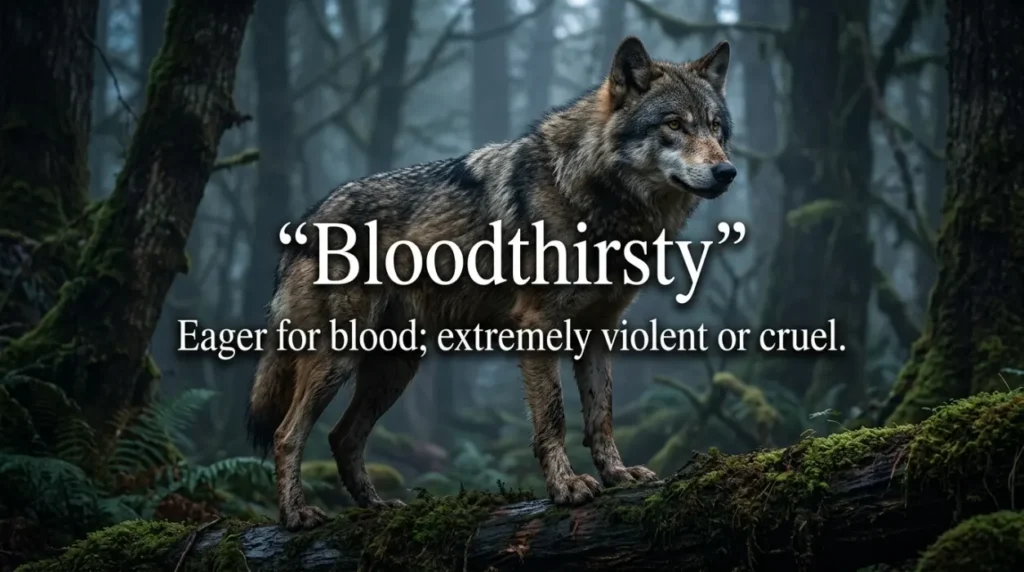
Synonyms for bloodthirsty mean eager for slaughter, violence, or ruthless destruction. Use sanguinary for formal or historical carnage, ruthless for unfeeling corporate or personal severity, and predatory for tactical exploitation. Match your choice to the context gothic horror, business competition, or wildlife behavior to elevate emotional precision and readability.
Bloodthirsty villains charge across dark fantasy pages during midnight reading sessions, creating scenes filled with danger and suspense. Replacing generic words with precise alternatives can turn flat fiction into vivid character portraits.
Writers, bloggers, and students can use synonyms for bloodthirsty to describe ruthless characters, violent intentions, and fierce behavior with greater accuracy. The right word helps establish a stronger tone and makes dramatic scenes more memorable.
Mastering 60 targeted synonyms for bloodthirsty can expand your descriptive vocabulary and improve storytelling. Choosing one precise adjective can add depth, tension, and personality to your writing.
Explore synonyms for bloodthirsty and discover words that make ordinary prose more expressive. Small vocabulary upgrades can create a sharper voice, stronger atmosphere, and a more engaging reading experience.
What Does “Bloodthirsty” Really Mean?
Bloodthirsty means eager for bloodshed, slaughter, violence, or ruthless destruction.
Native speakers use this word for predatory warlords, aggressive apex beasts, or relentless rival crowds.
Part of Speech: Adjective
Simple Definition: Eager for violence, slaughter, or brutal destruction.
Connotative Meaning
Connotation is the emotional tone, cultural association, or implied feeling a word carries beyond its literal dictionary definition.
- Positive tone: Rare, restricted to heroic or mythical battle grit in epic fantasy.
- Negative tone: Highlights cruelty, sadism, ruthless slaughter, and barbaric warmongering.
- Neutral tone: States tactical predator drive or evolutionary hunting imperatives objectively.
Etymology
- Origin: Compound of Old English/Germanic root blood and thirsty.
- Old English (450–1100): Derived from blōd (vital life fluid) paired with þurstig.
- Middle English (1100–1500): Shifted into a figurative description of a cruel appetite for harm.
- Modern English (1500–Present): Standardized for violent perpetrators, ruthless mobs, and predators.
Syllables
blood-thirs-ty
Affixation Pattern
- Root: Blood + thirst
- Prefix: None
- Suffix: y (adjectival quality suffix)
Synonyms List
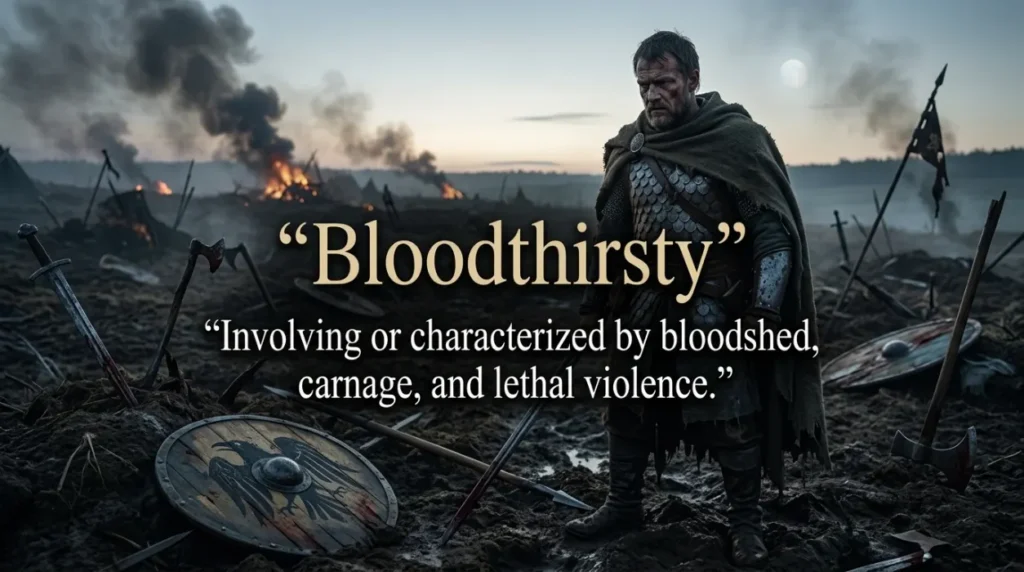
1. Sanguinary (Adjective)
Meaning: Involving or characterized by bloodshed, carnage, and lethal violence.
Tone/Register: Formal / Literary
Example 1: Historians documented the sanguinary civil conflict closely.
Example 2: The campaign ended after a sanguinary frontline engagement.
2. Cruel (Adjective)
Meaning: Willfully causing pain or suffering without emotional restraint.
Tone/Register: Standard / Negative
Example 1: Poachers set a cruel trap near watering holes.
Example 2: The villain delivered a cruel ultimatum to the captive.
3.Dreadful(Adjective)
Meaning: Fierce, violent, and unrestrained by civil norms.
Tone/Register: Raw / Descriptive
Example 1: A wolf pack launched a dreadful assault on the ridge.
Example 2: A critic wrote a dreadful review of the debut play.
4. Ferocious (Adjective)
Meaning: Savagely fierce, intense, or aggressive in action.
Tone/Register: Dynamic / Strong
Example 1: Gale wind delivered ferocious blows to the canvas roof.
Example 2: Defender put up ferocious resistance near goal.
5. Ruthless (Adjective)
Meaning: Having no pity, compassion, or moral hesitation.
Tone/Register: Formal / Critical
Example 1: Corporate raider executed ruthless asset restructuring.
Example 2: Dictator maintained power through ruthless purges.
6. Merciless (Adjective)
Meaning: Showing no tender mercy or leniency toward rivals.
Tone/Register: Dramatic / Serious
Example 1: The prosecutor delivered a merciless closing statement.
Example 2: Champion chess player capitalized mercilessly on error.
7. Murderous (Adjective)
Meaning: Capable of, prone to, or characterized by intentional killing.
Tone/Register: Dark / Graphic
Example 1: Noir detective tracked a murderous underground syndicate.
Example 2: Blizzard conditions turned murderous along the alpine pass.
8. Cutthroat (Adjective)
Meaning: Fiercely competitive or brutally ruthless in rivalry.
Tone/Register: Business / Dramatic
Example 1: Retail startups survived a cutthroat holiday season.
Example 2: Smugglers negotiated in a cutthroat harbor alley.
9. Belligerent (Adjective)
Meaning: Hostile, aggressive, and inclined to start fights.
Tone/Register: Formal / Legal
Example 1: The Coast Guard intercepted a belligerent trawler.
Example 2: Debater adopted a belligerent tone during cross-examination.
10. Bellicose (Adjective)
Meaning: Demonstrating aggression and willingness to fight wars.
Tone/Register: Academic / Political
Example 1: Envoy warned against bellicose border posturing.
Example 2: Newspaper editorial condemned bellicose rhetoric.
11. Martial (Adjective)
Meaning: Associated with war, military discipline, or combat arts.
Tone/Register: Formal / Historical
Example 1: Monks practiced traditional martial footwork drills.
Example 2: Plaza hosted martial drum parades at sunrise.
12. Predatory (Adjective)
Meaning: Living by preying on others or exploiting weakness.
Tone/Register: Analytical / Serious
Example 1: Regulators targeted predatory short-term lending apps.
Example 2: A leopard stalked an impala with predatory patience.
13. Rapacious (Adjective)
Meaning: Aggressively greedy or ravenous for plunder.
Tone/Register: Literary / Critical
Example 1: Rapacious corporate buyers stripped pension reserves.
Example 2: Deep-sea crab moved with rapacious appetite.
14. Carnivorous (Adjective)
Meaning: Feeding strictly on flesh, meat, or predatory intake.
Tone/Register: Scientific / Standard
Example 1: Dinosaur exhibit featured giant carnivorous theropods.
Example 2: Pitcher plant trapped insects in carnivorous fluids.
15. Prowling (Adjective)
Meaning: Moving stealthily in search of prey or trouble.
Tone/Register: Atmospheric / Action
Example 1: Alley cat stayed prowling near fish market docks.
Example 2: Security guard spotted a prowling shadow near fence.
16. Feral (Adjective)
Meaning: Existing in a wild, untamed, or reverted state.
Tone/Register: Descriptive / Gritty
Example 1: Shelter rescued a feral cat colony behind the mill.
Example 2: Survivor adopted feral instincts in deep timber.
17. Unrelenting (Adjective)
Meaning: Not slackening or showing mercy in pressure or pursuit.
Tone/Register: Serious / Persistent
Example 1: Marathoner kept an unrelenting pace uphill.
Example 2: Detective maintained unrelenting pressure on suspect.
18. Pitiless (Adjective)
Meaning: Devoid of human sympathy, warmth, or emotional softness.
Tone/Register: Literary / Dark
Example 1: Desert sun shone down with pitiless intensity.
Example 2: Judge issued a pitiless statutory sentence.
19. Blood-soaked (Adjective)
Meaning: Saturated literally or figuratively with violent carnage.
Tone/Register: Graphic / Horror
Example 1: Fantasy chapter opened inside a blood-soaked arena.
Example 2: Myth recalled a blood-soaked ancient border vale.
20. Slaughterous (Adjective)
Meaning: Characterized by mass destruction or brutal killing fields.
Tone/Register: Formal / Dark
Example 1: Chronicle detailed slaughterous tactics used in the siege.
Example 2: Militia launched a slaughterous dawn raid.
21. Vicious (Adjective)
Meaning: Deliberately violent, malicious, or damaging in strike.
Tone/Register: Standard / Strong
Example 1: Boxer landed a vicious right hook to the jaw.
Example 2: The rumor mill spread a vicious falsehood online.
22. Fiendish (Adjective)
Meaning: Cruelly wicked, clever, or demonic in execution.
Tone/Register: Literary / Dramatic
Example 1: Puzzlemaker designed a fiendish labyrinth vault.
Example 2: Villain hatched a fiendish escape scheme.
23. Diabolical (Adjective)
Meaning: Possessing evil ingenuity or tormenting cruelty.
Tone/Register: Dramatic / Intense
Example 1: Hacker deployed a diabolical data-lock script.
Example 2: Thriller featured a diabolical master criminal.
24. Barbaric (Adjective)
Meaning: Savagely crude, brutal, or lacking human refinement.
Tone/Register: Critical / Formal
Example 1: Tribune denounced barbaric treatment of captives.
Example 2: Archaeological dig exposed barbaric trophy vaults.
25. Brutal (Adjective)
Meaning: Savagely violent, harsh, or uncomfortably direct.
Tone/Register: Universal / Strong
Example 1: Cyclist faced brutal headwinds across salt flats.
Example 2: Reviewer offered a brutal critique of the draft.
26. Inexorable (Adjective)
Meaning: Impossible to stop, relent, or alter by plea.
Tone/Register: Formal / Literary
Example 1: Tide rose with inexorable grey momentum.
Example 2: Company faced inexorable market share decline.
27. Sadistic (Adjective)
Meaning: Deriving pleasure from inflicting pain on others.
Tone/Register: Clinical / Dark
Example 1: Antagonist played sadistic psychological games.
Example 2: Torturer displayed sadistic indifference to pleas.
28. Malevolent (Adjective)
Meaning: Having or showing a wish to do evil to others.
Tone/Register: Literary / Psychological
Example 1: Specter cast a malevolent gaze across the hall.
Example 2: Program flagged malevolent background code signatures.
29. Vindictive (Adjective)
Meaning: Having or showing a strong or unreasoning desire for revenge.
Tone/Register: Critical / Personal
Example 1: Partner left a vindictive negative vendor review.
Example 2: Emperor launched vindictive property confiscations.
30. Thirst-driven (Adjective)
Meaning: Driven urgently by a craving for conflict or spoils.
Tone/Register: Descriptive / Modern
Example 1: Raider fleet operated with thirst-driven speed.
Example 2: Columnist critiqued thirst-driven media hype cycles.
31. Carnage-loving (Adjective)
Meaning: Eagerly drawn to scenes of destruction and wreckage.
Tone/Register: Graphic / Informal
Example 1: Riot watchers included carnage-loving agitators.
Example 2: Dark fiction catered to carnage-loving readers.
32. Warmongering (Adjective)
Meaning: Encouraging or advocating aggressive military conflict.
Tone/Register: Political / Critical
Example 1: An editorial blamed warmongering cabinet ministers for the crisis.
Example 2: Protestors chanted against warmongering foreign policy.
33. Aggressive (Adjective)
Meaning: Ready or likely to attack, confront, or push hard.
Tone/Register: Universal / Standard
Example 1: Sales rep pursued aggressive quarterly targets.
Example 2: The terrier took an aggressive stance near the gate.
34. Hostile (Adjective)
Meaning: Unfriendly, antagonistic, or opposing in intent.
Tone/Register: Standard / Formal
Example 1: Expedition landed on a hostile volcanic shore.
Example 2: Witness gave a hostile deposition to the clerk.
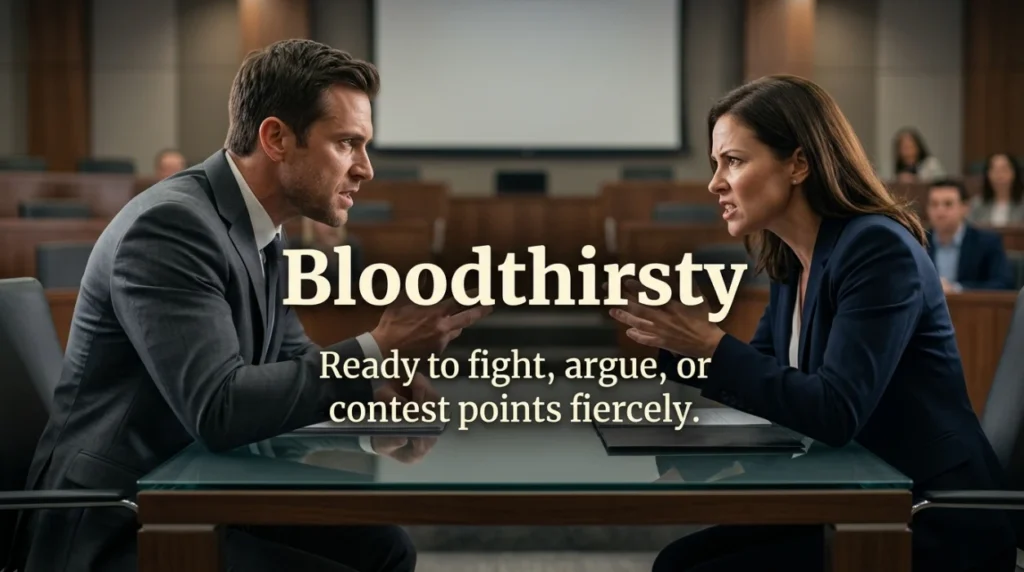
35. Combative (Adjective)
Meaning: Ready to fight, argue, or contest points fiercely.
Tone/Register: Conversational / Standard
Example 1: The lawyer adopted a combative posture in the hearing.
Example 2: Speaker grew combative during audience Q&A.
36. Truculent (Adjective)
Meaning: Eager or quick to argue, aggressive, or defiant.
Tone/Register: Formal / Literary
Example 1: A truculent patron challenged the doorman at the entrance.
Example 2: Driver offered a truculent glare at police officer.
37. Pugnacious (Adjective)
Meaning: Eager or quick to argue, quarrel, or fight.
Tone/Register: Literary / Character
Example 1: Terrier had a pugnacious chin and bark.
Example 2: Columnist maintained a pugnacious writing style.
38. Gluttonous (Adjective)
Meaning: Excessively greedy in consumption of food or power.
Tone/Register: Descriptive / Critical
Example 1: Gluttonous corporate board drained cash reserves.
Example 2: Bear grew gluttonous before winter denning.
39. Insatiable (Adjective)
Meaning: Impossible to satisfy in appetite or craving.
Tone/Register: Literary / Expressive
Example 1: Reader possessed an insatiable appetite for lore.
Example 2: Empire displayed an insatiable land hunger.
40. Ravenous (Adjective)
Meaning: Extremely hungry or greedy for acquisition.
Tone/Register: Vivid / Descriptive
Example 1: Hikers ate sandwiches with ravenous speed.
Example 2: Investor showed a ravenous appetite for shares.
41. Predator-like (Adjective)
Meaning: Exhibiting the focus and tactics of hunting carnivores.
Tone/Register: Descriptive / Modern
Example 1: Winger moved with predator-like corner positioning.
Example 2: Negotiator watched opponent with predator-like calm.
42. Pouncing (Adjective)
Meaning: Ready to jump suddenly onto a target or opportunity.
Tone/Register: Action / Dynamic
Example 1: Lynx sat pouncing on deep snow mice.
Example 2: Buyer waited, pouncing on a discounted stock drop.
43. Tooth-and-claw (Adjective)
Meaning: Operating by raw survival competition and combat.
Tone/Register: Idiomatic / Gritty
Example 1: Startup environment felt tooth-and-claw daily.
Example 2: Ridge wildlife lived tooth and claw in winter.
44. Relentless (Adjective)
Meaning: Unceasingly intense, severe, or pursuing without break.
Tone/Register: Universal / Strong
Example 1: Rain fell with relentless grey persistence.
Example 2: The investigator pursued relentless audit checks.
45. In relentless hunt (Adjective)
Meaning: Engaged actively in ongoing pursuit of a target.
Tone/Register: Narrative / Descriptive
Example 1: Tracker stayed in relentless hunt mode through the swamp.
Example 2: Falcon remained in relentless hunt glide.
46. Grim (Adjective)
Meaning: Depressing, forbidding, or unyielding in severity.
Tone/Register: Literary / Dark
Example 1: Crew faced a grim weather forecast report.
Example 2: Guard offered a grim nod at the checkpoint.
47. Gritty (Adjective)
Meaning: Showing courage, raw realism, or unpolished surface texture.
Tone/Register: Conversational / Positive-Leaning
Example 1: Indie film delivered a gritty urban drama.
Example 2: Worker wiped gritty coal dust from brow.
48. Hard-bitten (Adjective)
Meaning: Tough, experienced, and cynical from harsh trials.
Tone/Register: Literary / Character
Example 1: Hard-bitten sheriff inspected desert border post.
Example 2: Veteran sailor smoked a hard-bitten pipe.
49. Feud-driven (Adjective)
Meaning: Motivated by generational or persistent clan hostility.
Tone/Register: Narrative / Historical
Example 1: Mountain families locked in feud-driven standoff.
Example 2: Playwright scripted feud-driven tragedy dialogue.
50. Vengeful (Adjective)
Meaning: Seeking to harm someone in return for perceived wrong.
Tone/Register: Emotional / Dark
Example 1: Ghost returned with vengeful nocturnal purpose.
Example 2: Rival launched a vengeful patent challenge.
51. Relinquishing-none (Adjective)
Meaning: Holding a hard tactical grip without compromise or concession.
Tone/Register: Formal / Technical
Example 1: General ordered a relinquishing-none defense line.
Example 2: Union maintained relinquishing-none contract terms.
52. Unyielding (Adjective)
Meaning: Not giving way to pressure, pleas, or force.
Tone/Register: Formal / Resilient
Example 1: Climber anchored ropes to unyielding granite block.
Example 2: Chairman stood unyielding on audit standards.
53. Unmitigated (Adjective)
Meaning: Complete, absolute, and not lessened in severity.
Tone/Register: Formal / Critical
Example 1: Launch turned into an unmitigated software disaster.
Example 2: Report cited unmitigated supply chain delays.
54. Hard-edged (Adjective)
Meaning: Sharp, uncompromising, and modernly severe in tone.
Tone/Register: Descriptive / Contemporary
Example 1: Gallery featured hard-edged steel sculpture forms.
Example 2: Novelist wrote prose with a hard-edged cadence.
55. Cold-blooded (Adjective)
Meaning: Showing deliberate emotional calm during cruel acts.
Tone/Register: Dramatic / Clinical
Example 1: Assassin executed a cold-blooded harbor approach.
Example 2: Fraudster committed cold-blooded elder savings theft.
56. Hard-hearted (Adjective)
Meaning: Lacking sympathy, pity, or tender emotional response.
Tone/Register: Literary / Moral
Example 1: Landlord evicted tenants with a hard-hearted note.
Example 2: Tale warned against hard-hearted traveler rules.
57. Pitiless-eyed (Adjective)
Meaning: Watching struggle or pain with total emotional detachment.
Tone/Register: Literary / Vivid
Example 1: Hawk watched mouse movement with pitiless-eyed focus.
Example 2: Tyrant observed trial proceedings pitiless-eyed.
58. Predator-eyed (Adjective)
Meaning: Possessing fixed, calculating visual tracking focus.
Tone/Register: Descriptive / Fiction
Example 1: Tracker surveyed treeline with predator-eyed calm.
Example 2: Player eyed opponent queen move predator-eyed.
59. Ruthless-driven (Adjective)
Meaning: Propelled strictly by zero-sum tactical dominance goals.
Tone/Register: Business / Critical
Example 1: Fund managers pursued ruthless-driven yields.
Example 2: Cartel operated a ruthlessly driven supply line.
60. Hard-driving (Adjective)
Meaning: Demanding a high output pace with relentless pressure.
Tone/Register: Business / Standard
Example 1: Editor ran a hard-driving daily news desk.
Example 2: Coach led hard-driving preseason conditioning.
Synonyms by Tone
Tone governance separates mythological grit from corporate ruthlessness or biological predation.
| Tone Category | Synonyms for Bloodthirsty |
| Positive / Grit | Gritty, Hard-bitten, Tooth-and-claw |
| Neutral / Analytical | Predatory, Carnivorous, Aggressive, Relentless |
| Negative / Dark | Sanguinary, Ruthless, Murderous, Sadistic, Cruel |
| Playful / Informal | Cutthroat, Hard-driving, Pouncing |
Word choice governs reader empathy: calling a survivor gritty honors resilience, while calling them sanguinary evokes gothic horror.
Positive / Grit Tone
- Gritty
- Hard-bitten
- Tooth-and-claw
Neutral / Analytical Tone
- Predatory
- Carnivorous
- Aggressive
- Relentless
Negative / Dark Tone
- Sanguinary
- Ruthless
- Murderous
- Sadistic
- Cruel
Playful / Informal Tone
- Cutthroat
- Hard-driving
- Pouncing
Mini Comparison: “Bloodthirsty” vs Close Alternatives
| Term | Core Meaning | Tone | Best Context To Use |
| Bloodthirsty | Eager specifically for violent slaughter or bloodshed. | Dark / Gothic | Fantasy fiction, historical epics, thriller villains. |
| Ruthless | Acting without moral pause or emotional pity. | Critical / Corporate | Business profiles, strategic audits, political analyses. |
| Predatory | Operating by hunting, preying, or aggressive exploitation. | Analytical / Legal | Consumer protection, wildlife essays, market critiques. |
Context-Based Usage
Daily Conversation
Speakers swap gothic extremes for punchy markers like cutthroat, hard-driving, or aggressive.
Example: “Local bakery competition got super cutthroat this year.”
Writing or Blogging
Storytellers deploy visceral decay verbs like sanguinary, prowling, or pitiless-eyed.
Example: “Warlord surveyed the sanguinary trench courtyard.”
Professional or Academic Tone
Analysts replace colloquial slang with audit-ready terms like predatory, relentless, or unmitigated.
Example: “Commission investigated predatory loan fee structures.”
Creative or Informal Use
Fiction dialog captures grit or menace via tooth and claw, cold-blooded, or feral.
Example: “Mercenaries fought a tooth and claw frontier skirmish.”
Common Mistakes & Native Usage

Common Mistakes Learners Make
- Confusing Business Rigor with Carnage: Do not call a strict CFO bloodthirsty; reserve bloodthirsty for physical violence or slaughter appetite.
- Overusing Gothic Slang in Reports: Writing “the market review was sanguinary” sounds melodramatic where unmitigated or aggressive fits.
Register Notes
- Formal Written English: Prefer sanguinary, predatory, inexorable, and ruthless.
- Spoken Informal English: Opt for cutthroat, hard-driving, gritty, and rough.
- Tip: Match emotional darkness strictly to narrative context.
Real-Life Mini Scenarios
Workplace
Operations lead described quarterly logistics execution as relentless rather than bloodthirsty.
Social Situations
Amateur chess club members noted tournament elimination rounds turned cutthroat by round four.
Media / Pop Culture
Survival docuseries highlighted polar apex predators maintaining predatory ice floe habits.
Writing & Storytelling
Dark fantasy novel opened, introducing a bloodthirsty nomadic horde crossing southern salt dunes.
Conclusion
Upgrading aggression vocabulary brings sharper narrative weight and greater emotional precision to your writing. Precise adjectives can replace repetitive or vague descriptions and make each sentence more impactful.
Using synonyms for bloodthirsty helps you describe ruthless characters, violent intentions, and fierce behavior with greater accuracy. The right word can strengthen tension and create a clearer picture for your readers.
Rotate fresh descriptive terms through essays, blog stories, fiction, and everyday writing. Small vocabulary improvements can gradually build a more distinctive and confident authorial voice.
Practice Exercise
1. Which term describes formal historical chronicles of bloody wartime slaughter?
A) Gritty
B) Hard-driving
C) Sanguinary
D) Cutthroat
2. What formal technical adjective describes consumer loans preying on vulnerable income?
A) Fiendish
B) Pouncing
C) Tooth-and-claw
D) Predatory
3. Which rustic descriptor honors tough, weathered desert patrol experience?
A) Bellicose
B) Hard-bitten
C) Sanguinary
D) Slaughterous
4. What conversational slang adjective describes cut-rate retail competition?
A) Sanguinary
B) Inexorable
C) Cutthroat
D) Pitiless-eyed
5. Which formal term describes a march advance that cannot be halted by pleas?
A) Pugnacious
B) Gluttonous
C) Feral
D) Inexorable
6. What word fits a fictional torturer deriving joy from human suffering?
A) Martial
B) Carnivorous
C) Sadistic
D) Gritty
7. Which adjective marks cabinet speeches advocating aggressive military strikes?
A) Prowling
B) Warmongering
C) Sunlit
D) Alabaster
8. What adjective describes wolves moving wild and untamed outside rescue walls?
A) Hard-driving
B) Glacial-white
C) Feral
D) Cutthroat
9. Which term describes a cold execution performed without emotional pulse rush?
A) Drained
B) Faded
C) Cold-blooded
D) Spun-spent
10. What narrative adjective frames an apex bird tracking small prey from the air?
A) Sorry
B) Predator-eyed
C) Dingy
D) Mangy
Answer Key:
1: C | 2: D | 3: B | 4: C | 5: D | 6: C | 7: B | 8: C | 9: C | 10: B
Application Task
Write 5 original sentences using different alternatives for bloodthirsty. Try to match each word with a specific context, such as a ruthless character, aggressive leader, violent conflict, predatory behavior, or merciless action. Then explain in one short phrase why each word fits its sentence.
FAQs
1. Is “bloodthirsty” appropriate for formal historical essays?
No. Formal history papers should use sanguinary, belligerent, or destructive instead of expressive literary adjectives.
2. What distinguishes “bloodthirsty” from “ruthless”?
Bloodthirsty specifically implies a craving for physical slaughter or bloodshed, whereas ruthless means lacking moral pity in any context.
3. Can “predatory” apply outside animal biology?
Yes. Native speakers apply predatory to unfair commercial pricing (predatory pricing) or aggressive corporate takeover tactics.
4. Why avoid repeating “violent” across narrative drafts?
Violent flattens nuance; differentiating sanguinary, dreadful, ferocious, or brutal gives readers physical force cues.
5. How do generative AI engines rank precision aggression descriptors?
AI retrieval systems reward domain-specific, exact entity descriptors like predatory over generic sentiment clutter, improving semantic authority scores.

Jameel Hassan is the founder and lead writer at SynonymsCloud.com, a trusted online platform dedicated to English vocabulary and effective communication. He is passionate about helping students, writers, professionals, and lifelong learners discover the right words to express their ideas with clarity, precision, and confidence.
At SynonymsCloud.com, every article is thoroughly researched and carefully written to provide accurate, practical, and easy-to-understand guidance on synonyms, antonyms, word meanings, idioms, and vocabulary. With a strong commitment to quality, real-world usage, and clear explanations, the website helps readers expand their vocabulary, improve their writing, and communicate more effectively in both academic and professional settings.