Ingesting means taking food, drink, or information into the body or mind. Top synonyms include consuming, swallowing, absorbing, assimilating, and devouring. In casual contexts, terms like eating, munching, or snacking fit best, while scientific or technical scenarios favor ingesting, masticating, or processing.
A synonym for ingesting helps you describe taking food, drinks, medicine, or information into the body or mind with greater precision. The word can refer to eating, swallowing, consuming, or absorbing something. Choosing the right alternative makes your meaning clearer and more natural in different situations.
Imagine sitting down for dinner, swallowing a vitamin tablet with water, and enjoying a warm, home-cooked meal. In this context, a synonym for ingesting can help you avoid repetition while describing everyday actions smoothly and accurately.
Using varied vocabulary makes your writing more engaging and expressive. It helps students, bloggers, writers, and speakers communicate ideas with confidence and clarity.
This guide explores useful alternatives and explains how to use each synonym for ingesting naturally. Learning these words can strengthen reading, writing, and speaking skills in 2026.
What Does “Ingesting” Really Mean?
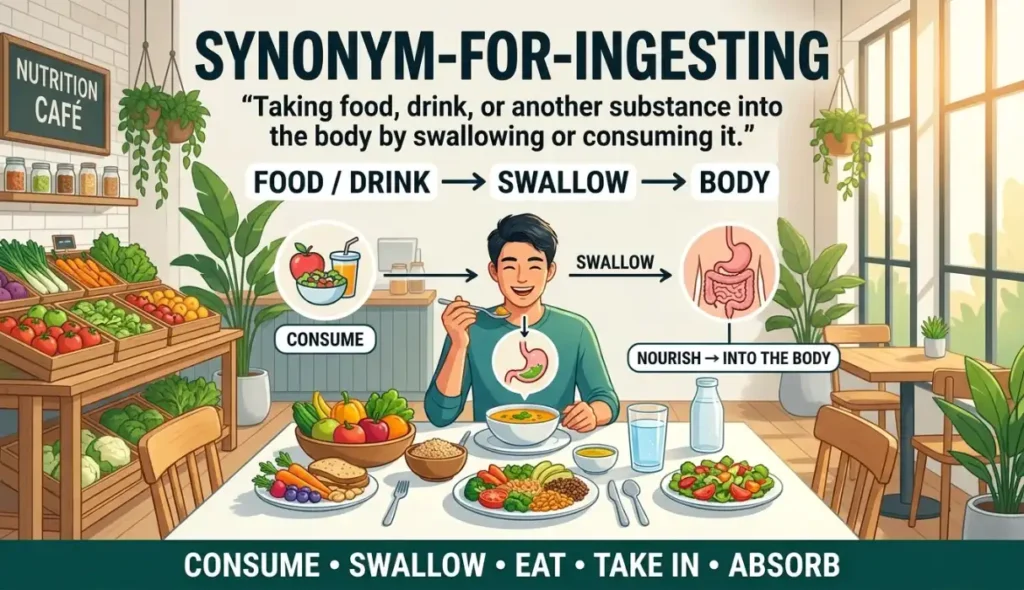
Ingesting means taking food, drink, or another substance into the body by swallowing or absorbing it. It also refers to absorbing ideas, data, or mental concepts into the mind.
- Part of Speech: Verb (Present Participle / Gerund)
- Simple English Definition: Taking food, liquid, or information into your body or mind.
- Emotional Tone: Mostly clinical, technical, neutral, or descriptive.
Connotative Meaning
(Connotation is the emotional, cultural, or social association attached to a word beyond its literal dictionary definition.)
- Positive Tone: Associated with nourishing the body, enjoying rich meals, or absorbing uplifting knowledge.
- Negative Tone: Used when describing accidentally swallowing toxins, poisons, harmful chemicals, or bad habits.
- Neutral Tone: Standard biological, medical, scientific, or technological descriptions of consumption and data processing.
Etymology and History
- Source Language: Latin (ingestus, past participle of ingerere, meaning “to carry in” or “to pour into”).
- Old English (450–1100): Not present in Old English; native terms like etan (to eat) and drincan (to drink) were used.
- Middle English (1100–1500): Early forms entered via scholarly Latin texts referring to physical consumption.
- Modern English (1500–Present): Fully adopted into medical, scientific, and computing vocabularies to describe biological input and digital data processing.
Pronunciation (US & UK)
- US: /ɪnˈdʒes.tɪŋ/
- UK: /ɪnˈdʒes.tɪŋ/
Syllables & Structure
- Syllables: in-gest-ing
- Root: gest (from Latin gerere, to carry)
- Prefix: in- (into)
- Suffix: -ing (present participle/gerund suffix)
Synonyms List
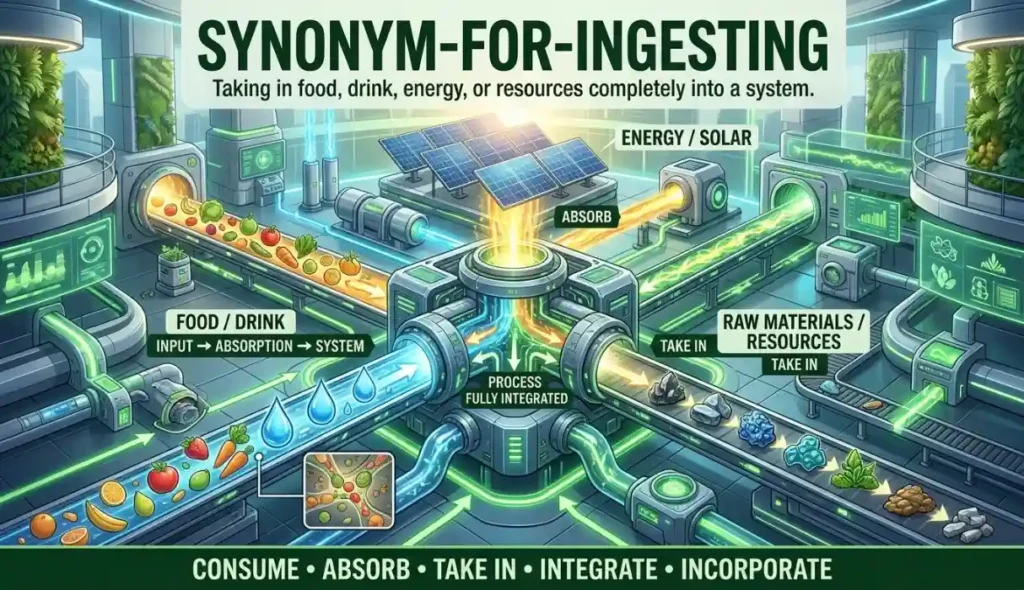
Consuming (Verb) — US: /kənˈsuː.mɪŋ/ | UK: /kənˈsjuː.mɪŋ/
- Meaning: Taking in food, drink, energy, or resources completely into a system.
- Tone/Register: General / Standard
- Example 1: Athletes are consuming extra carbohydrates before running the marathon.
- Example 2: Readers spent hours consuming news stories on their phones.
Swallowing (Verb) — US: /ˈswɑː.loʊ.ɪŋ/ | UK: /ˈswɒl.əʊ.ɪŋ/
- Meaning: Passing food, drink, or pills down the throat into the stomach.
- Tone/Register: Informal / Everyday
- Example 1: The child had trouble swallowing the large vitamin tablet.
- Example 2: He was swallowing warm tea to soothe his sore throat.
Devouring (Verb) — US: /dɪˈvaʊ.rɪŋ/ | UK: /dɪˈvaʊə.rɪŋ/
- Meaning: Eating something hungrily, quickly, or greedily.
- Tone/Register: Expressive / Dynamic
- Example 1: The hungry dogs were devouring their dinner in seconds.
- Example 2: She spent all weekend devouring a fantasy novel.
Absorbing (Verb) — US: /əbˈsɔːr.bɪŋ/ | UK: /əbˈzɔː.bɪŋ/
- Meaning: Taking in liquid, nutrients, or information gradually.
- Tone/Register: Academic / General
- Example 1: Dry soil was absorbing the sudden afternoon rain.
- Example 2: Students were absorbing complex math ideas during class.
Assimilating (Verb) — US: /əˈsɪm.ə.leɪ.t̬ɪŋ/ | UK: /əˈsɪm.ɪ.leɪ.tɪŋ/
- Meaning: Digesting nutrients into the body or integrating knowledge fully into the mind.
- Tone/Register: Academic / Formal
- Example 1: The body is assimilating essential vitamins from fresh vegetables.
- Example 2: New team members were assimilating company policies quickly.
Digesting (Verb) — US: /daɪˈdʒes.tɪŋ/ | UK: /daɪˈdʒes.tɪŋ/
- Meaning: Breaking down food in the stomach or processing thoughts mentally.
- Tone/Register: General / Educational
- Example 1: Resting after meals helps your stomach with digesting heavy food.
- Example 2: He sat quietly while digesting the unexpected news.
Imbibing (Verb) — US: /ɪmˈbaɪ.bɪŋ/ | UK: /ɪmˈbaɪ.bɪŋ/
- Meaning: Drinking liquids, especially alcohol, or taking in ideas gently.
- Tone/Register: Formal / Literary
- Example 1: Guests were imbibing cold lemonade under the shady porch.
- Example 2: Young scholars were imbibing wisdom from old books.
Inhaling (Verb) — US: /ɪnˈheɪ.lɪŋ/ | UK: /ɪnˈheɪ.lɪŋ/
- Meaning: Drawing air or fumes into the lungs, or eating food extremely fast.
- Tone/Register: Informal / Expressive
- Example 1: He was inhaling fresh mountain air on his morning walk.
- Example 2: Teenagers were inhaling pizza slices after soccer practice.
Downings (Verb) — US: /ˈdaʊ.nɪŋ/ | UK: /ˈdaʊ.nɪŋ/
- Meaning: Drinking or eating something completely and quickly.
- Tone/Register: Casual / Informal
- Example 1: Runners were downing glasses of cold water after the race.
- Example 2: He was downing a quick espresso before the meeting.
Partaking of (Verb Phrase) — US: /pɑːrˈteɪ.kɪŋ ɑːv/ | UK: /pɑːˈteɪ.kɪŋ ɒv/
- Meaning: Joining in to eat, drink, or share a portion of food.
- Tone/Register: Formal / Polite
- Example 1: Visitors were partaking of light snacks in the main hall.
- Example 2: Family members enjoyed partaking of the holiday feast.
Gulping (Verb) — US: /ˈɡʌl.pɪŋ/ | UK: /ˈɡʌl.pɪŋ/
- Meaning: Swallowing food or liquid quickly in large, mouth-filling amounts.
- Tone/Register: Informal / Conversational
- Example 1: She was gulping down ice water after running under the sun.
- Example 2: He sat at his desk gulping coffee to stay awake.
Gobbling (Verb) — US: /ˈɡɑː.bəl.ɪŋ/ | UK: /ˈɡɒb.əl.ɪŋ/
- Meaning: Eating food fast and noisily in large pieces.
- Tone/Register: Informal / Playful
- Example 1: The kids were gobbling popcorn while watching the movie.
- Example 2: Stop gobbling your lunch, or you will get a stomach ache.
Wolfing (Verb) — US: /ˈwʊl.fɪŋ/ | UK: /ˈwʊl.fɪŋ/
- Meaning: Eating food ravenously and hastily like a wild animal.
- Tone/Register: Informal / Vivid
- Example 1: The boy was wolfing down his sandwich during recess.
- Example 2: Hungry hikers began wolfing down stew by the fire.
Munching (Verb) — US: /ˈmʌn.tʃɪŋ/ | UK: /ˈmʌn.tʃɪŋ/
- Meaning: Chewing steady, crisp snacks with a noticeable crunching sound.
- Tone/Register: Informal / Casual
- Example 1: She sat on the couch munching crunchy apple slices.
- Example 2: Audience members were munching roasted nuts during the show.
Nibbling (Verb) — US: /ˈnɪb.əl.ɪŋ/ | UK: /ˈnɪb.əl.ɪŋ/
- Meaning: Eating food by taking very small, gentle bites.
- Tone/Register: Informal / Gentle
- Example 1: The rabbit was nibbling fresh green lettuce in the garden.
- Example 2: She kept nibbling small pieces of dark chocolate.
Grazing (Verb) — US: /ˈɡreɪ.zɪŋ/ | UK: /ˈɡreɪ.zɪŋ/
- Meaning: Eating small amounts of food repeatedly throughout the day.
- Tone/Register: Informal / Modern
- Example 1: Instead of big meals, he prefers grazing on light snacks.
- Example 2: Party guests were grazing at the buffet table all night.
Snacking (Verb) — US: /ˈsnæk.ɪŋ/ | UK: /ˈsnæk.ɪŋ/
- Meaning: Eating light food items between regular main meals.
- Tone/Register: Casual / Everyday
- Example 1: Students were snacking on dried fruit while studying late.
- Example 2: He stopped snacking late at night to sleep better.
Feasting (Verb) — US: /ˈfiː.stɪŋ/ | UK: /ˈfiː.stɪŋ/
- Meaning: Eating rich, plentiful food joyfully during a celebration.
- Tone/Register: Expressive / Positive
- Example 1: Villagers were feasting on roasted dishes during the festival.
- Example 2: The family spent Sunday afternoon feasting in the garden.
Dining (Verb) — US: /ˈdaɪ.nɪŋ/ | UK: /ˈdaɪ.nɪŋ/
- Meaning: Eating a formal meal, usually in a restaurant or home.
- Tone/Register: Formal / Elegant
- Example 1: Couples were dining at fancy downtown seafood restaurants.
- Example 2: We were dining outdoors while watching the sunset.
Chowing (Verb) — US: /ˈtʃaʊ.ɪŋ/ | UK: /ˈtʃaʊ.ɪŋ/
- Meaning: Eating food enthusiastically in an informal setting.
- Tone/Register: Slang / Informal
- Example 1: The workers were chowing down on tacos near the site.
- Example 2: Everyone started chowing on warm burgers at the picnic.
Bolting (Verb) — US: /ˈboʊl.tɪŋ/ | UK: /ˈbəʊl.tɪŋ/
- Meaning: Swallowing food without chewing it properly because of a rush.
- Tone/Register: Informal / Descriptive
- Example 1: Bolting your breakfast in two minutes causes bad digestion.
- Example 2: He was bolting his meal to catch the morning bus.
Quaffing (Verb) — US: /ˈkwɑː.fɪŋ/ | UK: /ˈkwɒf.ɪŋ/
- Meaning: Drinking a hearty liquid beverage with great enjoyment.
- Tone/Register: Literary / Historical
- Example 1: Travelers were quaffing cold cider at the village inn.
- Example 2: Actors played knights quaffing drinks from wooden mugs.
Swigging (Verb) — US: /ˈswɪɡ.ɪŋ/ | UK: /ˈswɪɡ.ɪŋ/
- Meaning: Drinking large gulps straight from a bottle or container.
- Tone/Register: Informal / Casual
- Example 1: The driver was swigging fruit juice from a sports bottle.
- Example 2: He stood in the kitchen swigging cold milk from the carton.
Sipping (Verb) — US: /ˈsɪp.ɪŋ/ | UK: /ˈsɪp.ɪŋ/
- Meaning: Drinking a liquid in very small, measured amounts.
- Tone/Register: General / Calm
- Example 1: She was sipping hot green tea by the window.
- Example 2: He sat quietly sipping soup from a small bowl.
Chewing (Verb) — US: /ˈtʃuː.ɪŋ/ | UK: /ˈtʃuː.ɪŋ/
- Meaning: Crushing food with teeth to make it ready for swallowing.
- Tone/Register: General / Standard
- Example 1: Chewing food slowly helps your body absorb nutrients better.
- Example 2: The puppy spent hours chewing his favorite rubber toy.
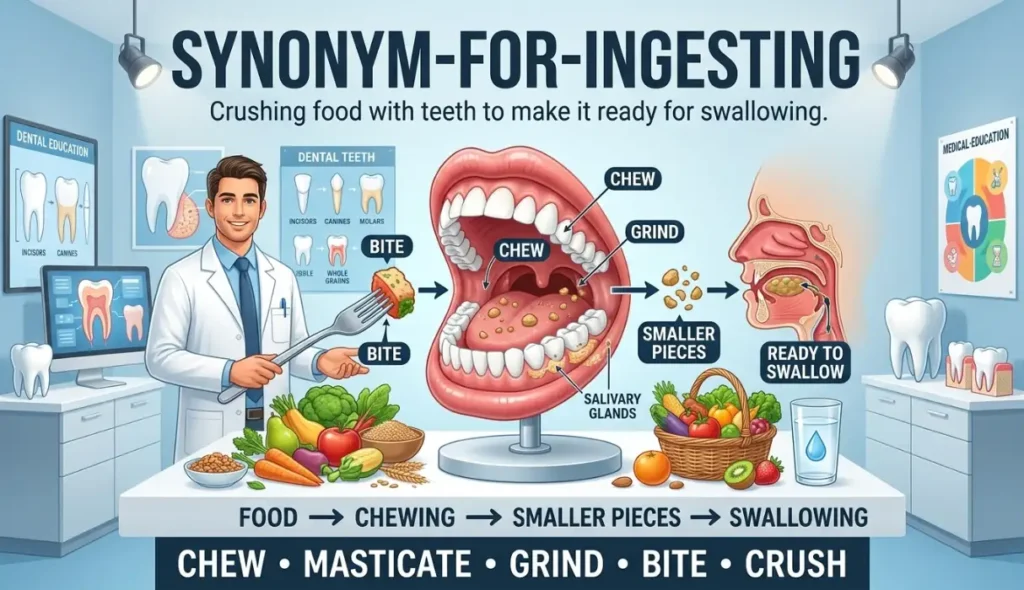
Masticating (Verb) — US: /ˈmæs.tə.keɪ.t̬ɪŋ/ | UK: /ˈmæs.tɪ.keɪ.tɪŋ/
- Meaning: Chewing food thoroughly as part of the formal digestive process.
- Tone/Register: Medical / Technical
- Example 1: Proper mastication of solid items reduces strain on the stomach.
- Example 2: Biology textbooks explain how teeth assist in masticating food.
Processing (Verb) — US: /ˈprɑː.ses.ɪŋ/ | UK: /ˈprəʊ.ses.ɪŋ/
- Meaning: Handling, breaking down, or digesting physical inputs or data.
- Tone/Register: Technical / Computing
- Example 1: The human liver is responsible for processing dietary fats.
- Example 2: The new computer system was processing data inputs rapidly.
Absorbing nutrients (Verb Phrase) — US: /əbˈsɔːr.bɪŋ ˈnuː.tri.ənts/ | UK: /əbˈzɔː.bɪŋ ˈnjuː.tri.ənts/
- Meaning: Taking beneficial vitamins and minerals into the bloodstream.
- Tone/Register: Medical / Educational
- Example 1: Healthy gut tissue is vital for absorbing nutrients efficiently.
- Example 2: Eating green vegetables helps your organs absorb nutrients.
Internalizing (Verb) — US: /ɪnˈtɝː.nə.laɪ.zɪŋ/ | UK: /ɪnˈtɜː.nəl.aɪ.zɪŋ/
- Meaning: Incorporating values, ideas, or knowledge deeply within one’s mind.
- Tone/Register: Academic / Psychological
- Example 1: The student was internalizing core ethical rules for practice.
- Example 2: She spent years internalizing lessons from her mentors.
Taking in (Verb Phrase) — US: /ˈteɪ.kɪŋ ɪn/ | UK: /ˈteɪ.kɪŋ ɪn/
- Meaning: Receiving food, liquid, light, or mental information into yourself.
- Tone/Register: General / Conversational
- Example 1: Plants stay healthy by taking in sunlight and groundwater.
- Example 2: He stood on the hill taking in the beautiful view.
Tucking into (Verb Phrase) — US: /ˈtʌk.ɪŋ ˈɪn.tuː/ | UK: /ˈtʌk.ɪŋ ˈɪn.tuː/
- Meaning: Starting to eat a large, delicious meal with real enthusiasm.
- Tone/Register: Informal / British standard
- Example 1: The hungry tourists were tucking into hot plates of pasta.
- Example 2: We sat at the table tucking into fresh homemade pie.
Packing away (Verb Phrase) — US: /ˈpæk.ɪŋ əˈweɪ/ | UK: /ˈpæk.ɪŋ əˈweɪ/
- Meaning: Eating large quantities of food easily without stopping.
- Tone/Register: Informal / Expressive
- Example 1: The teenage athlete was packing away three meals every night.
- Example 2: It was impressive seeing how much steak he was packing away.
Polishing off (Verb Phrase) — US: /ˈpɑː.lɪ.ʃɪŋ ɑːf/ | UK: /ˈpɒl.ɪ.ʃɪŋ ɒf/
- Meaning: Finishing every remaining bit of food or drink on a plate.
- Tone/Register: Casual / Conversational
- Example 1: They were polishing off the rest of the birthday cake.
- Example 2: He finished his homework after polishing off a bowl of soup.
Slurping (Verb) — US: /ˈslɝː.pɪŋ/ | UK: /ˈslɜː.pɪŋ/
- Meaning: Drinking or eating liquid food with a noisy sucking sound.
- Tone/Register: Informal / Descriptive
- Example 1: Customers were slurping hot noodle soup at the counter.
- Example 2: The child was slurping melting ice cream from a cone.
Lapping (Verb) — US: /ˈlæp.ɪŋ/ | UK: /ˈlæp.ɪŋ/
- Meaning: Drinking liquid using quick movements of the tongue like animals.
- Tone/Register: General / Animal context
- Example 1: The cat was lapping fresh milk from a shallow dish.
- Example 2: Waves were lapping gently against the wooden boat dock.
Sucking (Verb) — US: /ˈsʌk.ɪŋ/ | UK: /ˈsʌk.ɪŋ/
- Meaning: Drawing liquid or candy into the mouth by creating vacuum pressure.
- Tone/Register: General / Standard
- Example 1: The baby was sucking juice through a small plastic straw.
- Example 2: He was sucking on a lemon hard candy for his throat.
Feeding on (Verb Phrase) — US: /ˈfiː.dɪŋ ɑːn/ | UK: /ˈfiː.dɪŋ ɒn/
- Meaning: Consuming specific foods regularly to gain biological nourishment.
- Tone/Register: Scientific / Educational
- Example 1: Caterpillars were feeding on green oak leaves in spring.
- Example 2: Whales survive by feeding on tiny ocean plankton.
Gorging (Verb) — US: /ˈɡɔːr.dʒɪŋ/ | UK: /ˈɡɔː.dʒɪŋ/
- Meaning: Eating greedy, excessive amounts of food beyond full capacity.
- Tone/Register: Informal / Critical
- Example 1: They were gorging on sweets throughout the entire holiday.
- Example 2: Avoid gorging yourself at night to prevent sleep trouble.
Glutting (Verb) — US: /ˈɡlʌt.ɪŋ/ | UK: /ˈɡlʌt.ɪŋ/
- Meaning: Overfeeding or supplying an excess amount of food or goods.
- Tone/Register: Formal / Critical
- Example 1: He was glutting himself with rich desserts at the banquet.
- Example 2: Tech firms were glutting the market with cheap gadgets.
Stuffing (Verb) — US: /ˈstʌf.ɪŋ/ | UK: /ˈstʌf.ɪŋ/
- Meaning: Packing food tightly into your mouth or stomach in big amounts.
- Tone/Register: Casual / Informal
- Example 1: He was stuffing his mouth with warm biscuits at breakfast.
- Example 2: Kids were stuffing snacks into their pockets for the movie.
Cramming (Verb) — US: /ˈkræm.ɪŋ/ | UK: /ˈkræm.ɪŋ/
- Meaning: Forcing food into a full space or packing ideas into memory fast.
- Tone/Register: Informal / Conversational
- Example 1: She was cramming sandwiches into her lunch bag before work.
- Example 2: Students were cramming facts into their minds before exams.
Savoring (Verb) — US: /ˈseɪ.vɚ.ɪŋ/ | UK: /ˈseɪ.vər.ɪŋ/
- Meaning: Enjoying food, drink, or moments slowly to feel maximum pleasure.
- Tone/Register: Positive / Expressive
- Example 1: The chef was savoring each bite of the special sauce.
- Example 2: She spent her evening savoring the peaceful silence at home.
Tasting (Verb) — US: /ˈteɪ.stɪŋ/ | UK: /ˈteɪ.stɪŋ/
- Meaning: Sampling small portions of food or drink to check the flavor.
- Tone/Register: General / Standard
- Example 1: The baker was tasting the buttercream frosting before decorating.
- Example 2: Judges were tasting different cheese samples at the fair.
Sampling (Verb) — US: /ˈsæm.plɪŋ/ | UK: /ˈsɑːm.plɪŋ/
- Meaning: Trying small bits of food, drink, or products to evaluate quality.
- Tone/Register: Business / Standard
- Example 1: Customers were sampling free juice drinks inside the market.
- Example 2: We spent the afternoon sampling regional dishes at stalls.
Testing (Verb) — US: /ˈtes.tɪŋ/ | UK: /ˈtes.tɪŋ/
- Meaning: Trying out foods, liquids, or systems to measure performance.
- Tone/Register: Technical / Formal
- Example 1: Lab technicians were testing water samples for chemical purity.
- Example 2: Cooks were testing new soup recipes for the winter menu.
Inhaling food (Phrase) — US: /ɪnˈheɪ.lɪŋ fuːd/ | UK: /ɪnˈheɪ.lɪŋ fuːd/
- Meaning: Consuming a plate of food so fast it vanishes almost instantly.
- Tone/Register: Slang / Humorous
- Example 1: After the game, players were inhaling food at the diner.
- Example 2: You are inhaling food so fast you barely taste it.
Soaking up knowledge (Phrase) — US: /ˈsoʊ.kɪŋ ʌp ˈnɑː.lɪdʒ/ | UK: /ˈsəʊ.kɪŋ ʌp ˈnɒl.ɪdʒ/
- Meaning: Learning information rapidly, eagerly, and thoroughly like a sponge.
- Tone/Register: Informal / Educational
- Example 1: The intern spent the week soaking up knowledge from leaders.
- Example 2: Curious children love soaking up knowledge about animals.
Drinking in (Verb Phrase) — US: /ˈdrɪŋ.kɪŋ ɪn/ | UK: /ˈdrɪŋ.kɪŋ ɪn/
- Meaning: Absorbing sights, sounds, atmosphere, or ideas with intense delight.
- Tone/Register: Literary / Expressive
- Example 1: She stood on the balcony drinking in the fresh ocean air.
- Example 2: Visitors were drinking in the live orchestra music.
Feeding (Verb) — US: /ˈfiː.dɪŋ/ | UK: /ˈfiː.dɪŋ/
- Meaning: Supplying food or fuel to a person, animal, machine, or system.
- Tone/Register: General / Standard
- Example 1: The mother was feeding warm oatmeal to her young child.
- Example 2: Engineers were feeding wood logs into the furnace fire.
Nourishing (Verb) — US: /ˈnɝː.ɪ.ʃɪŋ/ | UK: /ˈnʌr.ɪ.ʃɪŋ/
- Meaning: Providing food or care necessary for healthy growth and life.
- Tone/Register: Positive / Formal
- Example 1: Fresh vegetable soup was nourishing the recovering patient.
- Example 2: Reading good literature is ideal for nourishing young minds.
Sustaining (Verb) — US: /səˈsteɪ.nɪŋ/ | UK: /səˈsteɪ.nɪŋ/
- Meaning: Supplying enough food, drink, or strength to keep life going.
- Tone/Register: Academic / Formal
- Example 1: Clean water is essential for sustaining life in harsh deserts.
- Example 2: Light meals were sustaining workers during long shifts.
Subsuming (Verb) — US: /səbˈsuː.mɪŋ/ | UK: /səbˈsjuː.mɪŋ/
- Meaning: Absorbing or incorporating an idea or entity into a larger whole.
- Tone/Register: Academic / Formal
- Example 1: The large corporation was subsuming smaller regional businesses.
- Example 2: The new policy is subsuming all previous safety guidelines.
Receiving (Verb) — US: /rɪˈsiː.vɪŋ/ | UK: /rɪˈsiː.vɪŋ/
- Meaning: Taking in or accepting physical substances, signals, or ideas into oneself.
- Tone/Register: Standard / Neutral
- Example 1: Patients were receiving liquid fluids through intravenous tubes.
- Example 2: The antenna was receiving clear satellite signals across town.
Inpouring (Verb) — US: /ˈɪnˌpɔːr.ɪŋ/ | UK: /ˈɪnˌpɔː.rɪŋ/
- Meaning: Flowing or pouring inward rapidly in large continuous streams.
- Tone/Register: Literary / Descriptive
- Example 1: Fresh sea air was inpouring through open seaside windows.
- Example 2: Support messages were inpouring after the team won.
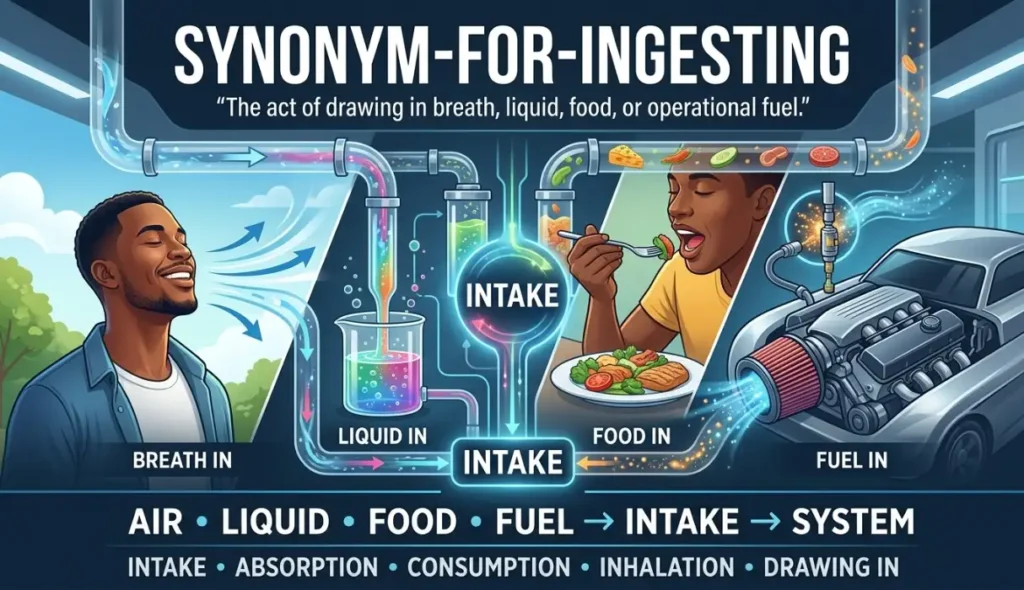
In-taking (Noun / Verb) — US: /ˈɪn.teɪ.kɪŋ/ | UK: /ˈɪn.teɪ.kɪŋ/
- Meaning: The act of drawing in breath, liquid, food, or operational fuel.
- Tone/Register: Technical / Medical
- Example 1: Doctors monitored the patient’s daily fluid intake closely.
- Example 2: The engine system showed an increased air intake rate.
Synonyms by Tone
Choosing the right tone ensures your vocabulary matches your audience and writing purpose.
- Positive Tone: Nourishing, Feasting, Savoring, Sustaining, Enriching. These words describe healthy consumption, joy, and growth.
- Neutral Tone: Consuming, Swallowing, Absorbing, Processing, Receiving, Ingesting. These provide clear facts without emotional bias.
- Negative Tone: Gorging, Glutting, Wolfing, Bolting, Indoctrinating. These suggest sloppy habits, overeating, or forced input.
- Playful / Informal Tone: Munching, Snacking, Chowing, Downing, Gobbling. These add fun energy to stories and casual writing.
Mini Comparison: Ingesting vs. Close Alternatives
| Word | Key Shade of Meaning | Tone | Best Context |
| Ingesting | Biological or technical input into a body or processing unit | Medical / Technical | Science reports, pill safety, data systems |
| Consuming | Broad intake of food, resources, energy, or media contents | Neutral / Standard | Nutrition plans, energy usage, media habits |
| Swallowing | The physical muscular action of moving food down the throat | Informal / Everyday | Eating meals, taking pills, throat health |
How “Ingesting” Changes by Context
Daily Conversation
In casual talk, speakers rarely use formal words like ingesting. They use eating, swallowing, downing, or snacking.
Writing & Blogging
Bloggers and storytellers use devouring, savoring, or munching to add vivid picture words that hook readers.
Professional & Academic Tone
In medical, biological, or data analysis papers, use precise terms like ingesting, assimilating, masticating, or processing.
Common Mistakes & Native Usage
Misuse Scenarios
- Confusing “Ingesting” with “Digesting”: Ingesting means taking food into the body. Digesting means breaking that food down inside the stomach afterward.
- Overusing “Ingesting” in Casual Situations: Saying “I am ingesting a burger with friends” sounds robotic. Say “I am eating a burger.”
Register Notes
Save ingesting for clinical contexts, science writing, or digital data ingestion references.
Real-Life Mini Scenarios
- Workplace: Software engineers configure cloud systems for ingesting user data continuously every hour.
- Social Situations: Friends sit on a porch enjoying summer evenings while sipping icy lemon drinks together.
- Media & Pop Culture: Movie critics write about audiences devouring superhero films across theaters worldwide.
Conclusion
Mastering an accurate synonym for ingesting gives you greater control over spoken and written expression. Choosing the right alternative helps you describe eating, swallowing, consuming, or absorbing something with clarity and precision. Varied vocabulary also makes your communication more natural and engaging.
Expanding your word choices can benefit students, bloggers, content writers, and everyday speakers. Students can create stronger essays, bloggers can develop vivid articles, and speakers can express their thoughts clearly. Learning suitable alternatives also reduces repetition and improves overall writing quality.
Choose three new terms from this guide and use each one in an original sentence. Regular practice helps you understand their meanings, remember them longer, and build lasting confidence in everyday communication.
Practice Exercise
- Which synonym best describes swallowing a medical pill with water?
A) Munching
B) Swallowing
C) Glutting
D) Grazing - Taking in digital data into a database is technically called:
A) Ingesting
B) Gobbling
C) Quaffing
D) Grazing - What tone does the word gorging carry?
A) Highly positive
B) Neutral medical
C) Critical / Negative
D) Formal business - Which word fits chewing crisp apple slices steadily?
A) Munching
B) Transfusing
C) Inhaling
D) Inscribing - Eating small snacks throughout the afternoon instead of big meals is called:
A) Bolting
B) Grazing
C) Masticating
D) Subsuming - Which term fits learning ideas deeply and making them part of your mindset?
A) Internalizing
B) Swigging
C) Slurping
D) Nibbling - What is the difference between ingesting and digesting?
A) Ingesting is breaking down food; digesting is taking food in.
B) Ingesting is taking food in; digesting is breaking it down inside.
C) Ingesting applies only to drinks; digesting applies only to solids.
D) There is no difference. - Identify the correct sentence for standard conversation:
A) “I am ingesting lunch with my mom.”
B) “We enjoyed eating lunch together.”
C) “He was ingesting fries rapidly.”
D) “She ingested tea slowly.” - Which term means finishing every bit of food on a plate?
A) Polishing off
B) Masticating
C) Lapping
D) Inhaling - Animals consuming green plant leaves for survival are described as:
A) Feeding on
B) Swigging
C) Quaffing
D) Bolting
Reflection Task:
Write a 2-sentence paragraph describing a meal or study session using at least two synonyms from this article.
Answer Key:
1: B | 2: A | 3: C | 4: A | 5: B | 6: A | 7: B | 8: B | 9: A | 10: A
FAQs
1. What is the most common synonym for ingesting in daily life?
The most common daily synonyms are eating, drinking, swallowing, and consuming. These words sound natural in everyday speech.
2. Can ingesting refer to taking in information?
Yes. In modern English, ingesting describes absorbing data, reading news, or taking digital information into computer systems.
3. What is the difference between ingesting and consuming?
Ingesting focuses specifically on physical or technical input into a body or system. Consuming is broader, covering food, energy, media, and products.
4. Is masticating a direct synonym for ingesting?
No. Masticating means chewing food with your teeth. Ingesting refers to taking the food into the body as a whole.
5. What Latin root gives us the word ingesting?
It comes from Latin ingerere, formed from in- (into) and gerere (to carry), literally meaning “to carry into.”

Jameel Hassan is the founder and lead writer at SynonymsCloud.com, a trusted online platform dedicated to English vocabulary and effective communication. He is passionate about helping students, writers, professionals, and lifelong learners discover the right words to express their ideas with clarity, precision, and confidence.
At SynonymsCloud.com, every article is thoroughly researched and carefully written to provide accurate, practical, and easy-to-understand guidance on synonyms, antonyms, word meanings, idioms, and vocabulary. With a strong commitment to quality, real-world usage, and clear explanations, the website helps readers expand their vocabulary, improve their writing, and communicate more effectively in both academic and professional settings.