
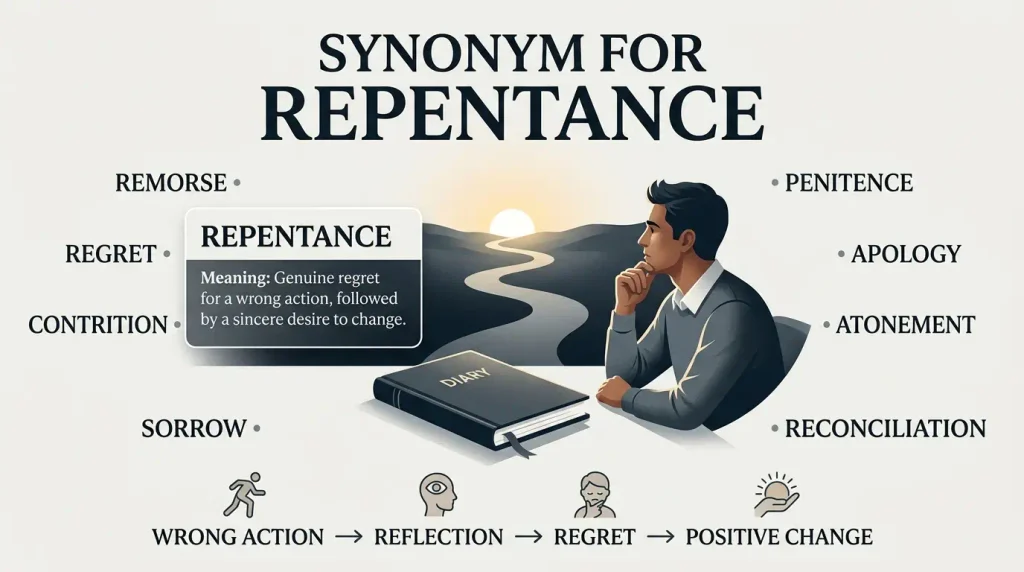
The best synonyms for repentance include remorse, contrition, penitence, regret, and atonement. These alternatives describe deep sorrow for past wrongs. Use remorse for emotional guilt, contrition for formal sorrow, and atonement for making amends through actions.
Synonym for repentance is a popular search phrase when you need to express deep regret or moral change. Imagine realizing a past mistake and searching for the exact word to convey your heartfelt sorrow. Finding the right term makes your personal reflections and narratives much more moving.
Writers search for a synonym for repentance to avoid repeating terms throughout modern literature and essays. Expanding your vocabulary helps you express emotional growth and moral awareness with absolute precision.
This specific word appears constantly in spiritual texts, philosophical discussions, and dramatic storytelling. Knowing alternative terms keeps your writing fresh and engaging for modern readers.
Students, bloggers, content writers, and daily English users find this vocabulary exploration very useful. Precise word choices prevent writing from sounding flat or repetitive. Using a synonym for repentance ensures your essays and personal blogs truly shine.
Core Meaning: What Does “Repentance” Really Mean?
Repentance is a noun that refers to the sincere regret or remorse felt for past wrongs, accompanied by a genuine commitment to change one’s behavior for the better. It carries a profound moral and emotional weight.
Connotative Meaning
- Positive tone: Represents personal growth, moral renewal, forgiveness, and positive transformation.
- Negative tone: Associated with deep guilt, past wrongdoing, moral failure, and severe regret.
- Neutral tone: Used in analytical psychological discussions regarding behavioral modification.
Etymology
- Source Language: Old French repentance, stemming from Latin re-intensive prefix plus paenitere (to make regret).
- Old English (450–1100): Used native Germanic phrasing related to sorrow and turning away from sin.
- Middle English (1100–1500): Adopted the French derivative through religious and theological translations.
- Modern English (1500–Present): Broadened from strictly theological contexts into psychological and everyday secular self-reflection.
Pronunciation & Syllables
- US: /rɪˈpɛntəns/
- UK: /rɪˈpɛntəns/
- Syllables: re-pen-tance (3 syllables)
- Affixation Pattern: Root verb repent with noun suffix -ance.
- Root: repent
- Prefix: re-
- Suffix: -ance
Synonyms List
Remorse (Noun) — US: /rɪˈmɔːrs/ | UK: /rɪˈmɔːs/
- Meaning: Deep regret or guilt felt for a wrong that someone has committed.
- Tone/Register: Formal / Psychological
- Example: He showed genuine remorse for his careless actions during the meeting.
- Example: The judge looked for signs of remorse before sentencing the defendant.
Contrition (Noun) — US: /kənˈtrɪʃən/ | UK: /kənˈtrɪʃən/
- Meaning: The state of feeling remorseful and penitent after a wrongdoing.
- Tone/Register: Formal / Academic
- Example: Her deep contrition convinced everyone that she had truly changed.
- Example: A written apology is a good start, but true contrition takes time.
Penitence (Noun) — US: /ˈpɛnɪtəns/ | UK: /ˈpɛnɪtəns/
- Meaning: The action of feeling or showing sorrow and regret for having done wrong.
- Tone/Register: Literary / Formal
- Example: Monks spent their days in quiet prayer and solemn penitence.
- Example: Tears of penitence rolled down his cheeks as he confessed.
Regret (Noun) — US: /rɪˈɡrɛt/ | UK: /rɪˈɡrɛt/
- Meaning: A sad or disappointed feeling about something that has happened.
- Tone/Register: Everyday / Casual
- Example: She felt a deep regret for missing her best friend’s wedding.
- Example: Living with constant regret can weigh heavily on your mind.
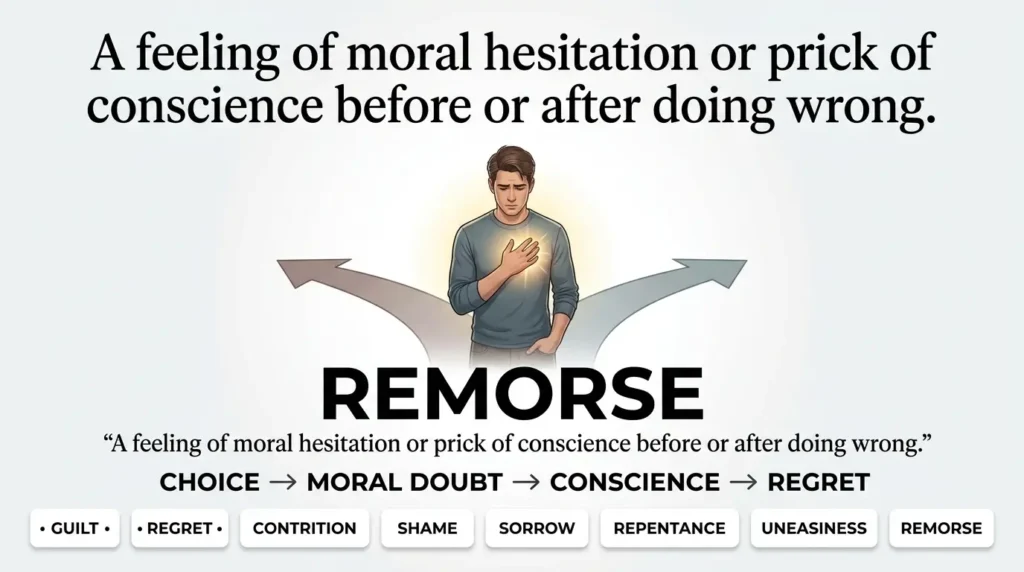
Compunction (Noun) — US: /kəmˈpʌŋkʃən/ | UK: /kəmˈpʌŋkʃən/
- Meaning: A feeling of moral hesitation or prick of conscience before or after doing wrong.
- Tone/Register: Formal / Literary
- Example: He spent the stolen money without a single moment of compunction.
- Example: She felt a sudden compunction about lying to her parents.
Penitency (Noun) — US: /ˈpɛnɪtənsi/ | UK: /ˈpɛnɪtənsi/
- Meaning: The quality or condition of being penitent and remorseful.
- Tone/Register: Archaic / Formal
- Example: Historical texts often emphasized lifelong penitency for grave errors.
- Example: The church sermon focused heavily on the path to true penitency.
Self-reproach (Noun) — US: /sɛlf rɪˈproʊtʃ/ | UK: /sɛlf rɪˈprəʊtʃ/
- Meaning: Blame or censure directed at oneself for a fault or mistake.
- Tone/Register: Psychological / Reflective
- Example: Years of silent self-reproach finally taught him to forgive himself.
- Example: Avoid harsh self-reproach when learning from unexpected failures.
Guilt (Noun) — US: /ɡɪlt/ | UK: /ɡɪlt/
- Meaning: The fact of having committed a specified or implied offense or crime.
- Tone/Register: Standard / Legal
- Example: The overwhelming weight of guilt forced him to tell the truth.
- Example: DNA evidence proved his guilt beyond any reasonable doubt.
Sorrow (Noun) — US: /ˈsɑːroʊ/ | UK: /ˈsɒrəʊ/
- Meaning: A feeling of deep distress caused by loss, disappointment, or wrongdoing.
- Tone/Register: Emotional / Literary
- Example: Her heart filled with profound sorrow after the tragic accident.
- Example: Sharing your sorrow with close friends can lighten emotional burdens.
Anguish (Noun) — US: /ˈæŋɡwɪʃ/ | UK: /ˈæŋɡwɪʃ/
- Meaning: Severe mental or physical pain or suffering over past mistakes.
- Tone/Register: Dramatic / Literary
- Example: He lived in mental anguish for months after making that mistake.
- Example: The mother felt deep anguish when her child fell ill.
Attrition (Noun – Theological) — US: /əˈtrɪʃən/ | UK: /əˈtrɪʃən/
- Meaning: Sorrow for sin motivated by fear of punishment rather than love of God.
- Tone/Register: Theological / Formal
- Example: The essay discussed the theological difference between attrition and contrition.
- Example: Spiritual advisors noted that true growth requires more than mere attrition.
Conscience-stricken (Adjective used as noun concept) — US: /ˈkɑːnʃəns strɪkən/ | UK: /ˈkɒnʃəns strɪkən/
- Meaning: Deeply troubled by a sense of guilt for past actions.
- Tone/Register: Descriptive / Literary
- Example: The conscience-stricken man returned the stolen wallet anonymously.
- Example: Feeling conscience-stricken is often the first step toward personal reform.
Penance (Noun) — US: /ˈpɛnəns/ | UK: /ˈpɛnəns/
- Meaning: Voluntary self-punishment inflicted as an outward expression of repentance.
- Tone/Register: Formal / Traditional
- Example: He offered to do extra chores around the house as penance.
- Example: Ancient traditions required strict acts of penance for severe transgressions.
Atonement (Noun) — US: /əˈtoʊnmənt/ | UK: /əˈtəʊnmənt/
- Meaning: Reparation or making amends for an injury or wrongdoing.
- Tone/Register: Formal / Literary
- Example: Community service was part of his atonement for past mistakes.
- Example: She sought lifelong atonement through charitable foundation work.
Redress (Noun) — US: /rɪˈdrɛs/ | UK: /rɪˈdrɛs/
- Meaning: Remedy or compensation for a wrong or grievance.
- Tone/Register: Legal / Formal
- Example: Citizens sought legal redress for the unfair business practices.
- Example: The company offered financial redress to affected customers.
Restitution (Noun) — US: /ˌrɛstɪˈtuːʃən/ | UK: /ˌrɛstɪˈtjuːʃən/
- Meaning: The restoration of something lost or stolen to its proper owner.
- Tone/Register: Legal / Professional
- Example: The court ordered full financial restitution for the damaged property.
- Example: Making restitution helps build trust after a major betrayal.
Amend (Noun context / Action) — US: /əˈmɛnd/ | UK: /əˈmɛnd/
- Meaning: An alteration or change made for the better.
- Tone/Register: Formal / Legal
- Example: He wanted to make amends for his thoughtless behavior.
- Example: Public officials proposed an important amendment to local housing laws.
Apology (Noun) — US: /əˈpɑːlədʒi/ | UK: /əˈpɒlədʒi/
- Meaning: A regretful acknowledgment of an offense or failure.
- Tone/Register: Everyday / Polite
- Example: She offered a sincere apology for arriving late to dinner.
- Example: A public apology helped restore public trust in the brand.
Plea (Noun) — US: /pliː/ | UK: /pliː/
- Meaning: An emotional request or legal statement of guilt or innocence.
- Tone/Register: Legal / Emotional
- Example: The defense entered a guilty plea during the morning session.
- Example: Her emotional plea for honesty moved the entire audience.
Confession (Noun) — US: /kənˈfɛʃən/ | UK: /kənˈfɛʃən/
- Meaning: A formal statement admitting that one is guilty of a crime.
- Tone/Register: Legal / Formal
- Example: Police recorded his full confession at the precinct station.
- Example: A written confession cleared up lingering doubts about the case.
Acknowledgment (Noun) — US: /əkˈnɑːlɪdʒmənt/ | UK: /əkˈnɒlɪdʒmᵊnt/
- Meaning: Acceptance of the truth or existence of something unpleasant.
- Tone/Register: Professional / Formal
- Example: His open acknowledgment of error earned everyone’s respect.
- Example: The report included an acknowledgment of past data flaws.
Admission (Noun) — US: /ədˈmɪʃən/ | UK: /ədˈmɪʃən/
- Meaning: A statement acknowledging the truth of something previously denied.
- Tone/Register: Formal / Legal
- Example: That surprising admission changed the direction of the investigation.
- Example: She made an honest admission about missing the project deadline.
Reclamation (Noun) — US: /ˌrɛkləˈmeɪʃən/ | UK: /ˌrɛkləˈmeɪʃən/
- Meaning: The act of returning something to a former, better state.
- Tone/Register: Formal / Environmental
- Example: Land reclamation projects restore damaged natural habitats.
- Example: Personal reclamation requires patience, discipline, and honest reflection.
Transformation (Noun) — US: /ˌtrænsfərˈmeɪʃən/ | UK: /ˌtrænsfɔːˈmeɪʃən/
- Meaning: A thorough or dramatic change in form or character.
- Tone/Register: Inspirational / General
- Example: His spiritual transformation inspired everyone in the community.
- Example: Continuous learning drives positive professional transformation.
Metanoia (Noun) — US: /ˌmɛtəˈnɔɪə/ | UK: /ˌmɛtəˈnɔɪə/
- Meaning: A transformative change of heart; a spiritual conversion or shift.
- Tone/Register: Philosophical / Literary
- Example: Deep meditation triggered a profound internal metanoia in him.
- Example: The novel explores the protagonist’s gradual psychological metanoia.
Rebirth (Noun) — US: /ˈriːbɜːrθ/ | UK: /ˈriːbɜːθ/
- Meaning: The process of being reincarnated or experiencing a fresh start.
- Tone/Register: Literary / Inspirational
- Example: Spring symbolizes a natural rebirth of plant life and color.
- Example: Overcoming adversity can lead to a powerful personal rebirth.
Renewal (Noun) — US: /rɪˈnuːəl/ | UK: /rɪˈnuːəl/
- Meaning: The replacement or repair of something to make it like new.
- Tone/Register: Formal / Positive
- Example: The city announced a major urban renewal plan for downtown.
- Example: Journaling brings mental clarity and spiritual renewal.
Regeneration (Noun) — US: /ˌriːdʒɛnəˈreɪʃən/ | UK: /ˌriːdʒɛnəˈreɪʃən/
- Meaning: The action or process of regenerating or being regenerated.
- Tone/Register: Scientific / Formal
- Example: Certain biological tissues possess remarkable powers of regeneration.
- Example: Economic regeneration boosted local employment opportunities.
Conversion (Noun) — US: /kənˈvɜːrʒən/ | UK: /kənˈvɜːʃən/
- Meaning: The process of changing or causing something to change in form.
- Tone/Register: Formal / Technical
- Example: The building underwent a conversion into modern apartments.
- Example: Her spiritual conversion brought immense peace to her soul.
Reformation (Noun) — US: /ˌrɛfərˈmeɪʃən/ | UK: /ˌrɛfəˈmeɪʃən/
- Meaning: The action or process of improving something or someone.
- Tone/Register: Historical / Formal
- Example: The historical reformation changed European political landscapes.
- Example: Prison programs focus heavily on the personal reformation of inmates.
Rehabilitation (Noun) — US: /ˌriːhəˌbɪlɪˈteɪʃən/ | UK: /ˌriːhəˌbɪlɪˈteɪʃən/
- Meaning: The action of restoring someone to health or normal life.
- Tone/Register: Medical / Professional
- Example: Physical rehabilitation helps athletes recover after knee surgery.
- Example: The center provides drug rehabilitation and counseling support.
Redemption (Noun) — US: /rɪˈdɛmpʃən/ | UK: /rɪˈdɛmpʃən/
- Meaning: The action of saving or being saved from sin, error, or evil.
- Tone/Register: Literary / Spiritual
- Example: The character’s journey toward redemption drove the plot forward.
- Example: Everyone deserves a chance at personal redemption and growth.
Salvage (Noun) — US: /ˈsælvɪdʒ/ | UK: /ˈsælvɪdʒ/
- Meaning: The rescue of property or a situation from loss or danger.
- Tone/Register: Practical / Maritime
- Example: Divers attempted the salvage of sunken cargo off the coast.
- Example: He worked hard to salvage his damaged professional reputation.
Rescue (Noun) — US: /ˈrɛskjuː/ | UK: /ˈrɛskjuː/
- Meaning: The act of saving someone from danger or distress.
- Tone/Register: Urgent / Everyday
- Example: Coast guard teams executed a daring ocean rescue mission.
- Example: Financial grants came as a rescue for small businesses.
Salvation (Noun) — US: /sælˈveɪʃən/ | UK: /salˈveɪʃən/
- Meaning: Preservation or deliverance from harm, ruin, or loss.
- Tone/Register: Spiritual / Formal
- Example: Ancient philosophies often equated wisdom with spiritual salvation.
- Example: Finding a mentor was his salvation during career struggles.
Absolution (Noun) — US: /ˌæbsəˈluːʃən/ | UK: /ˌabsəˈluːʃən/
- Meaning: Formal release from guilt, obligation, or punishment.
- Tone/Register: Religious / Legal
- Example: He sought absolution for past mistakes through honest confession.
- Example: The legal pardon provided complete absolution from charges.
Forgiveness (Noun) — US: /fərˈɡɪvnəs/ | UK: /fəˈɡɪvnəs/
- Meaning: The action or process of forgiving or being forgiven.
- Tone/Register: Emotional / Universal
- Example: Offering forgiveness brings peace to both parties involved.
- Example: She asked for forgiveness after a heated argument.
Pardon (Noun) — US: /ˈpɑːrdn/ | UK: /ˈpɑːdən/
- Meaning: The action of forgiving or being forgiven for an error or offense.
- Tone/Register: Legal / Formal
- Example: The governor issued a formal pardon for the convicted person.
- Example: He asked for a brief pardon when interrupting the speaker.
Grace (Noun) — US: /ɡreɪs/ | UK: /ɡreɪs/
- Meaning: Simple elegance or unearned divine favor and forgiveness.
- Tone/Register: Literary / Spiritual
- Example: She handled the awkward situation with remarkable grace.
- Example: Unearned grace offers comfort during difficult life trials.
Cleansing (Noun) — US: /ˈklɛnzɪŋ/ | UK: /ˈklɛnzɪŋ/
- Meaning: The process of making something thoroughly clean or pure.
- Tone/Register: Descriptive / Symbolic
- Example: Spring cleaning feels like a spiritual cleansing of the home.
- Example: Emotional journaling acts as a cleansing release for anxiety.
Purification (Noun) — US: /ˌpjʊrɪfɪˈkeɪʃən/ | UK: /ˌpjʊrɪfɪˈkeɪʃən/
- Meaning: The removal of impurities or contaminants from a substance.
- Tone/Register: Scientific / Formal
- Example: Water purification plants supply safe drinking water to cities.
- Example: Old rituals often involved symbolic purification baths.
Expiation (Noun) — US: /ˌɛkspiˈeɪʃən/ | UK: /ˌɛkspiˈeɪʃən/
- Meaning: The act of making amends or reparation for guilt or sin.
- Tone/Register: Literary / Theological
- Example: He performed acts of charity as expiation for past wrongs.
- Example: The epic poem centers on ritual expiation and divine favor.
Propitiation (Noun) — US: /prəˌpɪʃiˈeɪʃən/ | UK: /prəˌpɪʃiˈeɪʃən/
- Meaning: The action of appeasing a god, spirit, or offended person.
- Tone/Register: Theological / Archaic
- Example: Ancient offerings served as propitiation to secure bountiful harvests.
- Example: Dialogue acts as a modern propitiation between conflicting nations.
Reconciliation (Noun) — US: /ˌrɛkənsɪliˈeɪʃən/ | UK: /ˌrɛkənsɪliˈeɪʃən/
- Meaning: The restoration of friendly relations after an argument or dispute.
- Tone/Register: Diplomatic / Formal
- Example: Both leaders worked toward peaceful political reconciliation.
- Example: A heartfelt conversation led to full reconciliation between friends.
Rapprochement (Noun) — US: /ˌræprɑːʃˈmɑːŋ/ | UK: /ræˈprɒʃmɒŋ/
- Meaning: An establishment or resumption of harmonious relations.
- Tone/Register: Diplomatic / Formal
- Example: The diplomatic summit signaled a welcome rapprochement between nations.
- Example: Business partners achieved a steady rapprochement after negotiations.
Pacification (Noun) — US: /ˌpæsɪfɪˈkeɪʃən/ | UK: /ˌpæsɪfɪˈkeɪʃən/
- Meaning: The act of pacifying or bringing about peace in a conflict zone.
- Tone/Register: Political / Formal
- Example: Peacekeepers worked on the difficult pacification of the region.
- Example: Diplomacy requires patience rather than aggressive pacification.
Appeasement (Noun) — US: /əˈpiːzmənt/ | UK: /əˈpiːzmənt/
- Meaning: The action or process of pacifying someone by conceding demands.
- Tone/Register: Political / Historical
- Example: Historical analysis warns against the dangers of political appeasement.
- Example: Offering compromises is different from weak appeasement.
Composure (Noun) — US: /kəmˈpoʊʒər/ | UK: /kəmˈpəʊʒə/
- Meaning: The state or feeling of being calm and in control of one’s mind.
- Tone/Register: Psychological / Professional
- Example: She maintained her professional composure during the crisis.
- Example: Taking deep breaths helps recover mental composure quickly.
Serenity (Noun) — US: /səˈrɛnɪti/ | UK: /səˈrɛnɪti/
- Meaning: The state of being calm, peaceful, and untroubled.
- Tone/Register: Peaceful / Literary
- Example: Walking through the quiet forest brought him deep serenity.
- Example: Meditation fosters inner serenity amidst chaotic work schedules.
Tranquility (Noun) — US: /træŋˈkwɪlɪti/ | UK: /træŋˈkwɪlɪti/
- Meaning: The quality or state of being peaceful and calm.
- Tone/Register: Formal / Descriptive
- Example: The secluded mountain cabin offered complete tranquility.
- Example: Enjoying nature helps restore mental tranquility after stress.
Synonyms by Tone
- Positive / Uplifting: Redemption, Forgiveness, Reconciliation, Serenity, Renewal, Grace
- Neutral / Analytical: Remorse, Contrition, Acknowledgment, Admission, Restitution
- Negative / Heavy: Guilt, Anguish, Regret, Self-reproach, Sorrow
Mini Comparison
Repentance vs. Remorse vs. Contrition
- Repentance: A profound moral shift involving both sorrow for past wrongdoing and a firm commitment to change behavior.
- Remorse: A deeply emotional feeling of guilt or distress over a specific past action, without necessarily implying lifestyle reform.
- Contrition: A formal or literary term highlighting crushed sorrow and penitence, often associated with seeking formal forgiveness.
Context-Based Usage
- Daily Conversation: Use everyday terms like regret or apology when discussing minor personal mistakes with friends.
- Writing or Blogging: Elevate emotional storytelling by substituting repetitive words with remorse, redemption, or contrition.
- Professional or Academic Tone: Opt for formal vocabulary such as restitution, reconciliation, or rehabilitation in formal essays.
- Creative or Informal Use: Lean into dramatic literary terms like anguish or metanoia to build vivid character arcs.
Common Mistakes & Native Usage
- Confusing Remorse with Repentance: Remorse focuses purely on feeling bad about an action, whereas true repentance involves active behavioral change.
- Overusing Religious Terms: Avoid heavy theological words like absolution in casual workplace conversations where simpler words work better.
- Register Mismatch: Do not use archaic terms like penitency in modern psychological or business writing.
Real-Life Mini Scenarios
- Workplace: An employee shows sincere remorse for missing a crucial deadline and presents a detailed fix.
- Social Situations: Two friends work toward a joyful reconciliation after a minor disagreement.
- Media / Pop Culture: A film critic describes a character’s powerful cinematic journey toward redemption.
- Writing or Storytelling: An author writes about a protagonist experiencing deep internal metanoia.
Conclusion
Expanding your vocabulary with precise alternatives transforms how you discuss moral growth, emotional healing, and personal reflection. Exploring synonyms for repentance and different words helps you communicate clarity and depth across various writing formats.
Integrating these terms into your daily conversations makes your communication engaging and emotionally resonant. Thoughtful word choices elevate your blogging, essays, and everyday messages far above standard, repetitive phrasing.
Take time to practice these dynamic words in your emails, essays, and everyday conversations today. Embracing a richer vocabulary unlocks new levels of confidence and creative freedom in your writing journey, guiding you toward true repentance in your creative expression.
Practice Exercise
- Which synonym best describes deep emotional guilt or distress over a past action without necessarily implying reform?
- A) Redemption
- B) Remorse
- C) Reconciliation
- D) Serenity
- What term refers to a profound, transformative change of heart or spiritual shift?
- A) Regret
- B) Metanoia
- C) Apology
- D) Guilt
- Which formal term describes restoring something lost or stolen to its proper owner?
- A) Restitution
- B) Anguish
- C) Sorrow
- D) Composure
- If you want a common, everyday word for feeling sorry about missing an event, which option works best?
- A) Contrition
- B) Regret
- C) Penitence
- D) Expiation
- Which word is most appropriate for formal legal forgiveness granted by a government official?
- A) Pardon
- B) Metanoia
- C) Compunction
- D) Attrition
- What term describes repairing broken friendly relations between two people?
- A) Reconciliation
- B) Anguish
- C) Guilt
- D) Self-reproach
- Which word captures the emotional state of being calm, peaceful, and untroubled?
- A) Serenity
- B) Remorse
- C) Contrition
- D) Penitence
- How would an author describe a character’s journey toward saving their soul from moral ruin?
- A) Redemption
- B) Regret
- C) Apology
- D) Compunction
- Which term describes voluntary self-punishment as an outward sign of sorrow?
- A) Penance
- B) Serenity
- C) Grace
- D) Harmony
- What is a suitable term for formal release from guilt or obligation in a legal context?
- A) Absolution
- B) Anguish
- C) Sorrow
- D) Regret
Reflection Task:
Write one original sentence using the synonym contrition to describe a sincere apology.
Answer Key:
1: B | 2: B | 3: A | 4: B | 5: A | 6: A | 7: A | 8: A | 9: A | 10: A
FAQs
Why do writers look for alternatives to traditional emotional words?
Writers search for alternatives to avoid repetitive phrasing in psychological essays, memoirs, and fiction. Swapping basic words for precise semantic variants improves emotional resonance and professional authority.
Is there a difference between remorse and repentance in modern English?
Yes, remorse focuses strictly on feeling painful guilt over a past mistake. Repentance includes that sorrow but adds an active, intentional commitment to change one’s behavior moving forward.
How does understanding word connotation improve creative writing?
Understanding connotation helps writers select terms that accurately reflect character emotions. Choosing literary words like metanoia sets a sophisticated tone for deep personal growth narratives.
Can I use formal spiritual terms like absolution in casual conversations?
Formal spiritual terms sound overly dramatic in casual chats. It is best to use neutral alternatives like forgiveness or apology when talking with friends.
What is the quickest way to remember new vocabulary for emotional states?
The most effective retention strategy is writing original personal sentences mirroring real-life scenarios, such as making amends or showing remorse after an argument.

Jameel Hassan is the founder and lead writer at SynonymsCloud.com, a trusted online platform dedicated to English vocabulary and effective communication. He is passionate about helping students, writers, professionals, and lifelong learners discover the right words to express their ideas with clarity, precision, and confidence.
At SynonymsCloud.com, every article is thoroughly researched and carefully written to provide accurate, practical, and easy-to-understand guidance on synonyms, antonyms, word meanings, idioms, and vocabulary. With a strong commitment to quality, real-world usage, and clear explanations, the website helps readers expand their vocabulary, improve their writing, and communicate more effectively in both academic and professional settings.