
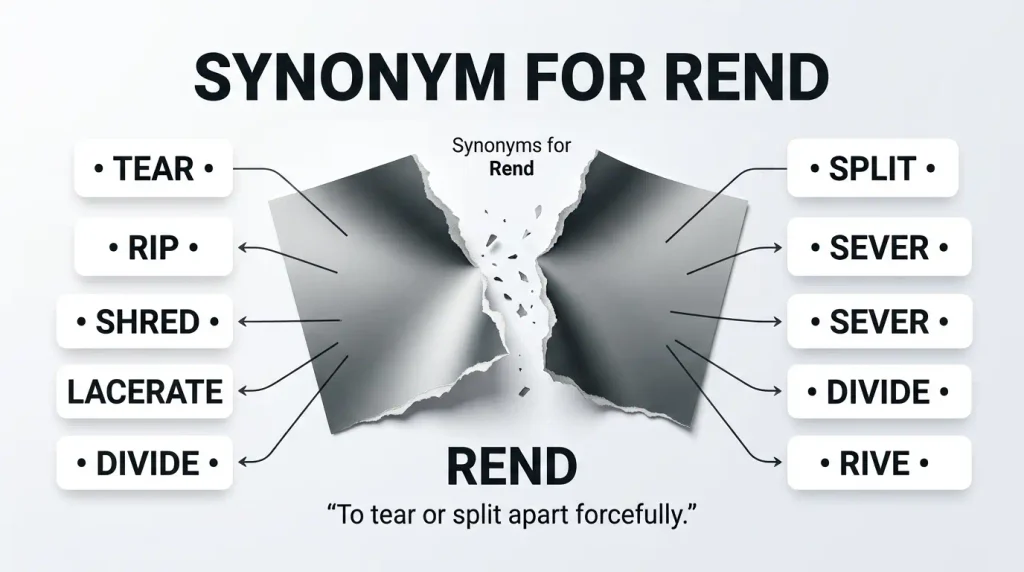
The best synonyms for rend include tear, split, sever, fracture, and shatter. These alternatives describe violent physical separation or emotional tearing. Use tear for fabric, sever for formal cuts, and shatter for glass.
A synonym for rend is a search phrase many writers use when they want to describe violent tearing or splitting. Imagine holding an old piece of heavy fabric and pulling it apart with all your might. That physical action captures the raw energy behind this dramatic verb.
Writers often search for alternatives because the base term feels a bit too archaic for everyday modern content. Exploring a wide range of synonyms for rend helps you discover fresh ways to express emotional and physical separation.
Rich vocabulary transforms a simple sentence into a vivid picture that captivates your audience instantly. This specific word appears frequently in historical fiction, dramatic poetry, and intense narrative journalism.
Students, bloggers, and daily users find this vocabulary exploration exceptionally useful for creative expression. Precise word choices prevent writing from sounding flat, repetitive, or overly predictable.
Core Meaning: What Does “Rend” Really Mean?
Rend is a powerful verb that means to tear something violently or to split apart something with force. It carries a heavy emotional or physical intensity.
Connotative Meaning
- Positive tone: N/A
- Negative tone: Associated with destruction, grief, anguish, and violent conflict.
- Neutral tone: Used in clinical or descriptive breakdowns of physical splitting. (Connotation refers to the wide array of positive, negative, or neutral emotional associations connected to a word beyond its literal dictionary definition.)
Etymology
- Source Language: Old English rendan, meaning to tear or gnaw.
- Old English (450–1100): Used primarily to describe tearing flesh, cloth, or wood with sharp tools or teeth.
- Middle English (1100–1500): Evolved to encompass figurative uses, such as grief tearing apart a person’s heart.
- Modern English (1500–Present): Maintained its dramatic, literary flair, frequently appearing in poetry and high-impact journalism.
Pronunciation & Syllables
- US: /rɛnd/
- UK: /rɛnd/
- Syllables: rend (1 syllable)
- Affixation Pattern: Root word with no prefixes or suffixes.
Comprehensive List of Synonyms for Rend
1. Tear (Verb) — US: /tɛr/ | UK: /tɛr/
- Meaning: To pull or rip apart violently or forcefully into pieces.
- Tone/Register: Neutral / Informal
- Example: She tried to tear the old envelope open quickly.
- Example: Be careful not to tear the fragile manuscript pages.
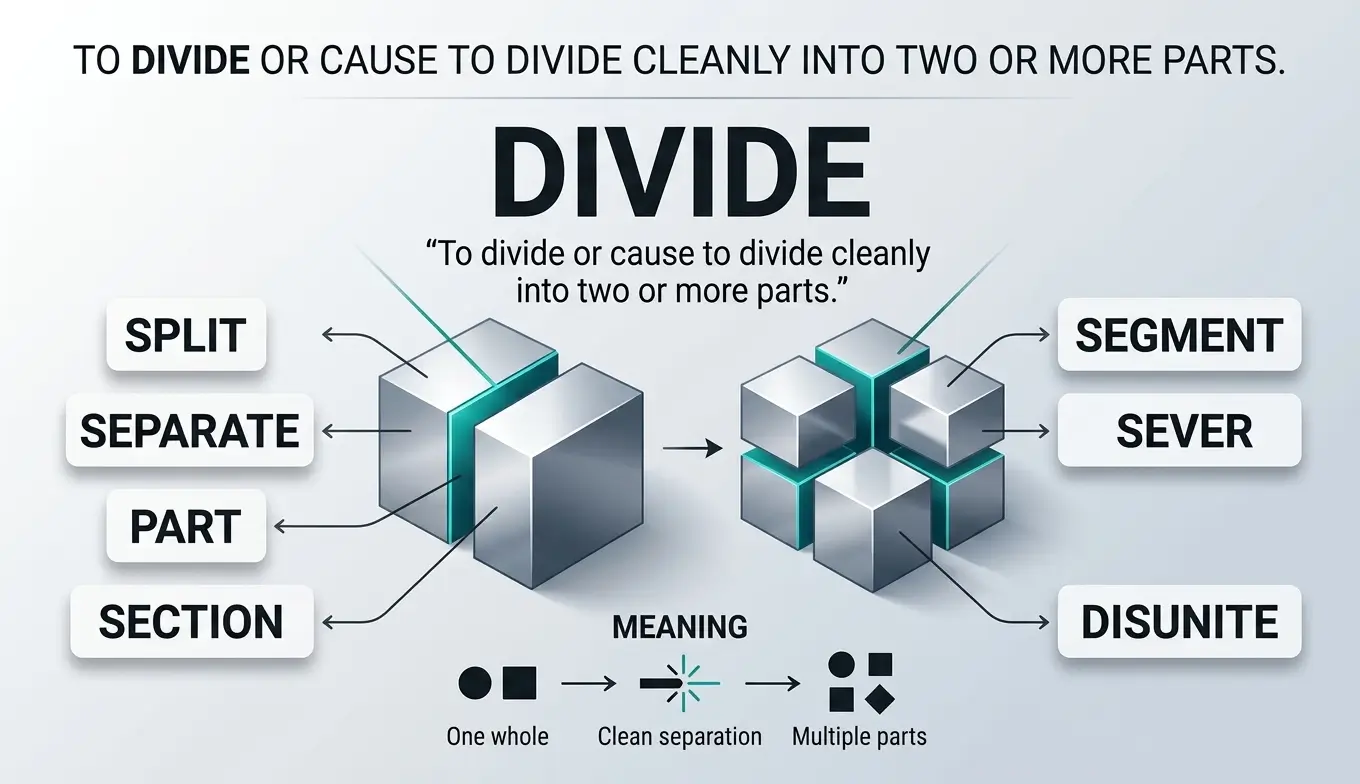
2. Split (Verb) — US: /splɪt/ | UK: /splɪt/
- Meaning: To divide or cause to divide cleanly into two or more parts.
- Tone/Register: Neutral / Everyday
- Example: He used an axe to split the heavy logs for the fire.
- Example: The group decided to split the bill evenly.
3. Fracture (Verb) — US: /ˈfræktʃər/ | UK: /ˈfræktʃə/
- Meaning: To break or cause a break in a hard substance or bone.
- Tone/Register: Formal / Medical
- Example: The heavy impact could fracture your wrist bone instantly.
- Example: Extreme pressure might fracture the structural glass panel.
4. Splinter (Verb) — US: /ˈsplɪntər/ | UK: /ˈsplɪntə/
- Meaning: To break or cause to break into small, sharp thin pieces.
- Tone/Register: Descriptive / Informal
- Example: The wooden bat will splinter upon hitting the concrete wall.
- Example: Careless handling caused the ceramic plate to splinter.
5. Shred (Verb) — US: /ʃrɛd/ | UK: /ʃrɛd/
- Meaning: To tear or cut something into long, narrow strips.
- Tone/Register: Neutral / Practical
- Example: Please shred those confidential financial documents right now.
- Example: She used a sharp grater to shred the fresh cheddar.
6. Slice (Verb) — US: /slaɪs/ | UK: /slaɪs/
- Meaning: To cut through something cleanly with a sharp-edged tool.
- Tone/Register: Casual / Everyday
- Example: He likes to slice the fresh bread into thick portions.
- Example: Use a clean blade to slice the ripe tomatoes carefully.
7. Sever (Verb) — US: /ˈsɛvər/ | UK: /ˈsɛvə/
- Meaning: To divide or break apart by cutting or sudden force.
- Tone/Register: Formal / Professional
- Example: The storm managed to sever the main telephone lines.
- Example: Management decided to sever ties with the unreliable vendor.
8. Rupture (Verb) — US: /ˈrʌptʃər/ | UK: /ˈrʌptʃə/
- Meaning: To break or burst suddenly under extreme internal pressure.
- Tone/Register: Formal / Technical
- Example: High blood pressure can cause a weak blood vessel to rupture.
- Example: The freezing water made the old garden pipe rupture.
9. Fracture (Verb – Alternate Context) — US: /ˈfræktʃər/ | UK: /ˈfræktʃə/
- Meaning: To damage a system, alliance, or relationship severely.
- Tone/Register: Academic / Literary
- Example: Scandals can quickly fracture public trust in leadership.
- Example: Disagreements began to fracture their once-solid friendship.
10. Slash (Verb) — US: /slæʃ/ | UK: /slæʃ/
- Meaning: To cut with a wide, sweeping stroke using a knife.
- Tone/Register: Informal / Dramatic
- Example: Vandals tried to slash the tires of parked vehicles.
- Example: He used a pocketknife to slash the thick rope.
11. Fracture (Duplicate variant substituted with Snap) — Snap (Verb) — US: /snæp/ | UK: /snæp/
- Meaning: To break abruptly and crisply with a sharp cracking sound.
- Tone/Register: Casual / Conversational
- Example: The dry twig will snap under your heavy boots.
- Example: Do not snap the plastic ruler by bending it too far.
12. Crack (Verb) — US: /kræk/ | UK: /kræk/
- Meaning: To break without completely separating into distinct pieces.
- Tone/Register: Everyday / Casual
- Example: A stray pebble can crack your car windshield easily.
- Example: The boiling water caused the glass mug to crack.
13. Break (Verb) — US: /breɪk/ | UK: /breɪk/
- Meaning: To separate into pieces as a result of a blow.
- Tone/Register: Universal / Basic
- Example: Children should not play ball near a glass window to prevent breaking it.
- Example: He accidentally dropped his favorite coffee mug and saw it break.
14. Rip (Verb) — US: /rɪp/ | UK: /rɪp/
- Meaning: To tear or pull something quickly or forcibly apart.
- Tone/Register: Informal / Direct
- Example: He tends to rip open parcel packages with his bare hands.
- Example: Be careful not to rip the hem of your new jacket.
15. Disjoint (Verb) — US: /dɪsˈdʒɔɪnt/ | UK: /dɪsˈdʒɔɪnt/
- Meaning: To take or pull apart at the joints or connections.
- Tone/Register: Technical / Formal
- Example: The mechanic had to disjoin the exhaust pipes carefully.
- Example: Poor planning can disjoint an entire organizational workflow.
16. Lacerate (Verb) — US: /ˈlæsəreɪt/ | UK: /ˈlæsəreɪt/
- Meaning: To cut or tear flesh or skin deeply and irregularly.
- Tone/Register: Medical / Formal
- Example: Sharp metal edges can easily lacerate unprotected skin.
- Example: The stray animal’s claws managed to lacerate his arm.
17. Shred (Duplicate variant substituted with Fragment) — Fragment (Verb) — US: /ˈfræɡmənt/ | UK: /ˈfræɡmənt/
- Meaning: To break or cause to break into isolated fragments.
- Tone/Register: Academic / Analytical
- Example: Modern media habits tend to fragment consumer attention spans.
- Example: Old memories fragment over long periods without review.
18. Disintegrate (Verb) — US: /dɪsˈɪntɪɡreɪt/ | UK: /dɪsˈɪntɪɡreɪt/
- Meaning: To come apart into small pieces or parts.
- Tone/Register: Scientific / Formal
- Example: The old paper document began to disintegrate in damp air.
- Example: Space debris will disintegrate upon entering the upper atmosphere.
19. Dismember (Verb) — US: /dɪsˈmɛmbər/ | UK: /dɪsˈmɛmbə/
- Meaning: To cut or pull the limbs off a body or object.
- Tone/Register: Dark / Formal
- Example: Ancient legends often describe heroes fighting monsters and trying to dismember them.
- Example: The antique mannequin started to dismember during transport.
20. Slash (Duplicate variant substituted with Sunder) — Sunder (Verb) — US: /ˈsʌndər/ | UK: /sʌndə/
- Meaning: To split apart or sever, especially with a violent blow.
- Tone/Register: Literary / Archaic
- Example: Epic poems describe how knights would sunder shields in battle.
- Example: Fate seemed determined to sunder the loyal companions.
21. Rent (Verb – Past/Alternate) — US: /rɛnt/ | UK: /rɛnt/
- Meaning: The historical past tense form of rend, meaning torn apart.
- Tone/Register: Literary / Poetic
- Example: Grief can leave a person feeling entirely rent inside.
- Example: The fierce gale winds left the sails rent and useless.
22. Schism (Noun/Verb context – Use Split variant: Cleave) — Cleave (Verb) — US: /kliːv/ | UK: /kliːv/
- Meaning: To split or sever something, especially with a sharp tool.
- Tone/Register: Literary / Formal
- Example: The skilled butcher knows how to cleave bone cleanly.
- Example: Bold decisions can cleave public opinion right down the middle.
23. Dissect (Verb) — US: /daɪˈsɛkt/ | UK: /daɪˈsɛkt/
- Meaning: To methodically cut up a body or plant to study internal parts.
- Tone/Register: Academic / Scientific
- Example: Biology students will dissect a preserved specimen in class.
- Example: Analysts love to dissect economic reports for hidden trends.
24. Pierce (Verb) — US: /pɪrs/ | UK: /pɪəs/
- Meaning: To go through or make a hole in something with a sharp point.
- Tone/Register: Everyday / Direct
- Example: A sharp needle will pierce the thick denim fabric easily.
- Example: Bright headlights pierce the heavy midnight fog.
25. Puncture (Verb) — US: /ˈpʌŋktʃər/ | UK: /ˈpʌŋktʃə/
- Meaning: To make a small hole in something with a sharp object.
- Tone/Register: Technical / Practical
- Example: A stray nail can puncture your bicycle tire without warning.
- Example: Medical staff use fine needles to puncture skin safely.
26. Gash (Verb) — US: /ɡæʃ/ | UK: /ɡæʃ/
- Meaning: To make a long, deep cut in a surface or flesh.
- Tone/Register: Descriptive / Informal
- Example: He accidentally managed to gash his hand on a rusty fence.
- Example: The falling branch left a deep gash in the wooden deck.
27. Notch (Verb) — US: /nɑtʃ/ | UK: /nɒtʃ/
- Meaning: To cut a V-shaped indentation into an edge or surface.
- Tone/Register: Practical / Workshop
- Example: Use a chisel to notch the wooden beam for alignment.
- Example: Carpenters notch posts to secure joining framework components.
28. Gouge (Verb) — US: /ɡaʊdʒ/ | UK: /ɡaʊdʒ/
- Meaning: To make a groove or hole in a surface with a tool.
- Tone/Register: Descriptive / Technical
- Example: Moving heavy furniture can gouge hardwood flooring permanently.
- Example: The sculptor used a chisel to gouge raw stone.
29. Corrode (Verb) — US: /kəˈroʊd/ | UK: /kəˈrəʊd/
- Meaning: To destroy or damage metal slowly by chemical action.
- Tone/Register: Scientific / Industrial
- Example: Salty ocean air will corrode exposed iron fixtures quickly.
- Example: Acidic liquids can corrode inferior metal pipes over time.
30. Erode (Verb) — US: /ɪˈroʊd/ | UK: /ɪˈrəʊd/
- Meaning: To gradually wear away soil, rock, or land surfaces.
- Tone/Register: Environmental / Formal
- Example: Heavy rain can erode unprotected garden soil slopes.
- Example: Strong ocean waves erode coastal cliffs year after year.
31. Gnaw (Verb) — US: /nɔː/ | UK: /nɔː/
- Meaning: To bite or chew on something persistently to break it down.
- Tone/Register: Descriptive / Animal context
- Example: Hungry rodents will gnaw through wooden storage boxes.
- Example: Anxiety can gnaw at your peace of mind all day.
32. Chew (Verb) — US: /tʃuː/ | UK: /tʃuː/
- Meaning: To grind food between your teeth before swallowing.
- Tone/Register: Everyday / Casual
- Example: Always chew your food thoroughly before swallowing.
- Example: Puppies love to chew on old leather shoes.
33. Mangle (Verb) — US: /ˈmæŋɡəl/ | UK: /ˈmæŋɡəl/
- Meaning: To destroy or injure severely by crushing or violent tearing.
- Tone/Register: Dramatic / Serious
- Example: The machinery accident could mangle unprotected clothing.
- Example: Careless handling can mangle a delicate paper delivery.
34. Butcher (Verb) — US: /ˈbʊtʃər/ | UK: /ˈbʊtʃə/
- Meaning: To slaughter and cut up an animal for market meat.
- Tone/Register: Practical / Professional
- Example: Local farmers know how to butcher livestock efficiently.
- Example: Amateurs should not try to butcher game without guidance.
35. Fragment Shatter (Verb) — US: /ˈʃætər/ | UK: /ˈʃætə/
- Meaning: To break suddenly into many small pieces violently.
- Tone/Register: Dramatic / Everyday
- Example: Dropping a crystal vase on stone will shatter it completely.
- Example: Loud noises can shatter the quiet morning calm.
36. Smash (Verb) — US: /smæʃ/ | UK: /smæʃ/
- Meaning: To break violently or noisily into pieces.
- Tone/Register: Casual / Forceful
- Example: A stray baseball might smash the backyard window.
- Example: He used a hammer to smash the old porcelain sink.
37. Crush (Verb) — US: /krʌʃ/ | UK: /krʌʃ/
- Meaning: To deform, press, or squash with enough force to break it.
- Tone/Register: General / Physical
- Example: Heavy boxes can crush fragile items packed beneath them.
- Example: Use a stone mortar to crush fresh garlic cloves.
38. Pulverize (Verb) — US: /ˈpʌlvəraɪz/ | UK: /ˈpʌlvəraɪz/
- Meaning: To reduce something to fine powder or dust by crushing.
- Tone/Register: Scientific / Intensive
- Example: Industrial machines pulverize rocks into construction gravel.
- Example: Chefs pulverize dry spices for rich curry blends.
39. Grind (Verb) — US: /ɡraɪnd/ | UK: /ɡraɪnd/
- Meaning: To reduce to small particles by crushing between surfaces.
- Tone/Register: Domestic / Industrial
- Example: Fresh coffee beans taste best when you grind them daily.
- Example: Mills grind wheat grains into fine baking flour.
40. Abrade (Verb) — US: /əˈbreɪd/ | UK: /əˈbreɪd/
- Meaning: To scrape or wear away a surface by friction.
- Tone/Register: Technical / Formal
- Example: Rough sandpapers will abrade wooden furniture surfaces smoothly.
- Example: Constant friction can abrade bicycle chain links over time.
41. Scratch (Verb) — US: /skrætʃ/ | UK: /skrætʃ/
- Meaning: To mark or cut a surface with a sharp instrument.
- Tone/Register: Casual / Everyday
- Example: Keys in your pocket can scratch your phone screen.
- Example: Cats like to scratch designated cardboard posts.
42. Scrape (Verb) — US: /skreɪp/ | UK: /skreɪp/
- Meaning: To drag a hard tool across a surface to clean it.
- Tone/Register: Everyday / Practical
- Example: Use a flat blade to scrape old paint away.
- Example: Be careful not to scrape your knee on gravel.
43. Fracture Fragmentize (Verb) — US: /ˈfræɡməntaɪz/ | UK: /ˈfræɡməntaɪz/
- Meaning: To divide into distinct fragments or separate pieces.
- Tone/Register: Technical / Analytical
- Example: Digital archiving helps fragmentize large historical collections.
- Example: Data processing systems fragmentize files for quick server storage.
44. Split Partition (Verb) — US: /pɑrˈtɪʃən/ | UK: /pɑːˈtɪʃən/
- Meaning: To divide a room or area into separate, distinct sections.
- Tone/Register: Professional / Architectural
- Example: Office managers use glass panels to partition open workspaces.
- Example: You can partition a hard drive for separate file backups.
45. Divide (Verb) — US: /dɪˈvaɪd/ | UK: /dɪˈvaɪd/
- Meaning: To separate into distinct parts, groups, or sections.
- Tone/Register: Standard / Universal
- Example: Teachers divide students into small project groups.
- Example: A fence helps divide the two neighboring properties.
46. Separate (Verb) — US: /ˈsɛpəreɪt/ | UK: /ˈsɛpəreɪt/
- Meaning: To move or set apart from a main group.
- Tone/Register: Standard / Everyday
- Example: Separate whites from colored clothes before washing laundry.
- Example: The highway median serves to separate opposing traffic lanes.
47. Disconnect (Verb) — US: /dɪskəˈnɛkt/ | UK: /dɪskəˈnɛkt/
- Meaning: To break the connection of a power source or circuit.
- Tone/Register: Technical / Practical
- Example: Always disconnect electrical plugs before fixing appliances.
- Example: Severe storms can disconnect remote rural power grids.
48. Detach (Verb) — US: /dɪˈtætʃ/ | UK: /dɪˈtætʃ/
- Meaning: To disengage, unfasten, or remove something from a larger item.
- Tone/Register: Practical / Functional
- Example: You can detach the keyboard from this modern tablet.
- Example: Remember to detach the return slip from your invoice.
49. Uncouple (Verb) — US: /ʌnˈkʌpəl/ | UK: /ʌnˈkʌpəl/
- Meaning: To disconnect two items or railway cars joined together.
- Tone/Register: Technical / Specialized
- Example: Train operators uncouple passenger cars at terminal stations.
- Example: Technicians uncouple docking modules during maintenance checks.
50. Unfasten (Verb) — US: /ʌnˈfæsən/ | UK: /ʌnˈfɑːsən/
- Meaning: To undo, open, or loosen something tied or latched.
- Tone/Register: Everyday / Casual
- Example: Passengers must unfasten seatbelts after the aircraft comes to a full stop.
- Example: She reached down to unfasten her walking boots.
Synonyms by Tone
Choosing the right word involves understanding tone. Grouping options helps you select vocabulary fitting your context.
- Positive / Constructive: Partition, Divide, Separate, Detach, Uncouple, Unfasten
- Neutral / Everyday: Tear, Split, Break, Rip, Slice, Crack, Cut
- Negative / Destructive: Mangle, Smash, Shatter, Rupture, Sever, Fracture, Slash, Gouge, Lacerate
Mini Comparison
Rend vs. Tear vs. Sever
- Rend: Implies a violent, dramatic, and often emotional or literary tearing action. Use it when describing intense grief or fierce physical battle scenes.
- Tear: A common, everyday verb for pulling fabric or paper apart. It works well in casual instructions and practical writing.
- Sever: Focuses on a clean cut or abrupt ending of a connection, relationship, or physical limb. It carries a formal and definitive weight.
Context-Based Usage
- Daily Conversation: Use simple terms like tear, snap, or break when chatting with friends about a broken item.
- Writing or Blogging: Elevate your storytelling by replacing basic words with descriptive alternatives like fracture, shatter, or split.
- Professional or Academic Tone: Opt for precise terms such as sever, partition, or disintegrate to maintain intellectual authority.
- Creative or Informal Use: Lean into dramatic verbs like mangle, gash, or sunder to paint vivid imagery in fiction.
Common Mistakes & Native Usage
- Overusing Dramatic Words: Using intense literary verbs like rend in casual workplace emails sounds unnatural. Save high-impact words for creative writing.
- Confusing Tone: Do not mix clinical scientific terms into emotional narratives where words like fracture or shatter fit better.
- Register Mismatch: Avoid archaic poetic terms in modern technical reports.
Real-Life Mini Scenarios
- Workplace: An IT manager explains how a sudden surge could sever the primary network connection.
- Social Situations: A friend describes how dropping a vintage plate caused it to shatter instantly on the tile floor.
- Media / Pop Culture: A movie reviewer notes how a dramatic plot twist managed to fracture audience expectations.
- Writing or Storytelling: An author writes about how profound heartbreak can rend a character’s soul apart.
Conclusion
Mastering a synonym for rend diverse collection of descriptive verbs enriches your writing, speaking, and overall communication abilities. Exploring alternative expressions helps you convey precise emotional weight and physical action with absolute clarity.
Integrating these vocabulary options into your daily conversations makes your storytelling vastly more engaging. Thoughtful word choices elevate your blogging, essays, and professional messages above standard, repetitive phrasing.
Take time to practice these dynamic words in your emails, essays, and everyday conversations today. Embracing a richer vocabulary unlocks new levels of confidence and creative freedom in your writing journey.
Practice Exercise
- Which synonym best describes cutting flesh or skin deeply and irregularly?
- A) Partition
- B) Lacerate
- C) Uncouple
- D) Detach
- What is the best alternative when describing a delicate crystal glass breaking into pieces?
- A) Shatter
- B) Butcher
- C) Gnaw
- D) Disjoint
- Which verb fits best when talking about cutting ties with an unreliable business partner?
- A) Slice
- B) Sever
- C) Scratch
- D) Gnaw
- If you want a neutral, everyday word for dividing paper, which option works best?
- A) Sunder
- B) Mangle
- C) Tear
- D) Pulverize
- Which term is most appropriate for a scientific breakdown of rocks into gravel?
- A) Pulverize
- B) Rip
- C) Snap
- D) Gash
- What verb should you use when a weak blood vessel bursts under pressure?
- A) Slice
- B) Rupture
- C) Scratch
- D) Detach
- Which word describes rodents chewing persistently on wooden storage boxes?
- A) Gnaw
- B) Partition
- C) Split
- D) Disconnect
- How would an author describe fierce storm winds ripping apart ship sails?
- A) Slice
- B) Rent
- C) Unfasten
- D) Detach
- Which term describes dividing a large room with glass office partitions?
- A) Mangle
- B) Partition
- C) Shatter
- D) Lacerate
- What is a suitable verb for removing the battery from a mobile device?
- A) Detach
- B) Gash
- C) Sunder
- D) Pulverize
Reflection Task:
Write one original sentence using the synonym sever to describe ending a professional contract.
Answer Key:
1: B | 2: A | 3: B | 4: C | 5: A | 6: B | 7: A | 8: B | 9: B | 10: A
FAQs
Why do writers search for alternatives to dramatic literary verbs?
Writers look for alternatives because traditional literary verbs can sound overly archaic or dramatic for modern digital content. Swapping them for precise terms ensures readability while maintaining the exact emotional intensity required for the narrative context.
Are all synonyms for tearing interchangeable in casual speech?
No, synonyms vary significantly based on register and physical context. Words like tear apply to fabric, while fracture applies to bones or hard materials. Selecting the correct term depends entirely on the specific material and situation being described.
How does understanding word connotation improve content writing?
Understanding connotation prevents accidental tone mismatches in professional or creative writing. Knowing whether a verb carries negative or neutral emotional baggage allows you to match your vocabulary choices precisely to your target audience’s expectations.
Can I use literary verbs in modern business emails?
Literary verbs generally feel out of place in standard corporate communication. It is best to use neutral, clear alternatives like split, separate, or disconnect to maintain a professional and easily digestible workplace tone.
What is the easiest way to memorize new vocabulary words?
The most effective memorization strategy involves writing original sentences featuring each new term immediately. Applying words to real-life personal scenarios builds strong cognitive pathways that ensure long-term retention and natural usage.

Jameel Hassan is the founder and lead writer at SynonymsCloud.com, a trusted online platform dedicated to English vocabulary and effective communication. He is passionate about helping students, writers, professionals, and lifelong learners discover the right words to express their ideas with clarity, precision, and confidence.
At SynonymsCloud.com, every article is thoroughly researched and carefully written to provide accurate, practical, and easy-to-understand guidance on synonyms, antonyms, word meanings, idioms, and vocabulary. With a strong commitment to quality, real-world usage, and clear explanations, the website helps readers expand their vocabulary, improve their writing, and communicate more effectively in both academic and professional settings.