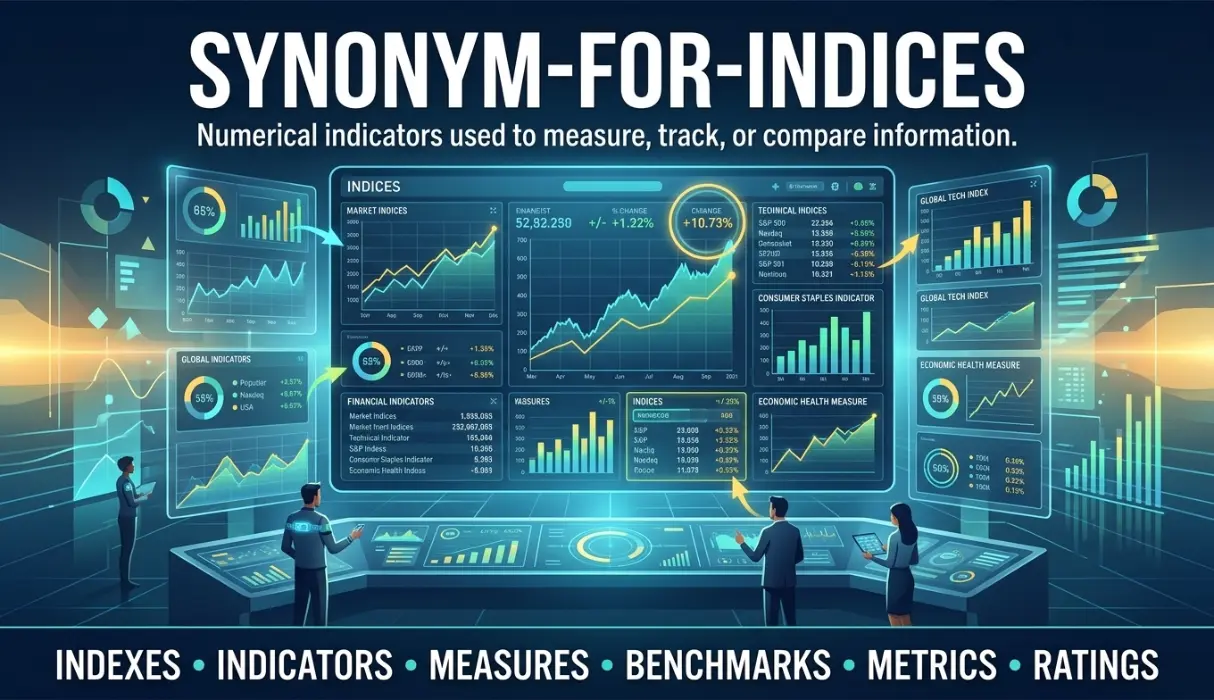
The best synonyms for indices depend on your exact context. Use metrics or indicators for data and trends, tables or directories for structured reference lists, and benchmarks or measures for standards of comparison. Selecting the right alternative instantly improves your writing clarity and professional tone.
A synonym for indices helps writers and students vary their vocabulary and communicate ideas more clearly. Whether you are writing a research paper, financial report, or blog post, using suitable alternatives can make your content more engaging and professional.
Repeating the same plural noun throughout an article can make your writing feel dull. Choosing a synonym for indices adds variety while helping you express measurements, indicators, lists, or statistical information more precisely.
Different alternatives can carry different meanings and levels of formality. Students may prefer terms such as indicators or measures, while content creators may choose metrics when discussing performance or data.
Learning a synonym for indices can strengthen your vocabulary and improve everyday communication. By selecting words that match your context, you can create clearer essays, reports, blogs, and professional content.
What Does “Indices” Really Mean?
Indices is the standard plural form of the noun index, referring to a systematic list, a guiding pointer, or a statistical indicator used to measure changes.
The tone of indices is almost entirely neutral, objective, and analytical, serving as a tool for clear data representation without emotional bias.
Native speakers use indices when discussing stock market performance, economic inflation data, book reference lists, or digital measurement metrics.
The word appears frequently in finance, mathematics, academia, and technology reporting.
Grammatically, indices is a plural noun derived from Latin roots, functioning as the direct subject or object in analytical sentences.
Connotative Meaning
- Positive tone: Used in contexts of growth, progress, or successful measurement.
- Negative tone: Applied when tracking declining metrics, inflation spikes, or economic downturns.
- Neutral tone: The default stance for raw statistical data, reference lists, and mathematical tables.
Etymology
The word indices comes directly from the Latin indicem, meaning an informer, sign, or index, stemming from the verb indicare (to point out).
- Old English (450–1100): The concept did not exist natively; Old English relied on native Germanic roots for pointing or showing.
- Middle English (1100–1500): Borrowed into English from Latin via Old French, initially referring to the forefinger or a table of contents in a manuscript.
- Modern English (1500–Present): Expanded into mathematical, scientific, and financial terminology as structured data systems grew more complex.
Pronunciation & Syllables
- US: /ˈɪn.də.siːz/
- UK: /ˈɪn.dɪ.siːz/
Syllables: in-di-ces
Affixation Pattern:
- Root: Index (Latin root indic-)
- Prefix: None
- Suffix: Plural suffix -es (replacing -ex)
Synonyms List
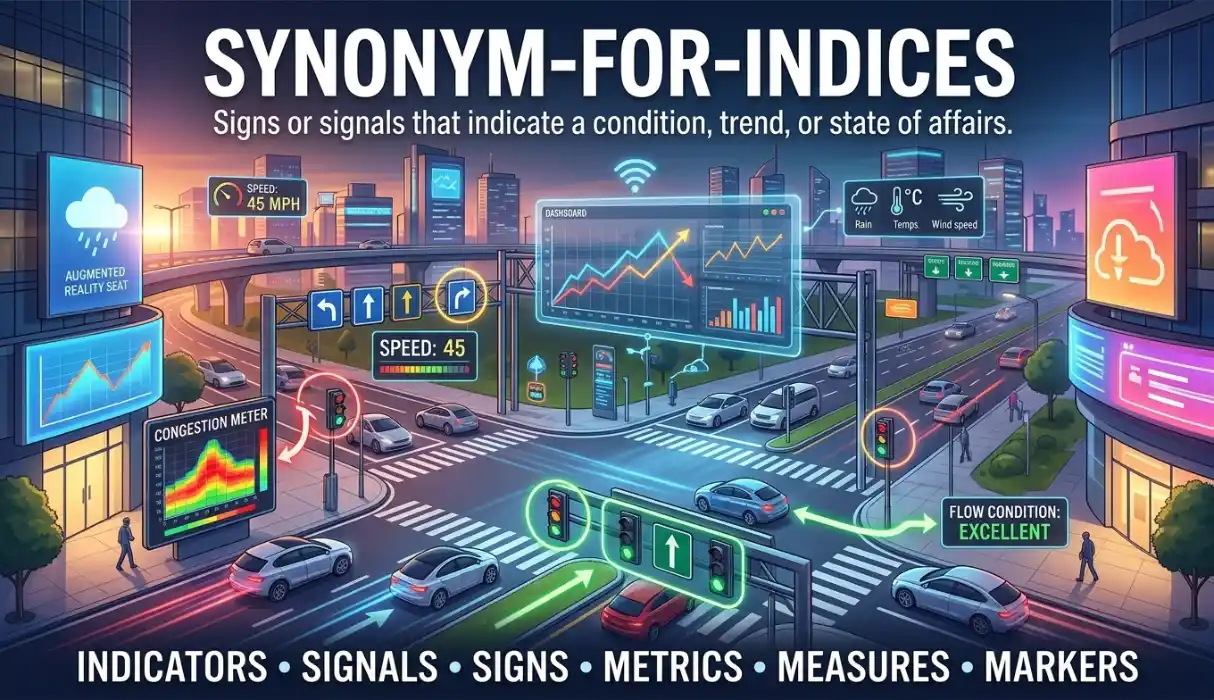
Indicators (Noun) — US / /ˈɪn.dɪ.keɪ.tɚz/ | UK / /ˈɪn.dɪ.keɪ.təz/
- Meaning: Signs or signals that point to a condition, trend, or state of affairs.
- Tone/Register: Formal / Academic
- Example: Economic indicators suggest a steady recovery in the housing market this year.
- Example: Key performance indicators help the marketing team measure weekly campaign success.
Metrics (Noun) — US / /ˈmɛt.rɪks/ | UK / /ˈmɛt.rɪks/
- Meaning: Standards or systems of quantitative measurement used to assess performance.
- Tone/Register: Business / Technical
- Example: The digital analytics platform tracks user engagement metrics in real time.
- Example: Every department head reviewed the productivity metrics during Monday’s meeting.
Measures (Noun) — US / /ˈmɛʒ.ɚz/ | UK / /ˈmɛʒ.əz/
- Meaning: Actions taken or standard units used to quantify a specific quantity.
- Tone/Register: Neutral / Professional
- Example: Safety measures must be updated before the new factory wing opens.
- Example: Standardized measures of student progress help teachers tailor their lessons.
Gauges (Noun) — US / /ɡeɪ.dʒɪz/ | UK / /ɡeɪ.dʒɪz/
- Meaning: Instruments or standards used to measure magnitude, amount, or contents.
- Tone/Register: Technical / Practical
- Example: Digital gauges on the dashboard display tire pressure and fuel levels accurately.
- Example: Surveys serve as reliable gauges of public opinion ahead of the election.
Markers (Noun) — US / /ˈmɑːr.kɚz/ | UK / /ˈmɑː.kəz/
- Meaning: Objects or features that serve as a sign, guide, or distinguishing characteristic.
- Tone/Register: Neutral / Descriptive
- Example: Biological markers in blood tests help doctors detect early signs of illness.
- Example: Stone pillars act as clear boundary markers along the old hiking trail.
Pointers (Noun) — US / /ˈpɔɪn.tɚz/ | UK / /ˈpɔɪn.təz/
- Meaning: Tips, helpful advice, or physical devices that indicate a specific direction.
- Tone/Register: Informal / Educational
- Example: She gave me three great pointers on how to prepare for the job interview.
- Example: The professor used a laser pointer to highlight data on the slide.
Benchmarks (Noun) — US / /ˈbɛntʃ.mɑːrks/ | UK / /ˈbɛntʃ.mɑːks/
- Meaning: Standards or points of reference against which things may be compared.
- Tone/Register: Professional / Business
- Example: Industry benchmarks show our customer service response time is exceptionally fast.
- Example: Quarterly earnings serve as important benchmarks for investor confidence.
Barometers (Noun) — US / /bəˈrɑː.mɪ.tɚz/ | UK / /bəˈrɒ.mɪ.təz/
- Meaning: Instruments or things that record or indicate changes in a situation.
- Tone/Register: Formal / Literary
- Example: Consumer spending is often seen as a reliable barometer of economic health.
- Example: Local diner conversations serve as a cultural barometer for small-town life.
Signals (Noun) — US / /ˈsɪɡ.nəlz/ | UK / /ˈsɪɡ.nəlz/
- Meaning: Gestures, actions, or sounds designed to give information or instructions.
- Tone/Register: Neutral / General
- Example: Traffic signals changed from green to red as the ambulance approached.
- Example: Mixed market signals made investors hesitant to buy new tech stocks.
Guides (Noun) — US / /ɡaɪdz/ | UK / /ɡaɪdz/
- Meaning: Persons or things that show the way or provide reference information.
- Tone/Register: Accessible / Practical
- Example: Field guides help nature lovers identify local birds and wild plants easily.
- Example: Style guides ensure consistency across all corporate publications and blogs.
Lists (Noun) — US / /lɪsts/ | UK / /lɪsts/
- Meaning: Several connected items or names written or printed consecutively.
- Tone/Register: Casual / Everyday
- Example: She wrote a long grocery list before heading to the supermarket.
- Example: The library keeps updated lists of newly released fiction books.
Directories (Noun) — US / /dɪˈrɛk.tə.riz/ | UK / /dɪˈrɛk.tə.riz/
- Meaning: Books or digital databases listing individuals or organizations alphabetically or by category.
- Tone/Register: Formal / Professional
- Example: His phone number is listed in the local business directory.
- Example: The university directory helps students find professors’ office locations quickly.
Catalogs (Noun) — US / /ˈkæt.əl.ɔːɡz/ | UK / /ˈkæt.əl.ɒɡz/
- Meaning: Complete lists of items, typically one in alphabetical or systematic order.
- Tone/Register: Commercial / Descriptive
- Example: The furniture store mailed out thick seasonal catalogs to residents.
- Example: Online library catalogs allow students to search for books from home.
Registers (Noun) — US / /ˈrɛdʒ.ɪ.stɚz/ | UK / /ˈrɛdʒ.ɪ.stəz/
- Meaning: Official lists or records of items, names, or transactions.
- Tone/Register: Formal / Administrative
- Example: Historic properties are kept on national heritage registers for preservation.
- Example: The wedding registry contains a list of items the couple requested.
Tables (Noun) — US / /ˈteɪ.bəlz/ | UK / /ˈteɪ.bəlz/
- Meaning: Sets of facts or figures displayed systematically in rows and columns.
- Tone/Register: Academic / Technical
- Example: Nutritional facts tables appear on the back of all packaged foods.
- Example: Mathematical tables at the back of the textbook make calculations easier.
Inventories (Noun) — US / /ˈɪn.vənˌtɔːr.iz/ | UK / /ˈɪn.vən.triz/
- Meaning: Complete lists of items such as property, goods in stock, or contents.
- Tone/Register: Business / Logistical
- Example: Retail stores conduct full product inventories at the end of every fiscal year.
- Example: The museum maintains detailed inventories of all ancient artifacts on display.
Records (Noun) — US / /ˈrɛk.ɚdz/ | UK / /ˈrɛk.ərdz/
- Meaning: Things constituting a piece of evidence about the past, kept in writing.
- Tone/Register: Administrative / Historical
- Example: Medical records are kept strictly confidential by healthcare providers.
- Example: Weather records show this summer has been the hottest on record.
Figures (Noun) — US / /ˈfɪɡ.jɚz/ | UK / /ˈfɪɡ.jəz/
- Meaning: Numbers, amounts, or statistical data presented in numerical form.
- Tone/Register: Financial / Analytical
- Example: Sales figures exceeded corporate projections for the third consecutive quarter.
- Example: Population figures show rapid growth in suburban metropolitan areas.
Statistics (Noun) — US / /stəˈtɪs.tɪks/ | UK / /stəˈtɪs.tɪks/
- Meaning: The practice or science of collecting and analyzing numerical data in large quantities.
- Tone/Register: Academic / Analytical
- Example: Sports analysts love studying player statistics before every major game.
- Example: Unemployment statistics indicate a positive shift in the labor market.
Parameters (Noun) — US / /pəˈræm.ɪ.tɚz/ | UK / /pəˈræm.ɪ.təz/
- Meaning: Limits or boundaries that define the scope of a particular process or system.
- Tone/Register: Technical / Scientific
- Example: Engineers must design the bridge within strict structural parameters.
- Example: The research project operated under strict budgetary parameters.
Scales (Noun) — US / /skeɪlz/ | UK / /skeɪlz/
- Meaning: Graded systems or series of values used for measuring or grading things.
- Tone/Register: Technical / Scientific
- Example: Richter scales measure the seismic magnitude of earthquakes accurately.
- Example: Pain scales help doctors understand how much discomfort a patient feels.
Scores (Noun) — US / /skɔːrz/ | UK / /skɔːz/
- Meaning: Numerical values representing a person’s success in a game, test, or evaluation.
- Tone/Register: Casual / Competitive
- Example: Final exam scores were posted on the student portal this morning.
- Example: Soccer match scores are updated live on sports mobile apps.
Ratings (Noun) — US / /ˈreɪ.tɪŋz/ | UK / /ˈreɪ.tɪŋz/
- Meaning: Classifications or evaluations of someone or something based on quality or standards.
- Tone/Register: Consumer / Media
- Example: Restaurant hygiene ratings are displayed clearly near the front entrance.
- Example: Television network ratings determine which shows get renewed for another season.
Values (Noun) — US / /ˈvæl.juːz/ | UK / /ˈvæl.juːz/
- Meaning: Numerical amounts denoted by an algebraic term or statistical measurement.
- Tone/Register: Mathematical / Analytical
- Example: The spreadsheet calculates property values based on recent neighborhood sales.
- Example: Scientists recorded temperature values every hour during the experiment.
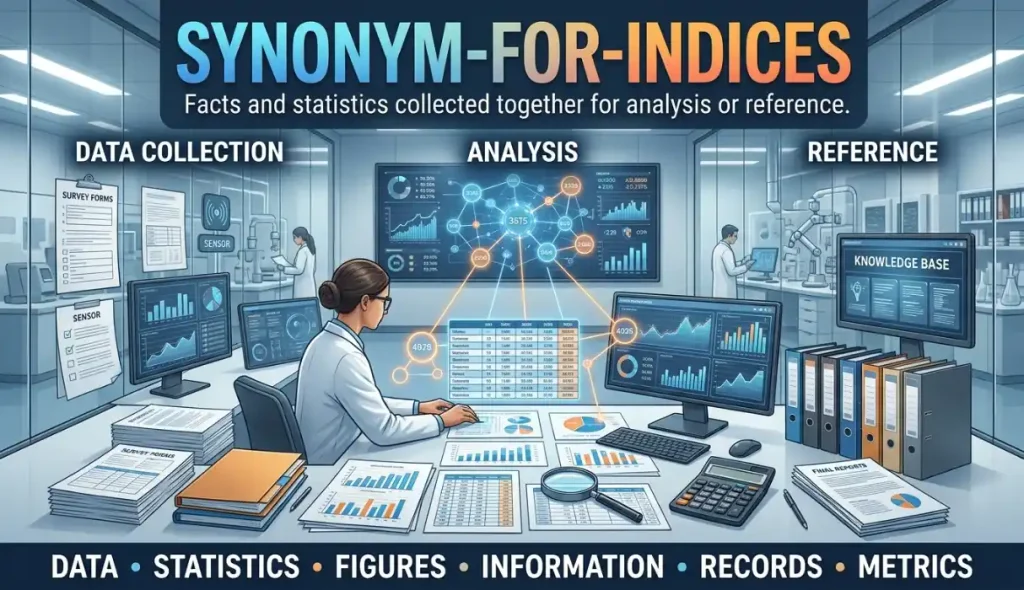
Data (Noun) — US / /ˈdeɪ.tə/ | UK / /ˈdeɪ.tə/
- Meaning: Facts and statistics collected together for analysis or reference.
- Tone/Register: Technical / Informational
- Example: Research data was compiled into a comprehensive report for the board.
- Example: Cloud storage services protect user data against accidental loss.
Profiles (Noun) — US / /ˈproʊ.faɪlz/ | UK / /ˈprəʊ.faɪlz/
- Meaning: Outlines or summaries of vital information regarding a person or subject.
- Tone/Register: Professional / Social
- Example: Company financial profiles help investors assess risk before buying shares.
- Example: Social media user profiles display personal bios and recent photo uploads.
Summaries (Noun) — US / /ˈsʌm.ə.riz/ | UK / /ˈsʌm.ə.riz/
- Meaning: Brief statements or accounts of the main points of something.
- Tone/Register: Academic / General
- Example: Chapter summaries at the end of the book help students review key concepts.
- Example: The manager provided daily shift summaries before leaving work.
Abstracts (Noun) — US / /ˈæb.strækts/ | UK / /ˈæb.strækts/
- Meaning: Short summaries of a research article, thesis, or academic review.
- Tone/Register: Academic / Scholarly
- Example: Conference organizers require abstract submissions months before the event.
- Example: Reading article abstracts saves researchers time during literature reviews.
Repertoire (Noun) — US / /ˈrɛp.ə.twɑːr/ | UK / /ˈrɛp.ə.twɑːr/
- Meaning: A stock of skills, techniques, or types of behavior that a person can use.
- Tone/Register: Professional / Creative
- Example: Acoustic guitar classics are a permanent part of his musical repertoire.
- Example: Problem-solving strategies expand as professionals gain experience in the field.
Codex (Noun) — US / /ˈkoʊ.dɛks/ | UK / /ˈkəʊ.dɛks/
- Meaning: An ancient manuscript text in book form or a systematic code of law.
- Tone/Register: Historical / Literary
- Example: Ancient monastic scribes spent years illuminating parchment pages in the codex.
- Example: Historians studied the legal codex to understand medieval property rights.
Compendiums (Noun) — US / /kəmˈpɛn.di.əmz/ | UK / /kəmˈpɛn.di.əmz/
- Meaning: Collections of concise information put together in a book or other publication.
- Tone/Register: Scholarly / Literary
- Example: This botanical compendium features illustrations of hundreds of rare wildflowers.
- Example: The historical compendium gathers stories from across three centuries.
Glossaries (Noun) — US / /ˈɡlɑː.sə.riz/ | UK / /ˈɡlɒ.sə.riz/
- Meaning: Alphabetical lists of terms or words relating to a specific subject with explanations.
- Tone/Register: Educational / Reference
- Example: Technical glossaries at the back of textbooks clarify difficult vocabulary words.
- Example: The medical glossary helped the patient understand technical diagnosis terms.
Lexicons (Noun) — US / /ˈlɛk.sɪ.kɑːnz/ | UK / /ˈlɛk.sɪ.kɒnz/
- Meaning: The vocabulary of a person, language, branch of knowledge, or region.
- Tone/Register: Linguistic / Academic
- Example: Artificial intelligence terminology has expanded modern technical lexicons rapidly.
- Example: Regional dialects add unique phrases to the English lexicon over time.
Thesauruses (Noun) — US / /θɪˈsɔːr.ə.sɪz/ | UK / /θɪˈsɔː.rə.sɪz/
- Meaning: Books that list words in groups of synonyms and related concepts.
- Tone/Register: Educational / Literary
- Example: Writers consult thesauruses to find precise adjectives for creative storytelling.
- Example: Digital thesauruses are built directly into modern word processing software.
Handbooks (Noun) — US / /ˈhænd.bʊks/ | UK / /ˈhænd.bʊks/
- Meaning: Concise manuals or books providing instruction or guidance about a subject.
- Tone/Register: Practical / Professional
- Example: Employee handbooks outline company policies, dress codes, and benefits.
- Example: Photography handbooks provide beginners with camera setting instructions.
Manuals (Noun) — US / /ˈmænj.u.əlz/ | UK / /ˈmænj.u.əlz/
- Meaning: Books providing instructions on how to use a machine or software program.
- Tone/Register: Technical / Instructional
- Example: The appliance repair manual includes wiring diagrams for troubleshooting errors.
- Example: Software user manuals guide customers through account setup steps.
Outlines (Noun) — US / /ˈaʊt.laɪnz/ | UK / /ˈaʊt.laɪnz/
- Meaning: General descriptions or plans giving the essential features of something.
- Tone/Register: Academic / Preparatory
- Example: She wrote a detailed essay outline before drafting the final paper.
- Example: Project outlines keep development teams aligned on core deliverables.
Synopses (Noun) — US / /sɪˈnɑːp.siːz/ | UK / /sɪˈnɒp.siːz/
- Meaning: Summaries or general surveys of a plot, book, or subject.
- Tone/Register: Literary / Professional
- Example: Film producers read script synopses before deciding to fund a movie.
- Example: Book jacket synopses give readers a teaser of the story inside.
Bibliographies (Noun) — US / /ˌbɪb.liˈɑː.ɡrə.fiːz/ | UK / /ˌbɪb.liˈɒ.ɡrə.fiːz/
- Meaning: Lists of books and articles referenced in a scholarly work or publication.
- Tone/Register: Academic / Scholarly
- Example: Research papers must include properly formatted bibliographies at the end.
- Example: The historian’s bibliography listed dozens of primary archival sources.
Repertoires (Noun) — US / /ˈrɛp.ə.twɑːrz/ | UK / /ˈrɛp.ə.twɑːrz/
- Meaning: Ranges or stocks of options, skills, or items available for use.
- Tone/Register: Professional / Creative
- Example: Chef’s culinary repertoires grew after attending international cooking classes.
- Example: Public speakers keep several opening jokes in their professional repertoires.
Formularies (Noun) — US / /ˈfɔːr.mjəˌlɛr.iz/ | UK / /ˈfɔː.mjʊ.lər.iz/
- Meaning: Authorized lists of prescription drugs approved for use by a healthcare plan.
- Tone/Register: Medical / Administrative
- Example: Hospital pharmacies maintain approved drug formularies for patient safety.
- Example: Insurance companies update their medication formularies at the start of each year.
Schedules (Noun) — US / /ˈskɛdʒ.uːlz/ | UK / /ˈʃɛd.juːlz/
- Meaning: Plans for carrying out a process or procedure, giving a list of intended events.
- Tone/Register: Practical / Business
- Example: Train departure schedules are posted on digital screens at the station.
- Example: Construction project schedules help contractors finish buildings on time.
Agendas (Noun) — US / /əˈdʒɛn.dəz/ | UK / /əˈdʒɛn.dəz/
- Meaning: Lists of items to be discussed or acted upon during a formal meeting.
- Tone/Register: Corporate / Administrative
- Example: Meeting agendas were emailed to all department members on Friday afternoon.
- Example: Board members reviewed the discussion agenda before entering the conference room.
Calendars (Noun) — US / /ˈkæl.ən.dɚz/ | UK / /ˈkæl.ən.dəz/
- Meaning: Charts or pages showing the days, weeks, and months of a particular year.
- Tone/Register: Everyday / Practical
- Example: Wall calendars help families keep track of birthdays and doctor appointments.
- Example: Academic calendars show semester start dates and final exam periods.
Directories (Noun) — US / /dɪˈrɛk.tə.riz/ | UK / /dɪˈrɛk.tə.riz/
- Meaning: Structured listings of contact details or computer file locations.
- Tone/Register: Technical / Administrative
- Example: Computer folder directories organize project files into neat subfolders.
- Example: Online medical directories help patients find local dental specialists.
Toolkits (Noun) — US / /ˈtuːl.kɪts/ | UK / /ˈtuːl.kɪts/
- Meaning: Sets of tools or resources designed for a specific purpose or project.
- Tone/Register: Modern / Practical
- Example: Marketing toolkits provide startup founders with ready-to-use social graphics.
- Example: Mental health toolkits offer practical exercises for managing daily stress.
Frameworks (Noun) — US / /ˈfreɪm.wɜːrks/ | UK / /ˈfreɪm.wɜːks/
- Meaning: Basic structures underlying a system, concept, or text.
- Tone/Register: Academic / Strategic
- Example: Legal frameworks protect intellectual property rights across international borders.
- Example: Theoretical frameworks guide sociological research and data interpretation.
Matrices (Noun) — US / /ˈmeɪ.trɪ.sɪz/ | UK / /ˈmeɪ.trɪ.sɪz/
- Meaning: Environments or rectangular arrays of quantities or items in mathematics.
- Tone/Register: Technical / Mathematical
- Example: Risk assessment matrices help project managers evaluate potential workplace hazards.
- Example: Linear algebra courses teach students how to multiply complex matrices.
Manifests (Noun) — US / /ˈmæn.ə.fɛsts/ | UK / /ˈmæn.ɪ.fests/
- Meaning: Complete lists of cargo or passengers carried on a ship, plane, or truck.
- Tone/Register: Logistical / Transport
- Example: Airport security officers checked passenger manifests before boarding the flight.
- Example: Cargo ship manifests listed every container loaded at the seaport.
Checklists (Noun) — US / /ˈtʃɛk.lɪsts/ | UK / /ˈtʃɛk.lɪsts/
- Meaning: Printed or digital lists of things to be done, checked, or consulted.
- Tone/Register: Practical / Everyday
- Example: Flight pilots go through safety checklists before every takeoff.
- Example: Packing checklists ensure travelers never forget essential items.
Summaries (Noun) — US / /ˈsʌm.ə.riz/ | UK / /ˈsʌm.ə.riz/
- Meaning: Short recap versions of larger documents or data sets.
- Tone/Register: Professional / Concise
- Example: Executive summaries give busy CEOs the main points of long reports.
- Example: Financial summaries show monthly income and expense totals at a glance.
Repertoires (Noun) — US / /ˈrɛp.ə.twɑːrz/ | UK / /ˈrɛp.ə.twɑːrz/
- Meaning: Available collections of creative works or professional techniques.
- Tone/Register: Artistic / Professional
- Example: Jazz pianists have large repertoires of improvised chord progressions.
- Example: Effective negotiators keep multiple compromise strategies in their repertoires.
Taxonomies (Noun) — US / /tækˈsɑː.nə.miːz/ | UK / /tækˈsɒ.nə.miːz/
- Meaning: Schemes of classification used to organize complex categories of items.
- Tone/Register: Scientific / Academic
- Example: Biological taxonomies classify living organisms into species, genus, and family.
- Example: Content taxonomies organize website blog categories for better user navigation.
Glosses (Noun) — US / /ˈɡlɑː.sɪz/ | UK / /ˈɡlɒ.sɪz/
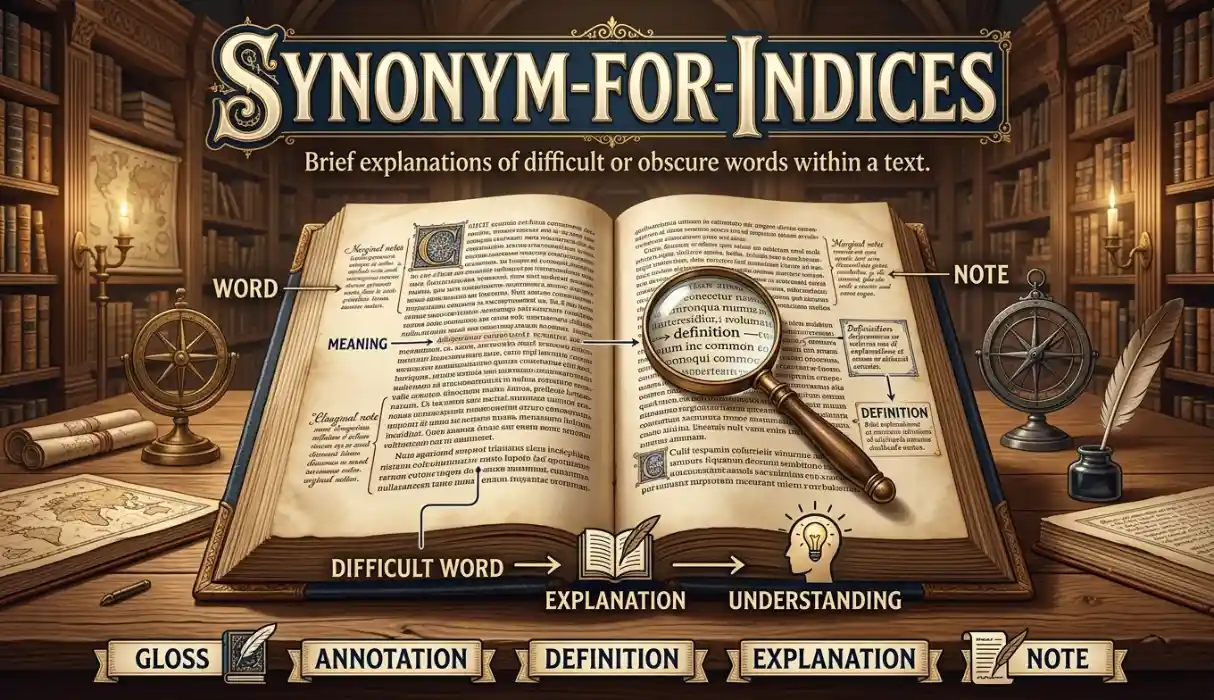
- Meaning: Brief explanations of difficult or obscure words within a text.
- Tone/Register: Literary / Academic
- Example: Medieval manuscripts often included marginal glosses explaining difficult Latin terms.
- Example: Literary critics study glosses to understand archaic poetic metaphors.
Synonyms by Tone
Choosing the correct word requires matching the register and tone of your writing environment:
- Positive tone: Indicators, Benchmarks, Toolkits
- Neutral tone: Metrics, Measures, Data, Tables, Lists
- Negative tone: Risk indicators, Warning markers, Deficit metrics
- Playful/informal: Pointers, Cheat sheets, Checklists
Tone matters because using overly formal words in casual conversation sounds stiff, while casual terms weaken academic authority.
Mini Comparison: Indices vs. Indicators vs. Metrics
- Indices: Represents a statistical composite or systematic collection of data points tracking overall change over time. Tone is formal and analytical. Use when discussing economic stock indices or comprehensive data tables.
- Indicators: Refers to individual signs or signals pointing toward a specific condition or trend. Tone is professional and scientific. Use when pointing to single warning signs or performance markers.
- Metrics: Focuses strictly on quantitative measurements used in business or digital environments. Tone is corporate and technical. Use when evaluating website traffic, conversion rates, or software performance.
Context-Based Usage
In daily conversation, native speakers rarely use indices, opting instead for casual terms like lists, scores, or pointers when discussing everyday items.
Writing or blogging requires cleaner, engaging vocabulary like metrics or indicators to keep readers hooked without sounding overly academic.
Professional or academic writing demands precise terms like indices, benchmarks, or taxonomies to maintain authority and rigorous methodological standards.
Creative or informal writing benefits from descriptive options like markers, outlines, or compendiums to paint a vivid picture for the audience.
Common Mistakes & Native Usage
Learners often make mistakes by using indices when they simply mean a single list or a basic table. Another common error is mixing up formal academic registers with casual spoken English.
- Misuse scenario: Saying “Check the indices in my grocery bag” instead of “Check the list in my grocery bag.”
- Overuse warning: Repeating any single data term more than twice per paragraph hurts flow.
Register notes: Indices is strictly a written or professional spoken term. In casual chat, everyday speakers say numbers or metrics instead.
Real-Life Mini Scenarios
- Workplace: The financial analyst updated the quarterly stock market indices before presenting to the board.
- Social situations: She jotted down a quick checklist of party supplies before heading to the store.
- Media/pop culture: Tech journalists analyzed digital engagement metrics following the product launch event.
- Writing or storytelling: The historian consulted ancient manuscript codex records to verify medieval trade routes.
Conclusion
Expanding your vocabulary with a strong synonym for indices transforms your writing from repetitive to remarkably engaging. Small word choices make a huge difference in how clearly your ideas resonate with readers everywhere.
Varying your language improves your overall writing, blogging, speaking, and professional communication skills effortlessly.
Practice these words today by incorporating terms like metrics, indicators, or benchmarks into your next email, essay, or conversation. Keep exploring new vocabulary and enjoy watching your communication skills grow stronger every single day!
Practice Exercise
- Which synonym best fits a formal academic paper discussing economic health over time?
- A) Cheat sheets
- B) Indices
- C) Grocery lists
- D) Pointers
- What is the most appropriate term for tracking website traffic and conversion rates in digital marketing?
- A) Codex
- B) Metrics
- C) Bibliographies
- D) Glossaries
- If you want to describe a single warning sign of a mechanical failure, which word is ideal?
- A) Indicator
- B) Thesaurus
- C) Lexicon
- D) Directory
- Which word describes a systematic book of laws or ancient manuscript texts?
- A) Checklist
- B) Codex
- C) Schedule
- D) Agenda
- When organizing website blog categories into neat groups, which term do content strategists use?
- A) Taxonomies
- B) Scores
- C) Pointers
- D) Tables
- Which term is best suited for official lists of prescription drugs approved by a healthcare plan?
- A) Formularies
- B) Outlines
- C) Synopses
- D) Inventories
- What casual word do everyday speakers use when referring to helpful tips or advice?
- A) Matrices
- B) Pointers
- C) Bibliographies
- D) Manifests
- Which choice represents a standard against which other things are measured in business?
- A) Benchmark
- B) Gloss
- C) Recipe
- D) Doodle
- When evaluating earthquake intensity using the Richter scale, what term refers to the graduated system?
- A) Scale
- B) List
- C) Catalog
- D) Summary
- What term describes a complete list of cargo carried on an international commercial flight?
- A) Manifest
- B) Glossary
- C) Index
- D) Agenda
Reflection Task:
Write one short sentence using the word “metrics” to describe how a fitness tracker measures daily physical activity.
Answer Key:
1-B, 2-B, 3-A, 4-B, 5-A, 6-A, 7-B, 8-A, 9-A, 10-A
FAQs
What is the difference between indices and indicators?
Indices refer to a collection of data points combined into a single statistical measure, whereas indicators are individual signs or signals pointing to specific conditions. Use indices for broad composite data like stock markets, and indicators for distinct warning signals.
Can I use metrics instead of indices in business reports?
Yes, metrics work exceptionally well in business reports when discussing quantitative performance measurements. They sound modern and precise, making them ideal for digital analytics, project management, and corporate performance reviews.
Why do writers avoid repeating the word indices?
Repeating indices creates monotonous sentence structures and bores readers. Using varied semantic alternatives like benchmarks, measures, or tables keeps your content engaging, professional, and easy to read.
Are indices and indexes interchangeable?
Both are valid plural forms of index, but they serve different contexts. Indices is preferred in mathematical, financial, and scientific contexts, while indexes is commonly used in publishing for book back-of-book reference lists.
How do native English speakers refer to reference lists casually?
Native speakers typically use everyday words like lists, guides, or tables in casual conversation rather than formal terms like indices or bibliographies. Keeping language natural helps maintain an approachable conversational tone.

Jameel Hassan is the founder and lead writer at SynonymsCloud.com, a trusted online platform dedicated to English vocabulary and effective communication. He is passionate about helping students, writers, professionals, and lifelong learners discover the right words to express their ideas with clarity, precision, and confidence.
At SynonymsCloud.com, every article is thoroughly researched and carefully written to provide accurate, practical, and easy-to-understand guidance on synonyms, antonyms, word meanings, idioms, and vocabulary. With a strong commitment to quality, real-world usage, and clear explanations, the website helps readers expand their vocabulary, improve their writing, and communicate more effectively in both academic and professional settings.