

A synonym for kvetch depends on the tone you want to set. Common informal alternatives include gripe, whine, grumble, bellyache, and nitpick. For formal or professional settings, use complain, object, express discontent, or air grievances. To describe emotional release without negativity, use vent.
A synonym for kvetch is what you need when someone endlessly complains about minor, annoying things. Imagine sitting in a cold cafe while a friend whines about five tiny ice cubes. They kvetch for twenty straight minutes!
Finding the perfect synonym for kvetch helps you describe habitual whining with accurate emotional precision. Repeating the same informal term limits your expressive range in writing. Varying your word choice makes every conversation far more colorful.
Native English speakers often use this expressive Yiddish borrowing in lighthearted, informal, or observational contexts. Choosing a suitable synonym for kvetch lets you match your tone to any social setting.
This guide helps students, bloggers, creative writers, and ESL learners build vivid vocabulary skills quickly. Learning these variations will make your daily English sound natural and polished.
What Does “Kvetch” Really Mean?
“Kvetch” is an informal verb (and noun) that means to complain in a persistent, chronic, or petty manner about minor annoyances.
It carries a slightly irritated yet often humorous attitude. Native speakers view it as mild, persistent whiny behavior rather than an angry protest. It pops up frequently in casual chats, comedic writing, personal blogs, and opinion columns.
- Part of Speech: Verb / Noun
- Simple Definition: To complain habitually or endlessly about small, insignificant problems.
Connotative Meaning
(Connotation is the emotional tone or cultural feeling attached to a word beyond its exact dictionary definition.)
- Positive tone: Vent (when light and healthy), express feelings, share grievances.
- Negative tone: Whine, gripe, carp, bellyache, nag, moan.
- Neutral tone: Complain, object, murmur, register a complaint.
Etymology
“Kvetch” entered American English from Yiddish kvetshn, which literally means “to squeeze, press, or pinch.” That root traces back to Middle High German quetschen (to squeeze).
- Old English (450–1100): The word did not exist in English; Germanic languages used cwean or murnan for sorrowful expression.
- Middle English (1100–1500): English speakers relied on terms like “grumble” or “whine” from early Germanic roots.
- Modern English (1500–Present): “Kvetch” was imported into American English through Yiddish-speaking immigrant communities in the mid-20th century, gaining widespread usage in comedy and pop culture.
Pronunciation (US & UK)
- US: /kvetʃ/
- UK: /kvetʃ/
Syllables & Structure
- Syllables: kvetch (1 syllable)
- Root: kvetsh (Yiddish origin meaning to squeeze/press)
- Prefix: None
- Suffix: None
Synonyms List

Complain (Verb) — US: /kəmˈpleɪn/ | UK: /kəmˈpleɪn/
- Meaning: To express dissatisfaction, pain, or resentment about a situation.
- Tone/Register: Neutral, General
- Example 1: Passengers started to complain about the long delays at the airport.
- Example 2: Please tell me directly if you need to complain about the service.
Whine (Verb) — US: /waɪn/ | UK: /waɪn/
- Meaning: To complain in an annoying, high-pitched, or childish tone.
- Tone/Register: Informal, Slightly Negative
- Example 1: The toddlers began to whine when the ice cream shop closed early.
- Example 2: Don’t whine about the cold weather when you forgot your jacket.
Gripe (Verb) — US: /ɡraɪp/ | UK: /ɡraɪp/
- Meaning: To express persistent, minor dissatisfaction in an irritated manner.
- Tone/Register: Informal, Casual
- Example 1: Employees often gripe about the new office parking rules during lunch.
- Example 2: He loves to gripe about his morning commute every Monday.
Grumble (Verb) — US: /ˈɡrʌm.bəl/ | UK: /ˈɡrʌm.bəl/
- Meaning: To mutter low, continuous sounds of discontent or annoyance.
- Tone/Register: Neutral, Informal
- Example 1: The workers grumble whenever the boss adds extra tasks to their schedule.
- Example 2: Old neighborhood residents grumble about the rising street noise.
Grouse (Verb) — US: /ɡraʊs/ | UK: /ɡraʊs/
- Meaning: To complain, grumble, or find fault with petty matters.
- Tone/Register: Informal, Slightly Old-Fashioned
- Example 1: The team members grouse about having to attend long weekend seminars.
- Example 2: She began to grouse about the quality of the hotel breakfast.
Carp (Verb) — US: /kɑːrp/ | UK: /kɑːp/
- Meaning: To find fault or complain continually about trivial matters.
- Tone/Register: Critical, Written
- Example 1: Critics like to carp about small editing errors in popular movies.
- Example 2: Stop carping about tiny details and focus on the main presentation.
Bellyache (Verb) — US: /ˈbel.i.eɪk/ | UK: /ˈbel.i.eɪk/
- Meaning: To complain loudly, excessively, and without good reason.
- Tone/Register: Informal, Slang
- Example 1: Stop bellyaching about the long walk and enjoy the scenic view.
- Example 2: He continued to bellyache about his small workload all afternoon.
Bitch (Verb) — US: /bɪtʃ/ | UK: /bɪtʃ/
- Meaning: To express strong, irritable dissatisfaction in an aggressive, informal manner.
- Tone/Register: Very Informal, Vulgar Slang
- Example 1: They sat around to bitch about their tough manager after work.
- Example 2: Stop bitching about the rain and grab an umbrella.
Moan (Verb) — US: /moʊn/ | UK: /məʊn/
- Meaning: To make a low sound of grief or express dissatisfaction sorrowfully.
- Tone/Register: General, Informal
- Example 1: Patients often moan when they wait too long in emergency rooms.
- Example 2: Drivers moan about the rising cost of gasoline every summer.
Groan (Verb) — US: /ɡroʊn/ | UK: /ɡrəʊn/
- Meaning: To utter a deep sound of despair, disapproval, or annoyance.
- Tone/Register: General, Expressive
- Example 1: Students groan whenever the teacher announces a pop quiz.
- Example 2: Audience members groan at the comedian’s terrible puns.
Bleat (Verb) — US: /bliːt/ | UK: /bliːt/
- Meaning: To make a weak, whining, or foolish complaint.
- Tone/Register: Critical, Descriptive
- Example 1: Pundits bleat continuously about political policy changes on TV.
- Example 2: He began to bleat about his hard luck during the card game.
Whimper (Verb) — US: /ˈwɪm.pɚ/ | UK: /ˈwɪm.pər/
- Meaning: To express dissatisfaction or fear through quiet, broken, crying sounds.
- Tone/Register: Emotional, Expressive
- Example 1: The tired child began to whimper as bedtime approached.
- Example 2: Lost dogs whimper quietly when they feel cold and alone.
Snivel (Verb) — US: /ˈsnɪv.əl/ | UK: /ˈsnɪv.əl/
- Meaning: To complain or whine in a tearful, weak, or annoying way.
- Tone/Register: Critical, Informal
- Example 1: He sniveled about his minor injury to get out of gym class.
- Example 2: Nobody wants to listen to a contestant snivel about losing fairly.
Nag (Verb) — US: /næɡ/ | UK: /næɡ/
- Meaning: To annoy someone with continuous complaints, requests, or fault-finding.
- Tone/Register: Everyday, Informal
- Example 1: Parents often nag their teenagers to clean up messy bedrooms.
- Example 2: She had to nag her roommate for weeks to pay the utility bill.
Fret (Verb) — US: /fret/ | UK: /fret/
- Meaning: To express worry, anxiety, or discontent over minor issues.
- Tone/Register: Emotional, General
- Example 1: Please do not fret over small mistakes on your first draft.
- Example 2: She tends to fret whenever travel schedules change unexpectedly.
Fuss (Verb) — US: /fʌs/ | UK: /fʌs/
- Meaning: To show excessive, unnecessary excitement, worry, or complaint.
- Tone/Register: Casual, Expressive
- Example 1: Travelers fuss over lost luggage at the airport counter.
- Example 2: The baby started to fuss during the long car ride home.
Mutter (Verb) — US: /ˈmʌt̬.ɚ/ | UK: /ˈmʌt.ər/
- Meaning: To speak in a low, indistinct tone to express private discontent.
- Tone/Register: Descriptive, General
- Example 1: Unhappy customers mutter complaints while standing in long lines.
- Example 2: He continued to mutter under his breath after losing the argument.
Murmur (Verb) — US: /ˈmɝː.mɚ/ | UK: /ˈmɜː.mər/
- Meaning: To express discontentment in a quiet, low, continuous voice.
- Tone/Register: Gentle, Literary
- Example 1: Crowd members murmur their disapproval during the dull speech.
- Example 2: Employees murmur about changes to the healthcare package.
Object (Verb) — US: /əbˈdʒekt/ | UK: /əbˈdʒekt/
- Meaning: To express disagreement, disapproval, or opposition formally.
- Tone/Register: Formal, Professional
- Example 1: Lawyers object to leading questions during court proceedings.
- Example 2: Residents object strongly to the new highway construction proposal.
Protest (Verb) — US: /prəˈtest/ | UK: /prəˈtest/
- Meaning: To express strong objection, disapproval, or disagreement publicly.
- Tone/Register: Formal, Public
- Example 1: Citizens protest high tax rates outside the city hall building.
- Example 2: Players protest the referee’s controversial call on the field.
Rail (Verb) — US: /reɪl/ | UK: /reɪl/
- Meaning: To complain persistently and passionately against something.
- Tone/Register: Formal, Literary
- Example 1: Activists rail against unfair labor practices in manufacturing.
- Example 2: Opinion writers rail against high housing costs in major cities.
Fulminate (Verb) — US: /ˈfʊl.mə.neɪt/ | UK: /ˈfʌl.mɪ.neɪt/
- Meaning: To express vehement, explosive protest or complaint against something.
- Tone/Register: Academic, High-Formal
- Example 1: Columnists fulminate against corporate corruption in national newspapers.
- Example 2: The speaker fulminated against government overreach during the lecture.
Inveigh (Verb) — US: /ɪnˈveɪ/ | UK: /ɪnˈveɪ/
- Meaning: To speak or write about something with great hostility and complaint.
- Tone/Register: Academic, Formal
- Example 1: Scholars inveigh against outdated educational methods in their essays.
- Example 2: Politicians inveigh against economic policies during debates.
Denounce (Verb) — US: /dɪˈnaʊns/ | UK: /dɪˈnaʊns/
- Meaning: To publicly declare something to be wrong, evil, or unacceptable.
- Tone/Register: Formal, Serious
- Example 1: Leaders denounce international law violations at the global conference.
- Example 2: Ethics boards denounce unsafe working conditions in factories.
Execrate (Verb) — US: /ˈek.sə.kreɪt/ | UK: /ˈek.sɪ.kreɪt/
- Meaning: To express great hatred or utter curses while complaining about something.
- Tone/Register: Literary, Extremely Formal
- Example 1: Historians execrate the cruel tyranny of ancient rulers.
- Example 2: The crowd execrated the traitor as he walked past them.
Cavil (Verb) — US: /ˈkæv.əl/ | UK: /ˈkæv.əl/
- Meaning: To make petty, unnecessary objections or complaints.
- Tone/Register: Academic, Formal
- Example 1: Editors cavil over minor punctuation choices in the manuscript.
- Example 2: Critics cavil at small plot flaws in an otherwise brilliant novel.
Quibble (Verb) — US: /ˈkwɪb.əl/ | UK: /ˈkwɪb.əl/
- Meaning: To argue or complain about small, unimportant details.
- Tone/Register: Informal, Professional
- Example 1: Buyers quibble over a few dollars during price negotiations.
- Example 2: Stop quibbling about the wording and approve the main budget.
Nitpick (Verb) — US: /ˈnɪt.pɪk/ | UK: /ˈnɪt.pɪk/
- Meaning: To examine something too closely to find tiny, insignificant faults.
- Tone/Register: Informal, Casual
- Example 1: Reviewers nitpick every scene in new science fiction movies.
- Example 2: Teachers try not to nitpick formatting during early writing stages.
Fault-find (Verb) — US: /ˈfɑːlt.faɪnd/ | UK: /ˈfɔːlt.faɪnd/
- Meaning: To look continually for mistakes, flaws, or shortcomings.
- Tone/Register: Critical, Neutral
- Example 1: Unhappy supervisors fault-find every report submitted by new interns.
- Example 2: Constant fault-finding damages morale in creative workplace teams.
Whinge (Verb) — US: /wɪndʒ/ | UK: /wɪndʒ/
- Meaning: To complain persistently in an annoying, whining manner (common in British English).
- Tone/Register: Informal, British/Australian
- Example 1: He continues to whinge about the rainy weather every single day.
- Example 2: Don’t whinge to me about your self-inflicted problems.

Vent (Verb) — US: /vent/ | UK: /vent/
- Meaning: To express strong negative emotions or frustrations freely to get relief.
- Tone/Register: Conversational, Positive/Neutral
- Example 1: Friends call each other late at night to vent after stressful work shifts.
- Example 2: Writing in a journal helps people healthily vent anger.
Air Grievances (Verb Phrase) — US: /er ˈɡriː.vəns.ɪz/ | UK: /eər ˈɡriː.vəns.ɪz/
- Meaning: To express formal or informal complaints publicly to seek resolution.
- Tone/Register: Professional, Workplace
- Example 1: Union leaders met with management to air grievances regarding benefits.
- Example 2: Town hall meetings give residents space to air local grievances.
Find Fault (Verb Phrase) — US: /faɪnd fɑːlt/ | UK: /faɪnd fɔːlt/
- Meaning: To look for and criticize defects, mistakes, or shortcomings.
- Tone/Register: General, Critical
- Example 1: Hypercritical managers always find fault with creative project ideas.
- Example 2: It is easy to find fault, but harder to suggest real solutions.
Express Discontent (Verb Phrase) — US: /ɪkˈspres ˌdɪs.kənˈtent/ | UK: /ɪkˈspres ˌdɪs.kənˈtent/
- Meaning: To communicate feelings of dissatisfaction or unhappiness formally.
- Tone/Register: Professional, Formal
- Example 1: Shareholders expressed discontent with quarterly dividend returns.
- Example 2: Customers expressed discontent regarding the sudden software changes.
Register Disapproval (Verb Phrase) — US: /ˈredʒ.ə.stɚ ˌdɪs.əˈpruː.vəl/ | UK: /ˈredʒ.ɪ.stər ˌdɪs.əˈpruː.vəl/
- Meaning: To record or announce an official objection to an action or decision.
- Tone/Register: Formal, Administrative
- Example 1: Board members registered disapproval regarding the merger proposal.
- Example 2: Voters registered disapproval at the polling stations on election day.
Make a Fuss (Verb Phrase) — US: /meɪk ə fʌs/ | UK: /meɪk ə fʌs/
- Meaning: To cause unnecessary trouble, worry, or complaint over something small.
- Tone/Register: Everyday, Casual
- Example 1: Please don’t make a fuss over my birthday this weekend.
- Example 2: Diners made a fuss when the waiter brought the wrong side dish.
Sound Off (Verb Phrase) — US: /saʊnd ɑːf/ | UK: /saʊnd ɒf/
- Meaning: To express opinions or complaints loudly, forcefully, and openly.
- Tone/Register: Informal, Energetic
- Example 1: Callers love to sound off about sports trades on talk radio programs.
- Example 2: Employees sounded off about bad office coffee during the break.
Pitch a Fit (Verb Phrase) — US: /pɪtʃ ə fɪt/ | UK: /pɪtʃ ə fɪt/
- Meaning: To throw an angry, intense, or childish temper tantrum.
- Tone/Register: Informal, Idiomatic
- Example 1: The toddler pitched a fit when his parents refused to buy candy.
- Example 2: Customers pitch a fit whenever airline flights get canceled unexpectedly.
Throw a Tantrum (Verb Phrase) — US: /θroʊ ə ˈtæn.trəm/ | UK: /θrəʊ ə ˈtæn.trəm/
- Meaning: To experience an outburst of childish anger and loud complaint.
- Tone/Register: Descriptive, Informal
- Example 1: Spoiled kids throw a tantrum when they don’t get immediate attention.
- Example 2: The tennis player threw a tantrum after losing a crucial match point.
Kicking and Screaming (Idiom) — US: /ˈkɪk.ɪŋ ænd skriː.mɪŋ/ | UK: /ˈkɪk.ɪŋ ænd skriː.mɪŋ/
- Meaning: Complain or resist extremely hard while being forced to do something.
- Tone/Register: Idiomatic, Expressive
- Example 1: Management dragged the company into digital upgrades kicking and screaming.
- Example 2: Kids go to bed kicking and screaming during summer vacations.
Bad-mouth (Verb) — US: /ˈbæd.maʊθ/ | UK: /ˈbæd.maʊθ/
- Meaning: To criticize or speak ill of someone or something behind their back.
- Tone/Register: Informal, Casual
- Example 1: Bitter ex-employees bad-mouth their old companies on social media.
- Example 2: It is unprofessional to bad-mouth your colleagues in public.
Run Down (Verb Phrase) — US: /rʌn daʊn/ | UK: /rʌn daʊn/
- Meaning: To criticize, disparage, or speak negatively of someone continuously.
- Tone/Register: Informal, Conversational
- Example 1: Jealous rivals run down your achievements when you succeed.
- Example 2: Don’t run down your own skills before you try the job interview.
Knock (Verb) — US: /nɑːk/ | UK: /nɒk/
- Meaning: To criticize or find fault with something in casual conversation.
- Tone/Register: Informal, Slang
- Example 1: Don’t knock the cheap restaurant until you try their delicious food.
- Example 2: People knock new technology until they learn how to use it.
Pan (Verb) — US: /pæn/ | UK: /pæn/
- Meaning: To criticize or complain about a creative work or product severely.
- Tone/Register: Journalistic, Media
- Example 1: Film critics panned the expensive action movie in weekend reviews.
- Example 2: Users panned the new app update due to frequent software crashes.
Blast (Verb) — US: /blæst/ | UK: /blæst/
- Meaning: To attack or criticize someone or something loudly and aggressively.
- Tone/Register: Journalistic, High-Impact
- Example 1: Headlines blast local officials for wasting public budget money.
- Example 2: The coach blasted the team for lack of effort during practice.
Slag (Verb) — US: /slæɡ/ | UK: /slæɡ/
- Meaning: To criticize or insult someone insultingly (common in British slang).
- Tone/Register: Informal, British Slang
- Example 1: Tabloids love to slag off celebrities for minor fashion mistakes.
- Example 2: Stop slagging your teammates off when they make mistakes.
Slam (Verb) — US: /slæm/ | UK: /slæm/
- Meaning: To criticize or complain about something with great force or hostility.
- Tone/Register: Media, Informal
- Example 1: Environmental groups slam energy companies over pollution levels.
- Example 2: Fans slam the team’s poor performance after three straight losses.
Roast (Verb) — US: /roʊst/ | UK: /rəʊst/
- Meaning: To criticize, mock, or complain about someone in a sharp, humorous way.
- Tone/Register: Informal, Pop Culture
- Example 1: Social media users roast the brand for its confusing advertisement.
- Example 2: Friends roast each other good-naturedly during birthday parties.
Scold (Verb) — US: /skoʊld/ | UK: /skəʊld/
- Meaning: To rebuke or find fault with someone angrily or noisily.
- Tone/Register: Traditional, General
- Example 1: Teachers scold students who talk loudly during quiet exams.
- Example 2: Parents scold young children for running across busy streets.
Chide (Verb) — US: /tʃaɪd/ | UK: /tʃaɪd/
- Meaning: To express mild disapproval or complaint about someone’s behavior.
- Tone/Register: Literary, Formal
- Example 1: The mentor chided her student for handing in homework late.
- Example 2: She gently chided her brother for forgetting her graduation.
Admonish (Verb) — US: /ədˈmɑː.nɪʃ/ | UK: /ədˈmɒn.ɪʃ/
- Meaning: To warn or reprimand someone firmly about a minor fault or duty.
- Tone/Register: Formal, Professional
- Example 1: Doctors admonish patients to reduce sugar intake for better health.
- Example 2: Managers admonish workers who fail to log their daily hours.
Reprove (Verb) — US: /rɪˈpruːv/ | UK: /rɪˈpruːv/
- Meaning: To express blame or disapproval regarding a wrongdoing politely.
- Tone/Register: Formal, Academic
- Example 1: The professor reproved the student for improper citation habits.
- Example 2: She reproved him with a stern glance across the dinner table.
Berate (Verb) — US: /bɪˈreɪt/ | UK: /bɪˈreɪt/
- Meaning: To scold, complain at, or criticize someone angrily and lengthily.
- Tone/Register: Intense, Serious
- Example 1: Angry shoppers berate retail workers when store items run out.
- Example 2: Coaches berate players who show lazy habits during tournament play.
Castigate (Verb) — US: /ˈkæs.tə.ɡeɪt/ | UK: /ˈkæs.tɪ.ɡeɪt/
- Meaning: To criticize or punish someone severely for an error or fault.
- Tone/Register: High-Formal, Academic
- Example 1: The investigation board castigated executives for safety neglect.
- Example 2: Columnists castigated political parties for failing to reach a deal.
Upbraid (Verb) — US: /ʌpˈbreɪd/ | UK: /ʌpˈbreɪd/
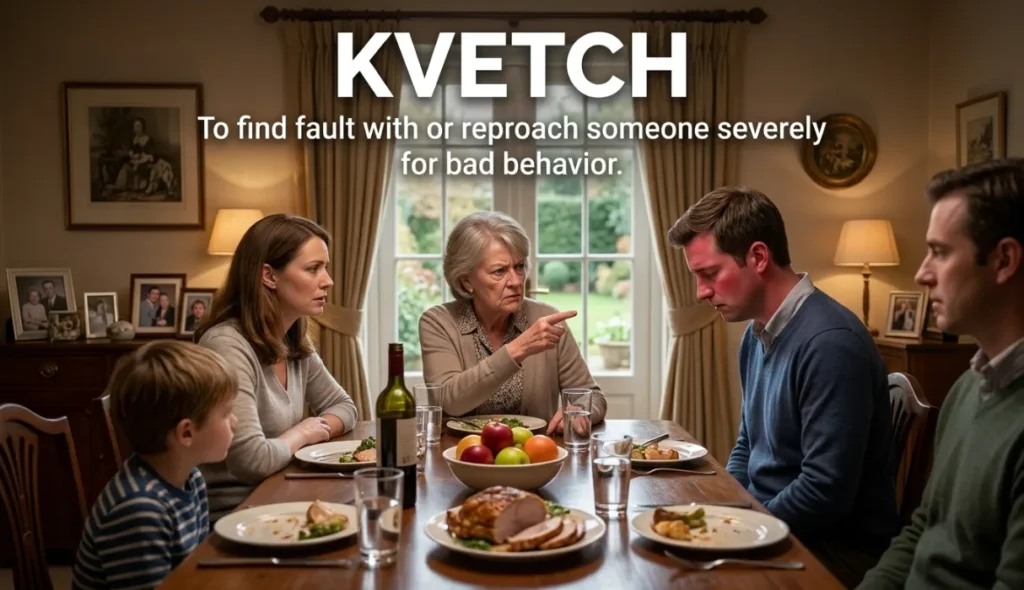
- Meaning: To find fault with or reproach someone severely for bad behavior.
- Tone/Register: Literary, Formal
- Example 1: The captain upbraided the sailors for neglecting basic ship duties.
- Example 2: She upbraided her friend for breaking an important promise.
Synonyms by Tone
| Tone Group | Synonyms Included | Why Tone Matters |
| Positive | Vent, Air grievances, Express feelings, Share concerns | Positive words turn complaining into healthy communication or emotional relief. |
| Neutral | Complain, Object, Register disapproval, Express discontent | Neutral options report dissatisfaction factually without dramatic judgment. |
| Negative | Whine, Gripe, Carp, Nitpick, Bellyache, Cavil, Berate | Negative terms highlight annoying, petty, or unreasonable complaining habits. |
| Playful / Informal | Kvetch, Sound off, Make a fuss, Pitch a fit, Roast, Whinge | Informal choices add humor, color, and cultural flavor to casual chats. |
Choosing the correct tone ensures your audience understands your intent. Calling a colleague’s feedback “nitpicking” sounds accusatory, while describing it as “expressing concerns” keeps discussions professional.
Mini Comparison: “Kvetch” vs Close Alternatives
Kvetch vs. Complain
- Meaning Difference: “Complain” is a broad verb covering all forms of dissatisfaction, serious or minor. “Kvetch” specifically means complaining about petty, small annoyances repeatedly.
- Tone Difference: “Complain” is neutral and suitable everywhere. “Kvetch” is informal, colorful, and often carries a lighthearted, comedic touch.
- When to Use Each: Use “complain” in formal emails, legal matters, or official forms. Use “kvetch” when poking fun at a friend whining about minor daily inconveniences.
Kvetch vs. Whine
- Meaning Difference: “Kvetch” focuses on habitual, nagging discontentment. “Whine” highlights a nasal, high-pitched, childish tone or pitiful attitude.
- Tone Difference: “Kvetch” is playful and expressive. “Whine” carries a stronger negative judgment regarding childish weakness.
- When to Use Each: Use “kvetch” when describing an adult grumbling about traffic. Use “whine” when describing a tired child begging for candy.
How “Kvetch” Changes by Context
- Daily Conversation: English speakers reach for casual, lively terms like “gripe,” “whine,” “bellyache,” or “kvetch” when chatting with friends or family.
- Writing & Blogging: Content writers use visual terms like “vent,” “sound off,” “nitpick,” or “make a fuss” to create engaging storytelling.
- Professional or Academic Tone: Professionals use respectful, objective terms like “object,” “express discontent,” “air grievances,” or “register disapproval.”
- Creative or Informal Use: Authors use dramatic or idiomatic phrases like “fulminate,” “pitch a fit,” “upbraid,” or “roast” to build vibrant character interactions.
Common Mistakes & Native Usage
Mistakes Learners Make
- Using “Kvetch” in Formal Writing: Avoid using “kvetch” in academic essays, official emails, or legal filings because it is an informal Yiddish borrowing.
- Confusing “Kvetch” with Serious Protest: Do not use “kvetch” to describe serious social protests or legal human rights complaints; it minimizes serious issues.
- Preposition Errors: Native speakers usually say someone “kvetches about” something or “kvetches to” someone.
Register Notes
- Spoken English: Expressive verbs like “gripe,” “bellyache,” “sound off,” and “whinge” dominate casual conversations.
- Written English: Formal options like “object,” “inveigh,” “cavil,” and “express discontent” appear in news articles, essays, and workplace literature.
Real-Life Mini Scenarios
- Workplace: “Management created a town hall so staff could air grievances.” (Air grievances frames complaining as a structured workplace process.)
- Social Situations: “We sat on the porch to vent about our hectic schedules.” (Vent highlights healthy emotional release among supportive friends.)
- Media / Pop Culture: “Film fans roast the special effects in new movie trailers online.” (Roast describes playful, sarcastic public criticism.)
- Writing or Storytelling: “The grumpy old landlord loved to kvetch about muddy boots on the stairs.” (Kvetch builds a memorable, humorous character trait.)
Conclusion
Expanding your vocabulary with a synonym for kvetch gives you the precise language needed to express daily human frustrations. Whether writing creative stories or professional emails, choosing the exact word elevates your communication.
Practicing these varied expressions in daily conversations, essays, and emails builds natural fluency and confidence over time. Diverse vocabulary helps you sound more engaging, authentic, and expressive.
Try incorporating two or three of these new alternatives into your daily English practice today to sharpen your vocabulary skills!
Practice Exercise
Test your understanding of synonyms for kvetch across different contexts.
- Which synonym best describes expressing mild daily frustration to a close friend for emotional relief?
a) Vent
b) Execrate
c) Castigate
d) Inveigh - What is the most appropriate formal phrase for a legal or business setting?
a) Bellyache
b) Pitch a fit
c) Register disapproval
d) Slag off - “The food critic began to __________ over minor plating flaws on an otherwise great dish.”
a) Cavil
b) Fulminate
c) Roar
d) Bark - Which word implies high-pitched, childish complaining?
a) Object
b) Whine
c) Proclaim
d) Endorse - What is an informal British English term for nagging complaints?
a) Whinge
b) Admonish
c) Reprove
d) Execrate - Choose the best phrase to describe sports fans venting loudly on television or radio:
a) Sound off
b) Chide
c) Revere
d) Extol - Which verb implies finding fault with tiny, unimportant details?
a) Nitpick
b) Praise
c) Laud
d) Commend - What is a high-formal, academic verb for speaking fiercely against a policy?
a) Inveigh
b) Knock
c) Bad-mouth
d) Run down - “The toddler threw a __________ when her mother turned off the cartoon show.”
a) Tantrum
b) Grievance
c) Quibble
d) Reproof - Select the word that describes journalists harshly criticizing a terrible new movie:
a) Pan
b) Cherish
c) Encourage
d) Support
Application Task:
Write a 2-sentence story about a humorous everyday situation using one synonym (such as gripe, kvetch, or whine) correctly.
Answer Key:
1-a, 2-c, 3-a, 4-b, 5-a, 6-a, 7-a, 8-a, 9-a, 10-a
FAQs
1. Is kvetch considered a rude or offensive word in English?
No, kvetch is not rude or offensive. It is an informal, expressive Yiddish borrowing that native speakers use lightheartedly to describe mild, habitual whining about minor daily annoyances.
2. What is the best formal synonym for kvetch in business writing?
In professional environments, replace kvetch with terms like express discontent, object, register disapproval, or air grievances. These options remain polite and objective.
3. How does kvetch differ from vent?
Kvetching focuses on nagging, petty complaints about minor inconveniences. Venting refers to sharing frustrating emotions freely with a supportive listener to feel emotional relief.
4. What is a British synonym for kvetch?
In British and Australian English, the word whinge is the closest equivalent. It describes persistent, annoying complaining in daily casual conversations.
5. Can kvetch be used as both a noun and a verb?
Yes! As a verb, you can say “He kvetches about everything.” As a noun, it describes a person who complains constantly: “Don’t be such a kvetch!”

Jameel Hassan is the founder and lead writer at SynonymsCloud.com, a trusted online platform dedicated to English vocabulary and effective communication. He is passionate about helping students, writers, professionals, and lifelong learners discover the right words to express their ideas with clarity, precision, and confidence.
At SynonymsCloud.com, every article is thoroughly researched and carefully written to provide accurate, practical, and easy-to-understand guidance on synonyms, antonyms, word meanings, idioms, and vocabulary. With a strong commitment to quality, real-world usage, and clear explanations, the website helps readers expand their vocabulary, improve their writing, and communicate more effectively in both academic and professional settings.