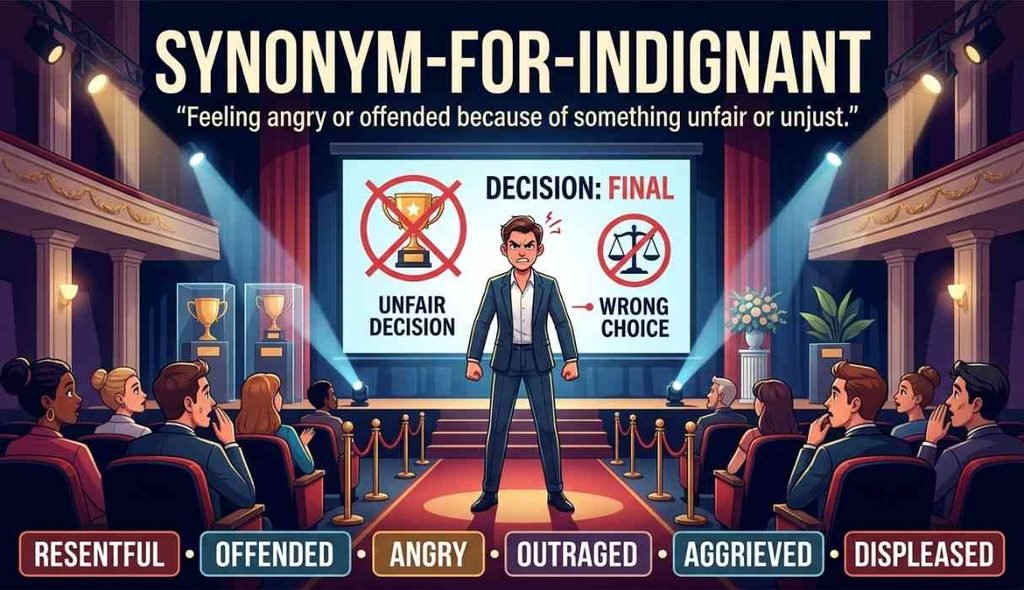
A direct synonym for indignant includes aggrieved, resentful, offended, or disgruntled. Use outraged or incensed for intense moral anger, and miffed or peeved for informal contexts. Choose indignant specifically when anger is triggered by unfair treatment or injustice, rather than just simple annoyance or frustration.
A synonym for indignant helps you express anger caused by unfairness, injustice, or disrespect. Imagine working hard on a project while someone else takes credit for your efforts. That powerful feeling of being wronged captures the meaning of indignant.
For example, Sarah felt indignant when her manager blamed her for a software problem she had already reported. Choosing a precise synonym for indignant can help readers understand the strength and cause of that emotion.
Learning these alternatives can expand your vocabulary and improve your communication skills. Words such as outraged, offended, resentful, and angered can express different shades of emotional reaction.
This guide introduces useful alternatives for students, bloggers, writers, and everyday English users. Mastering a synonym for indignant can make your essays, stories, conversations, and professional writing clearer, stronger, and more expressive.
What Does “Indignant” Really Mean?
Indignant describes a specific kind of anger caused by unfair treatment or injustice. It is not just feeling mad; it is feeling wronged by an unfair action. Native speakers use it when someone acts out of a sense of violated justice.
- Part of Speech: Adjective
- Simple English Definition: Feeling or showing anger because of something unfair, unjust, or wrong.
- Emotional Tone: Strong, righteous, and defensive.
Connotative Meaning
Connotation is the emotional or cultural association attached to a word beyond its literal definition.
- Positive Tone: Righteous or protective anger against clear wrongdoing or corruption.
- Negative Tone: Overly sensitive, defensive, or quick to take offense over minor issues.
- Neutral Tone: Expressing strong disagreement regarding a questionable decision or policy.
Etymology and History
- Source Language: Latin (indignari meaning “to regard as unworthy” or “to be displeased with”).
- Old English (450–1100): Not present in Old English; concepts of righteous anger were expressed through Germanic roots.
- Middle English (1100–1500): Adapted from Anglo-Norman and Old French sources.
- Modern English (1500–Present): Formally entered Modern English in the late 16th century to describe anger stemming from unjust treatment.
Pronunciation
- US: /ɪnˈdɪɡ.nənt/
- UK: /ɪnˈdɪɡ.nənt/
Syllables & Structure
- Syllables: in-dig-nant
- Root: dign (worthy)
- Prefix: in- (not)
- Suffix: -ant (forming an adjective)
Synonyms List
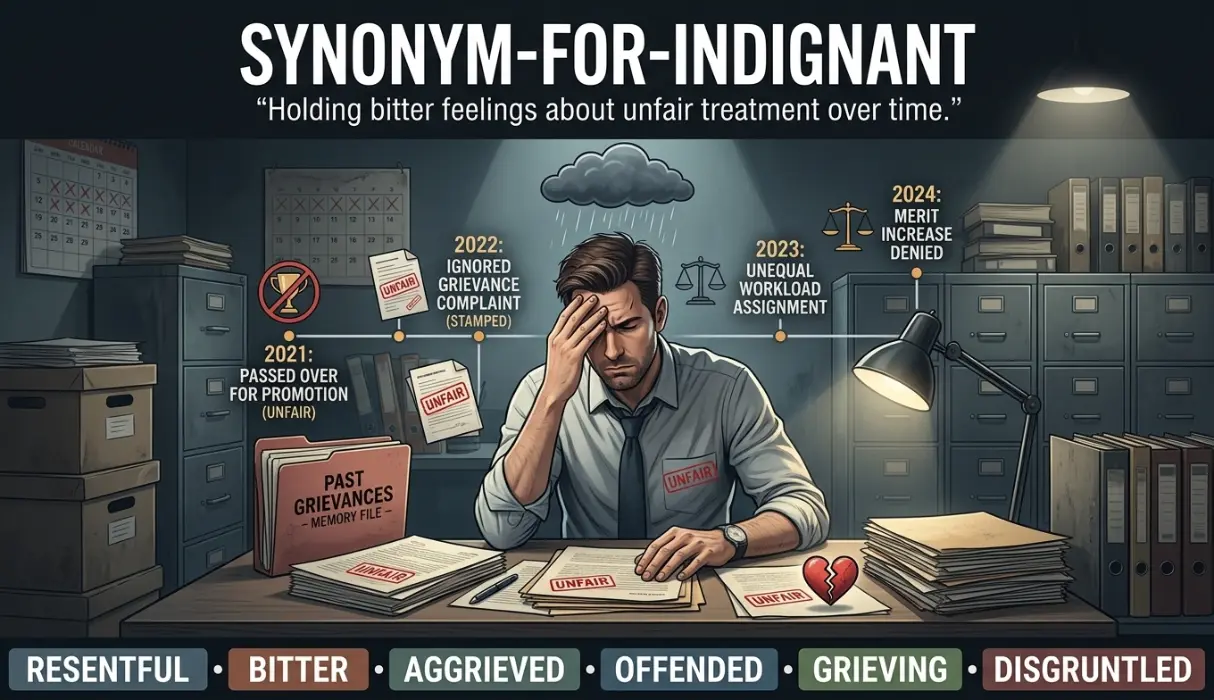
Resentful (Adjective) — US: /rɪˈzent.fəl/ | UK: /rɪˈzent.fəl/
- Meaning: Holding bitter feelings about being treated unfairly over time.
- Tone/Register: Neutral / General
- Example 1: He felt resentful after being passed over for a promotion he deserved.
- Example 2: Writing a bitter letter only made her look resentful and unprofessional.
Offended (Adjective) — US: /əˈfen.dɪd/ | UK: /əˈfen.dɪd/
- Meaning: Hurt or upset due to perceived disrespect or insult.
- Tone/Register: Informal / General
- Example 1: She was offended when they left her name off the guest list.
- Example 2: His sharp tone left several team members feeling deeply offended.
Aggrieved (Adjective) — US: /əˈɡriːvd/ | UK: /əˈɡriːvd/
- Meaning: Feeling resentful because of unfair treatment or violation of rights.
- Tone/Register: Formal / Legal / Business
- Example 1: The aggrieved employees filed a formal petition with human resources.
- Example 2: She looked aggrieved when her supervisor cut her presentation short.
Disgruntled (Adjective) — US: /dɪsˈɡrʌn.təld/ | UK: /dɪsˈɡrʌn.təld/
- Meaning: Displeased and moody due to unmet expectations or poor conditions.
- Tone/Register: Neutral / Business
- Example 1: A disgruntled customer demanded to speak directly with the branch manager.
- Example 2: The long delay left passengers feeling tired and disgruntled.
Exasperated (Adjective) — US: /ɪɡˈzæs.pə.reɪ.tɪd/ | UK: /ɪɡˈzɑː.spə.reɪ.tɪd/
- Meaning: Intensely irritated and frustrated by ongoing problems.
- Tone/Register: General / Conversational
- Example 1: The teacher gave an exasperated sigh as the noisy class continued.
- Example 2: I felt exasperated after waiting on hold for two hours.
Infuriated (Adjective) — US: /ɪnˈfjʊr.i.eɪ.tɪd/ | UK: /ɪnˈfjʊə.ri.eɪ.tɪd/
- Meaning: Extremely angry and filled with violent rage.
- Tone/Register: General / Expressive
- Example 1: She was infuriated by the sudden, unexplained cancellation of her flight.
- Example 2: An infuriated driver honked loudly at the stalled delivery truck.
Incensed (Adjective) — US: /ɪnˈsenst/ | UK: /ɪnˈsenst/
- Meaning: Very angry, often in response to a direct insult or injustice.
- Tone/Register: Formal / Literary
- Example 1: Citizens were incensed by the sudden increase in local property taxes.
- Example 2: He became incensed when accused of lying to his colleagues.
Irritated (Adjective) — US: /ˈɪr.ə.teɪ.tɪd/ | UK: /ˈɪr.ɪ.teɪ.tɪd/
- Meaning: Slightly angry, annoyed, or impatient.
- Tone/Register: General / Informal
- Example 1: The constant buzzing sound made her feel increasingly irritated.
- Example 2: He gave an irritated response when interrupted during his meeting.
Annoyed (Adjective) — US: /əˈnɔɪd/ | UK: /əˈnɔɪd/
- Meaning: Slightly angry or bothered by something trivial.
- Tone/Register: Informal / Conversational
- Example 1: I was annoyed when the train arrived ten minutes late.
- Example 2: She looked annoyed when her brother took her phone without asking.
Pissed off (Adjective) — US: /ˌpɪst ˈɑːf/ | UK: /ˌpɪst ˈɒf/
- Meaning: Very angry, annoyed, or displeased (slang).
- Tone/Register: Informal / Slang
- Example 1: He was pissed off after his computer crashed without saving.
- Example 2: Don’t get pissed off over a minor misunderstanding.
Vexed (Adjective) — US: /vekst/ | UK: /vekst/
- Meaning: Annoyed, frustrated, or worried by difficult situations.
- Tone/Register: Formal / Literary
- Example 1: The manager seemed vexed by the complex logistical delay.
- Example 2: She felt vexed after trying to solve the puzzle all afternoon.
Irked (Adjective) — US: /ɜːrkt/ | UK: /ɜːkt/
- Meaning: Irritated or annoyed by a specific action or event.
- Tone/Register: Informal / General
- Example 1: It irked him that nobody offered to help clean up.
- Example 2: She felt irked by his dismissive attitude toward her idea.
Miffed (Adjective) — US: /mɪft/ | UK: /mɪft/
- Meaning: Somewhat annoyed or put out by a minor offense.
- Tone/Register: Informal / Conversational
- Example 1: She was miffed that he forgot her birthday again.
- Example 2: He looked a bit miffed when he lost the game.
Peeved (Adjective) — US: /piːvd/ | UK: /piːvd/
- Meaning: Annoyed or irritated by something minor.
- Tone/Register: Informal / Conversational
- Example 1: Mark was peeved that someone drank his favorite coffee.
- Example 2: She felt peeved after waiting in the wrong line for an hour.
Sore (Adjective) — US: /sɔːr/ | UK: /sɔː/
- Meaning: Feeling upset, angry, or bitter about a loss or failure.
- Tone/Register: Informal / Conversational
- Example 1: Try not to be a sore loser after the game ends.
- Example 2: He is still sore about losing his spot on the team.
Bitter (Adjective) — US: /ˈbɪt̬.ɚ/ | UK: /ˈbɪt.ər/
- Meaning: Feeling deep anger and resentment over past mistreatment.
- Tone/Register: General / Expressive
- Example 1: She remained bitter about the unfair dismissal for years.
- Example 2: His bitter comments ruined the peaceful atmosphere of dinner.
Rankled (Adjective) — US: /ˈræŋ.kəld/ | UK: /ˈræŋ.kəld/
- Meaning: Persistently irritated or bothered by a past incident.
- Tone/Register: Neutral / Literary
- Example 1: The unfair criticism rankled in his mind all night long.
- Example 2: She felt rankled by his condescending remarks during lunch.
Displeased (Adjective) — US: /dɪsˈpliːzd/ | UK: /dɪsˈpliːzd/
- Meaning: Unhappy or dissatisfied with a situation or performance.
- Tone/Register: Formal / Business
- Example 1: The director was displeased with the poor quality of the report.
- Example 2: She looked displeased when the project was delayed again.
Wrathful (Adjective) — US: /ˈræθ.fəl/ | UK: /ˈrɒθ.fəl/
- Meaning: Full of intense, vengeful anger.
- Tone/Register: Formal / Literary
- Example 1: The wrathful customer threatened to take legal action against the company.
- Example 2: A wrathful expression crossed his face when he heard the news.
Livid (Adjective) — US: /ˈlɪv.ɪd/ | UK: /ˈlɪv.ɪd/
- Meaning: Extremely angry to the point of turning pale or red.
- Tone/Register: Informal / Expressive
- Example 1: My boss was livid when he found out about the budget error.
- Example 2: She was absolutely livid after her car was scratched in the parking lot.
Seething (Adjective) — US: /ˈsiː.ðɪŋ/ | UK: /ˈsiː.ðɪŋ/
- Meaning: Filled with intense, suppressed anger that is barely kept under control.
- Tone/Register: General / Expressive
- Example 1: He was seething with quiet anger as he left the courtroom.
- Example 2: Beneath her calm mask, she was seething with deep frustration.
Fuming (Adjective) — US: /ˈfjuː.mɪŋ/ | UK: /ˈfjuː.mɪŋ/
- Meaning: Showing clear, visible signs of extreme anger.
- Tone/Register: Informal / Expressive
- Example 1: She walked out of the room, fuming about the unfair criticism.
- Example 2: He sat in traffic, fuming over his ruined schedule.
Outraged (Adjective) — US: /ˈaʊt.reɪdʒd/ | UK: /ˈaʊt.reɪdʒd/
- Meaning: Feeling deep anger and shock at a moral violation.
- Tone/Register: General / News
- Example 1: The community was outraged by the sudden closure of the hospital.
- Example 2: She felt outraged when she saw the animal neglect online.
Scandalized (Adjective) — US: /ˈskæn.də.laɪzd/ | UK: /ˈskæn.də.laɪzd/
- Meaning: Shocked and offended by immoral or improper behavior.
- Tone/Register: Formal / General
- Example 1: The public was scandalized by the politician’s hidden financial dealings.
- Example 2: She was scandalized by the rude comments made at the party.
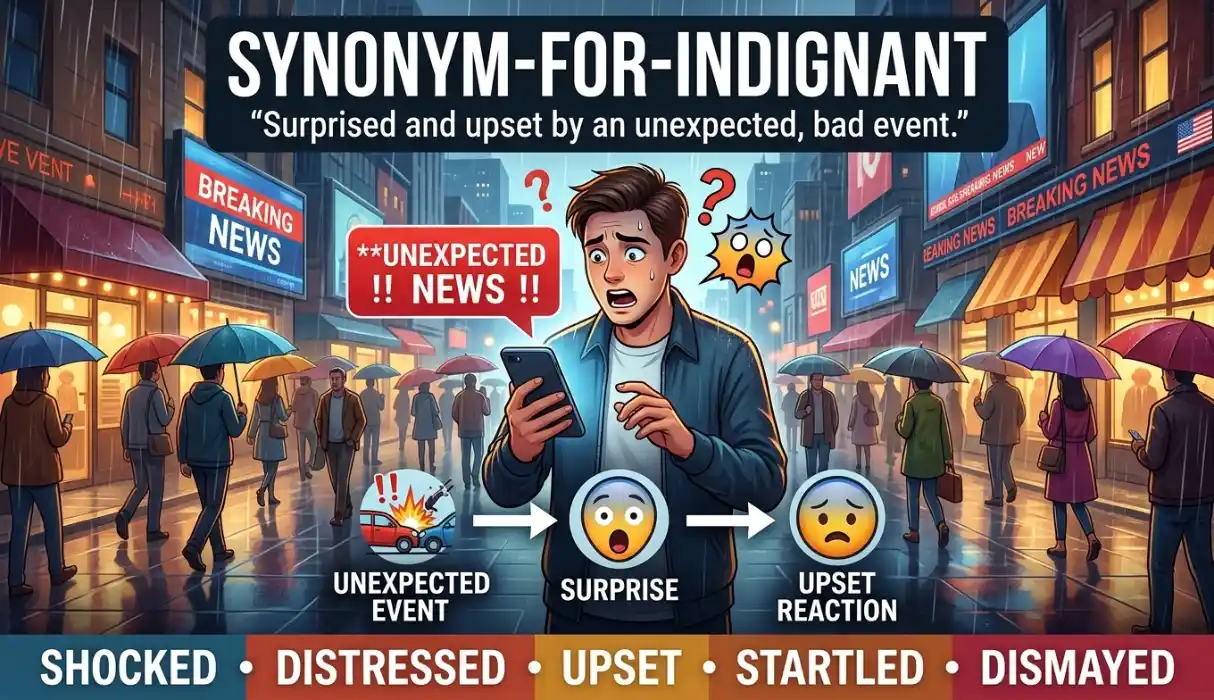
Shocked (Adjective) — US: /ʃɑːkt/ | UK: /ʃɒkt/
- Meaning: Surprised and upset by an unexpected, bad event.
- Tone/Register: General / Informal
- Example 1: I was shocked to hear that the company went bankrupt overnight.
- Example 2: She looked completely shocked when she saw the damage to her car.
Appalled (Adjective) — US: /əˈpɑːld/ | UK: /əˈpɔːld/
- Meaning: Filled with strong dismay, disgust, or horror.
- Tone/Register: Formal / General
- Example 1: We were appalled by the terrible conditions inside the shelter.
- Example 2: She gave an appalled reaction to the news of the scam.
Disgusted (Adjective) — US: /dɪsˈɡʌs.tɪd/ | UK: /dɪsˈɡʌs.tɪd/
- Meaning: Feeling strong disapproval or physical revulsion.
- Tone/Register: General / Informal
- Example 1: He was disgusted by the dishonest behavior of his business partner.
- Example 2: She turned away, thoroughly disgusted by the dirty kitchen.
Righteous (Adjective) — US: /ˈraɪ.tʃəs/ | UK: /ˈraɪ.tʃəs/
- Meaning: Motivated by a strong belief in moral correctness.
- Tone/Register: Formal / Academic
- Example 1: She delivered a righteous speech defending the rights of workers.
- Example 2: His righteous anger inspired others to join the peaceful protest.
Umbrageous (Adjective) — US: /ʌmˈbreɪ.dʒəs/ | UK: /ʌmˈbreɪ.dʒəs/
- Meaning: Apt to take offense or feeling resentful.
- Tone/Register: Literary / Archaic
- Example 1: His umbrageous nature made it hard to give constructive feedback.
- Example 2: She took an umbrageous stance during the tense debate.
Choleric (Adjective) — US: /kəˈler.ɪk/ | UK: /ˈkɒl.ər.ɪk/
- Meaning: Bad-tempered, easily angered, or hot-headed.
- Tone/Register: Formal / Literary
- Example 1: The choleric manager yelled whenever an employee made a small mistake.
- Example 2: His choleric mood ruined an otherwise pleasant dinner party.
Irascible (Adjective) — US: /ɪˈræs.ə.bəl/ | UK: /ɪˈræs.ə.bəl/
- Meaning: Easily provoked to anger; quick-tempered.
- Tone/Register: Formal / Academic
- Example 1: The irascible old man shouted at children who walked on his lawn.
- Example 2: Working with such an irascible boss requires great patience.
Testy (Adjective) — US: /ˈtes.ti/ | UK: /ˈtes.ti/
- Meaning: Easily annoyed, impatient, and quick to respond sharply.
- Tone/Register: Informal / General
- Example 1: He gave a testy answer when asked about the project deadline.
- Example 2: Long work hours made the whole team feel testy and stressed.
Touchy (Adjective) — US: /ˈtʌtʃ.i/ | UK: /ˈtʌtʃ.i/
- Meaning: Overly sensitive and easily offended by comments.
- Tone/Register: Informal / Conversational
- Example 1: Don’t mention his past mistakes because he is touchy about that topic.
- Example 2: She became touchy when we asked about her plans.
Snappish (Adjective) — US: /ˈsnæp.ɪʃ/ | UK: /ˈsnæp.ɪʃ/
- Meaning: Responding in an irritable, sharp tone.
- Tone/Register: Informal / Conversational
- Example 1: She gave a snappish reply because she hadn’t slept well.
- Example 2: His snappish attitude alienated his team members during the meeting.
Cantankerous (Adjective) — US: /kænˈtæŋ.kɚ.əs/ | UK: /kænˈtæŋ.kər.əs/
- Meaning: Bad-tempered, argumentative, and uncooperative.
- Tone/Register: General / Informal
- Example 1: The cantankerous neighbor complained about every minor noise.
- Example 2: Exhaustion turned the sweet child into a cantankerous toddler.
Cross (Adjective) — US: /krɑːs/ | UK: /krɒs/
- Meaning: Annoyed or slightly angry (common in British English).
- Tone/Register: Informal / British
- Example 1: Please don’t be cross with me for forgetting the keys.
- Example 2: She looked cross after missing her morning bus.
Petulant (Adjective) — US: /ˈpetʃ.ə.lənt/ | UK: /ˈpetʃ.ʊ.lənt/
- Meaning: Bad-tempered or childishly sulky.
- Tone/Register: General / Expressive
- Example 1: He threw a petulant tantrum when he lost the card game.
- Example 2: Her petulant tone made it hard to reason with her.
Sulky (Adjective) — US: /ˈsʌl.ki/ | UK: /ˈsʌl.ki/
- Meaning: Silent, gloomy, and bad-tempered out of resentment.
- Tone/Register: Informal / Conversational
- Example 1: The teenager remained sulky all afternoon after being grounded.
- Example 2: She sat in the corner with a sulky expression on her face.
Sullen (Adjective) — US: /ˈsʌl.ən/ | UK: /ˈsʌl.ən/
- Meaning: Bad-tempered, silent, and gloomy.
- Tone/Register: General / Literary
- Example 1: He gave a sullen nod and refused to speak further.
- Example 2: The room fell into a sullen silence after the harsh announcement.
Crabbed (Adjective) — US: /kræbd/ | UK: /kræbd/
- Meaning: Morose, bad-tempered, and hard to deal with.
- Tone/Register: Literary / Formal
- Example 1: His crabbed response made it clear he wanted to be left alone.
- Example 2: A crabbed disposition can make teamwork very challenging.
Surly (Adjective) — US: /ˈsɝː.li/ | UK: /ˈsɜː.li/
- Meaning: Bad-tempered, rude, and unfriendly.
- Tone/Register: General / Informal
- Example 1: The surly clerk shoved the receipt across the counter.
- Example 2: He gave a surly answer when asked for directions.
Grouchy (Adjective) — US: /ˈɡraʊ.tʃi/ | UK: /ˈɡraʊ.tʃi/
- Meaning: Irritable and prone to complaining.
- Tone/Register: Informal / Conversational
- Example 1: I feel grouchy whenever I don’t get my morning coffee.
- Example 2: The grouchy driver complained about the morning traffic.
Grumpy (Adjective) — US: /ˈɡrʌm.pi/ | UK: /ˈɡrʌm.pi/
- Meaning: Easily annoyed and bad-tempered.
- Tone/Register: Informal / Conversational
- Example 1: He is always grumpy right after waking up from a nap.
- Example 2: A grumpy customer complained about the temperature in the store.
Peevish (Adjective) — US: /ˈpiː.vɪʃ/ | UK: /ˈpiː.vɪʃ/
- Meaning: Easily irritated by small things; fretful.
- Tone/Register: Formal / Literary
- Example 1: Her peevish remark ruined the joyful mood in the office.
- Example 2: He grew peevish as the meeting dragged on past noon.
Huffy (Adjective) — US: /ˈhʌf.i/ | UK: /ˈhʌf.i/
- Meaning: Annoyed or irritated, taking offense easily.
- Tone/Register: Informal / Conversational
- Example 1: She went off in a huffy mood after losing the argument.
- Example 2: Don’t get huffy just because I asked a simple question.
Offended-like (Adjective) — US: /əˈfen.dɪd laɪk/ | UK: /əˈfen.dɪd laɪk/
- Meaning: Appearing or acting as if offended by something.
- Tone/Register: Informal / Colloquial
- Example 1: He walked off all offended-like after the joke was made.
- Example 2: She gave an offended-like look when her offer was turned down.
Soreheaded (Adjective) — US: /ˈsɔːr.hed.ɪd/ | UK: /ˈsɔː.hed.ɪd/
- Meaning: Easily angered or disgruntled; irritable.
- Tone/Register: Informal / Regional
- Example 1: The soreheaded spectator argued loudly with the referee.
- Example 2: He was soreheaded all day after his team lost the championship.
Hot-headed (Adjective) — US: /ˌhɑːtˈhed.ɪd/ | UK: /ˌhɒtˈhed.ɪd/
- Meaning: Quick to react with anger; impulsive.
- Tone/Register: Informal / General
- Example 1: The hot-headed youth reacted immediately to the slight.
- Example 2: His hot-headed decisions often got him into trouble at work.
Fiery (Adjective) — US: /ˈfaɪ.ri/ | UK: /ˈfaɪə.ri/
- Meaning: Having a passionate, quick-tempered nature.
- Tone/Register: Expressive / Literary
- Example 1: Her fiery personality made her a captivating, bold speaker.
- Example 2: They had a fiery debate over the new company policies.
Impassioned (Adjective) — US: /ɪmˈpæʃ.ənd/ | UK: /ɪmˈpæʃ.ənd/
- Meaning: Filled with or showing great emotion or passion.
- Tone/Register: Formal / Academic
- Example 1: He made an impassioned plea for environmental protection.
- Example 2: Her impassioned speech brought the audience to its feet.
Provoked (Adjective) — US: /prəˈvoʊkt/ | UK: /prəˈvəʊkt/
- Meaning: Incited to anger by a deliberate, hostile action.
- Tone/Register: General / Legal
- Example 1: The provoked dog barked fiercely at the intruder.
- Example 2: She reacted sharply only after being provoked repeatedly.
Unappeased (Adjective) — US: /ˌʌn.əˈpiːzd/ | UK: /ˌʌn.əˈpiːzd/
- Meaning: Not satisfied or pacified in terms of anger or demands.
- Tone/Register: Formal / Academic
- Example 1: The unappeased crowd continued to protest outside city hall.
- Example 2: He remained unappeased despite the manager’s sincere apology.
Malicious (Adjective) — US: /məˈlɪʃ.əs/ | UK: /məˈlɪʃ.əs/
- Meaning: Characterized by a desire to cause harm or distress.
- Tone/Register: Formal / General
- Example 1: She was hurt by the malicious rumors spread online.
- Example 2: The computer virus was designed with malicious intent.
Spiteful (Adjective) — US: /ˈspaɪt.fəl/ | UK: /ˈspaɪt.fəl/
- Meaning: Showing or caused by a desire to harm or annoy someone.
- Tone/Register: Informal / General
- Example 1: He made a spiteful comment to ruin her big moment.
- Example 2: Leaving a spiteful review was her way of getting revenge.
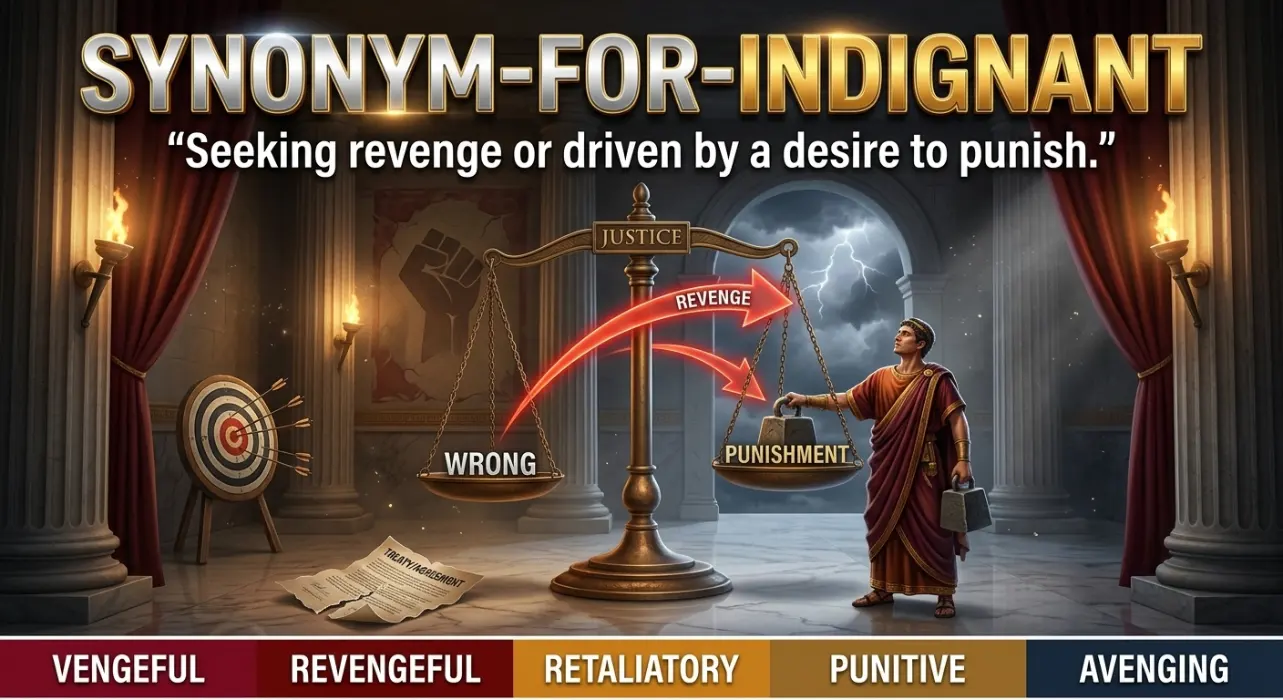
Vengeful (Adjective) — US: /ˈvendʒ.fəl/ | UK: /ˈvendʒ.fəl/
- Meaning: Seeking revenge or driven by a desire to punish.
- Tone/Register: Formal / Literary
- Example 1: The vengeful villain plotted against the hero for years.
- Example 2: She harbored vengeful thoughts after being cheated out of her savings.
Synonyms by Tone
Tone controls how your reader perceives your message. Selecting the right tone ensures your anger sounds professional, justified, or informal depending on the scenario.
- Positive / Righteous Tone: Righteous, Impassioned, Aggrieved. These words imply that the anger stems from a moral standard or a legitimate fight against injustice.
- Neutral Tone: Displeased, Resentful, Offended, Irritated. These describe the emotional state directly without framing the person as either noble or childish.
- Negative / Childish Tone: Petulant, Sulky, Cantankerous, Grouchy. These imply that the anger is unreasonable, overblown, or immature.
- Playful / Informal Tone: Peeved, Miffed, Huffy, Pissed off. These work best in casual conversations, blogging, or fiction.
Mini Comparison: Indignant vs. Close Alternatives
| Word | Key Shade of Meaning | Tone | Best Context |
| Indignant | Anger caused by perceived injustice or unfair treatment | Formal / Moral | Reacting to unfair rules or false accusations |
| Outraged | Violent shock and deep anger caused by a severe moral breach | Strong / Dramatic | Public scandals or severe violations |
| Resentful | Long-lasting, quiet bitterness from feeling treated unfairly | Internal / Reflective | Workplace rivalries or long-term grudges |
How “Indignant” Changes by Context
Daily Conversation
In casual speech, native speakers rarely say “I am indignant.” Instead, they use lighter options like miffed, peeved, or annoyed. If the situation involves real unfairness, they might say: “I felt so cheated” or “It made me so mad.”
Writing & Blogging
Content creators use indignant to create instant empathy. Describing a character or customer as indignant signals to the reader that a rule or boundary was broken. It adds narrative tension.
Professional & Academic Tone
In professional emails or academic writing, use formal terms like aggrieved, displeased, or incensed. For example: “The aggrieved party requested a formal audit” sounds vastly better than “The mad group wanted an audit.”
Common Mistakes & Native Usage
Misuse Scenarios
- Confusing “Indignant” with “Indigent”: Indigent means poor or needy. Indignant means angry at unfairness. Saying “The indignant man asked for spare change” is incorrect unless he is angry about unfair treatment while doing so.
- Overusing “Angry”: Writers often use “angry” for everything. Using a specific synonym like seething or petulant gives your writing far more precision.
Register & Native Polish
Native speakers reserve indignant for situations where a moral boundary or rule of fairness has been crossed. If you lose your keys, you are frustrated or annoyed—not indignant. If someone steals your work and claims it as their own, you are truly indignant.
Real-Life Mini Scenarios
- Workplace: An employee works overtime to finish a report. The manager claims all the credit in front of executives. The employee feels deeply indignant.
- Social Situations: You wait in line for an hour at a bakery. Someone cuts right in front of you. You give them an indignant look.
- Media & News: A city suddenly cuts funding for public parks without notice. Citizens attend the town hall feeling outraged and incensed.
Conclusion
Mastering a new synonym for indignant empowers you to express anger with exact nuance and emotional authority. Choosing precise words elevates your style whether you are writing an essay, blogging, or speaking.
Using varied vocabulary helps students earn better grades, bloggers capture attention, and professionals communicate with precision. Replacing basic words with exact alternatives makes your communication far more compelling.
Try picking three synonyms from this list today and build your own sentences with them. Consistent practice will naturally weave these powerful words into your everyday vocabulary.
Practice Exercise
- Which synonym best describes anger caused specifically by an unfair decision at work?
A) Peeved
B) Aggrieved
C) Sulky
D) Touchy - If a toddler throws a tantrum because they did not get candy, their behavior is best described as:
A) Righteous
B) Impassioned
C) Petulant
D) Incensed - What is the main difference between being indignant and being frustrated?
A) Indignant involves unfairness; frustrated involves obstacles.
B) Indignant means mild annoyance; frustrated means extreme rage.
C) Indignant is informal; frustrated is academic.
D) There is no difference. - Choose the best formal word to use in a legal or professional complaint:
A) Pissed off
B) Huffy
C) Aggrieved
D) Grouchy - Which word implies long-lasting bitterness rather than a sudden outburst?
A) Livid
B) Resentful
C) Testy
D) Snappish - If your boss turns pale with extreme rage, they are best described as:
A) Miffed
B) Livid
C) Sullen
D) Cross - What type of tone does the word righteous carry when combined with anger?
A) Childish
B) Morally justified
C) Rude and surly
D) Casual - Identify the common vocabulary mistake:
A) “He was indigent when he lost his job.” (Meaning poor)
B) “She felt indignant when falsely accused.”
C) “The indignant customer demanded a refund for the broken item.”
D) “They expressed indignant surprise at the unfair law.” - Which British-English term means slightly annoyed?
A) Soreheaded
B) Cross
C) Choleric
D) Umbrageous - If someone is quietly burning with suppressed anger inside, they are:
A) Seething
B) Touchy
C) Snappish
D) Peeved
Reflection Task:
Write a short, 2-sentence story about a character experiencing an unfair situation. Use at least two synonyms from this article.
Answer Key:
1: B | 2: C | 3: A | 4: C | 5: B | 6: B | 7: B | 8: A | 9: B | 10: A
FAQs
1. What is the most common synonym for indignant in daily speech?
The most common casual synonyms are offended, annoyed, or upset. In everyday speech, native speakers often use phrases like “feeling cheated” or “mad about how unfair it was” rather than formal adjectives.
2. Can indignant have a positive connotation?
Yes, it can. When used as righteous indignation, it describes standing up against injustice, corruption, or prejudice. In this context, feeling indignant shows a strong moral code and a drive to protect others.
3. What is the difference between indignant and irate?
Indignant specifically stems from a sense of unfairness or injustice. Irate simply means furious, regardless of whether the anger is justified or caused by unfair treatment.
4. How do I choose between indignant, offended, and outraged?
Use offended for personal insults or hurt feelings. Indignant when a rule of fairness or justice is broken. Use outraged when a situation causes extreme shock and widespread public moral outrage.
5. What prefix and root make up the word indignant?
The word combines the Latin prefix in- (meaning “not”) with the root dignus (meaning “worthy”). Together, they literally translate to treating something or someone as “not worthy” of respect, causing anger.

Jameel Hassan is the founder and lead writer at SynonymsCloud.com, a trusted online platform dedicated to English vocabulary and effective communication. He is passionate about helping students, writers, professionals, and lifelong learners discover the right words to express their ideas with clarity, precision, and confidence.
At SynonymsCloud.com, every article is thoroughly researched and carefully written to provide accurate, practical, and easy-to-understand guidance on synonyms, antonyms, word meanings, idioms, and vocabulary. With a strong commitment to quality, real-world usage, and clear explanations, the website helps readers expand their vocabulary, improve their writing, and communicate more effectively in both academic and professional settings.