
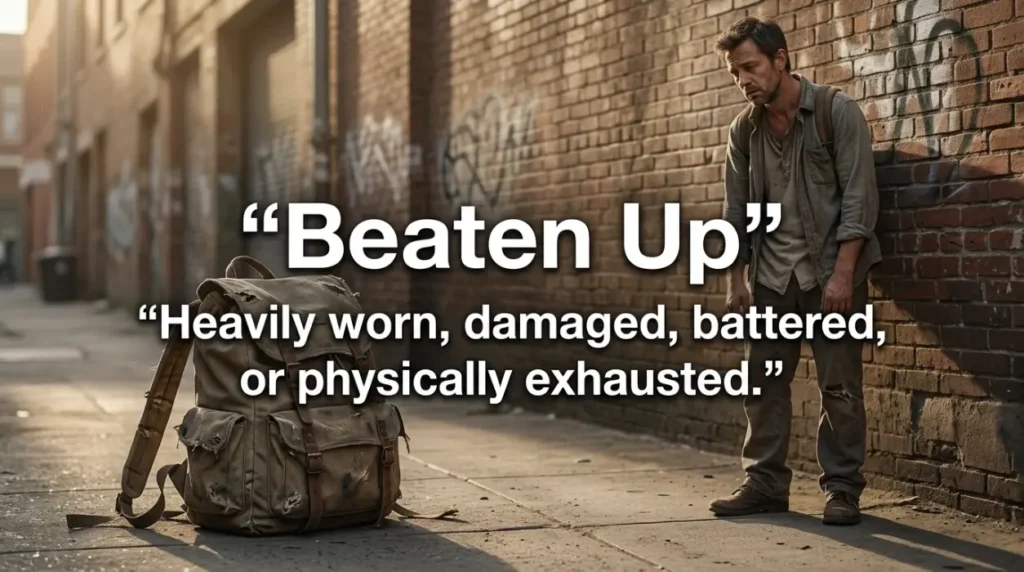
Synonyms for beaten up mean severely damaged, worn from rough use, or deeply fatigued. Elevate your writing with precision: use battered for physical impacts, dilapidated for neglected ruins, weathered for natural aging, threadbare for worn textiles, and exhausted for people. Exact word choice immediately sharpens tone, clarity, and visual storytelling impact today.
Synonyms for beaten up help describe exhausted people, damaged objects, and items that look old, rough, or heavily used. Imagine discovering your favorite childhood toy, scratched and broken, tucked away in an attic. The right expression can instantly bring that worn-out scene to life.
You may even have a beloved pair of sneakers that looks battered but still feels impossible to throw away. Using synonyms for beaten up gives your writing more variety while helping readers picture age, damage, or physical exhaustion with greater clarity.
These descriptive terms can express different levels of wear, from slightly shabby to severely damaged. They also help writers avoid repetitive language when describing people, vehicles, clothing, furniture, or everyday belongings.
Learning synonyms for beaten up can benefit bloggers, students, authors, and everyday communicators. Choosing precise alternatives adds color to your English, strengthens descriptions, and keeps readers engaged from the first sentence to the last.
What Does “Beaten Up” Really Mean?
“Beaten up” describes something that is heavily damaged from overuse, age, or physical impact. It can also describe a person who feels entirely exhausted or physically battered. Native speakers use it for both broken objects and tired people.
You will see this phrase in casual conversations, fiction writing, and daily storytelling. It implies a history of rough treatment or long-term wear and tear.
Part of Speech: Adjective (Phrasal). Definition: Damaged, worn out, or physically battered due to heavy use or rough treatment.
Connotative Meaning
Connotation is the emotional tone or cultural association a word carries beyond its literal definition.
- Positive tone: Can show affection for well-loved, vintage, or deeply cherished items.
- Negative tone: Suggests neglect, physical harm, destruction, or complete exhaustion.
- Neutral tone: Simply describes the factual physical condition of an old object.
Etymology
The phrase combines the verb “beat” and the particle “up” to show completion or intensity.
- Old English (450–1100): Rooted in beatan, meaning to strike or hit repeatedly.
- Middle English (1100–1500): Remained beten, used to describe physical striking.
- Modern English (1500–Present): “Beaten up” evolved to describe worn items and exhausted people.
Syllables
beat-en-up
Affixation Pattern
- Root: Beat
- Suffix: en (turns the verb into a past participle)
Synonyms List
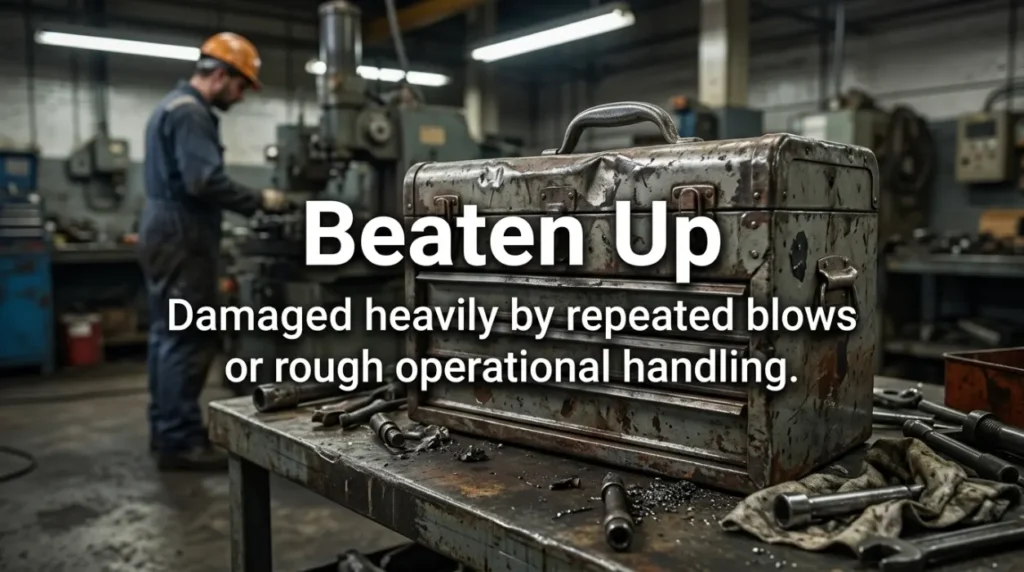
1. Battered (Adjective)
Meaning: Damaged heavily by repeated blows or rough operational handling.
Tone/Register: Standard / Descriptive
Example 1: Delivery driver maneuvered a battered transit van down the alley.
Example 2: Boxer protected his battered cheekbone during the final round.
2. Worn (Adjective)
Meaning: Thinned or softened from continuous long-term friction.
Tone/Register: Neutral / Universal
Example 1: Library stair treads showed deep wooden hollows worn smooth.
Example 2: She turned pages of a worn paperback poetry anthology.
3. Damaged (Adjective)
Meaning: Impaired in physical integrity, utility, or commercial value.
Tone/Register: Formal / Business
Example 1: Freight carrier flagged three cartons as water-damaged.
Example 2: Inspection confirmed structural frame elements remained damaged.
4. Dilapidated (Adjective)
Meaning: Fallen into partial ruin specifically through age and neglect.
Tone/Register: Formal / Literary
Example 1: Ivy climbed the exterior brick walls of a dilapidated Victorian manor.
Example 2: City council ordered demolition of dilapidated storage sheds.
5. Ragged (Adjective)
Meaning: Characterized by uneven, torn, or deeply frayed edges.
Tone/Register: Descriptive / Literary
Example 1: Wanderer wrapped a ragged wool shawl tighter against frost.
Example 2: Coastal cliffs dropped sheer into ragged white surf foam.
6. Frayed (Adjective)
Meaning: Unraveled at fabric threads due to mechanical friction.
Tone/Register: Standard / Practical
Example 1: Climbing instructor retired rope showing frayed nylon sheathing.
Example 2: Vintage denim cuffs arrived neatly frayed at bottom seams.
7. Ruined (Adjective)
Meaning: Destroyed or spoiled completely beyond functional recovery.
Tone/Register: Emotional / Strong
Example 1: Torrential basement flood left antique records completely ruined.
Example 2: Sudden gear failure ruined the photographer’s golden-hour shoot.
8. Trashed (Adjective)
Meaning: Vandalized, trashed carelessly, or reduced to junk status.
Tone/Register: Casual / Slang-Leaning
Example 1: Touring band found backstage greenroom completely trashed.
Example 2: Old aluminum mountain bike frame got trashed on rocks.
9. Wrecked (Adjective)
Meaning: Severely smashed from collision or drained of vitality.
Tone/Register: Conversational / Dramatic
Example 1: A tow truck winched a wrecked sedan off a guardrail curve.
Example 2: Working consecutive double shifts left staff feeling wrecked.
10. Bruised (Adjective)
Meaning: Showing surface discoloration from blunt-force impact or pressure.
Tone/Register: Descriptive / Personal
Example 1: Harvested orchard peaches arrived slightly bruised near stems.
Example 2: He iced a bruised forearm after a mountain bike spill.
11. Tattered (Adjective)
Meaning: Hanging in torn shreds or worn to extreme thinness.
Tone/Register: Literary / Descriptive
Example 1: Weather vane spun above a tattered canvas stable awning.
Example 2: An archival box held a tattered 19th-century railway ledger.
12. Torn (Adjective)
Meaning: Separated forcefully along a rip or stress line.
Tone/Register: Universal / Standard
Example 1: A field botanist taped a torn page inside a plant journal.
Example 2: Shelter dogs chewed up a torn cotton sofa cushion.
13. Broken (Adjective)
Meaning: Fractured into pieces or failing in function.
Tone/Register: Universal / Standard
Example 1: Maintenance crew replaced the broken glass pane in the lobby door.
Example 2: Photographer carried a backup body after the shutter broke.
14. Cracked (Adjective)
Meaning: Fractured with visible hairline fissures across the surface.
Tone/Register: Neutral / Descriptive
Example 1: Clay planter developed a hairline crack from frost.
Example 2: Driver squinted through a cracked windshield edge.
15. Chipped (Adjective)
Meaning: Having a small fragment broken cleanly off a rim.
Tone/Register: Neutral / Specific
Example 1: Cafe served espresso in a charmingly chipped ceramic mug.
Example 2: Carpenter touched up chipped doorframe enamel with a brush.
16. Smashed (Adjective)
Meaning: Shattered violently into multiple fractured shards.
Tone/Register: Dramatic / Strong
Example 1: Rogue pebble left a smashed headlight lens on SUV.
Example 2: Dropped glass carafe left smashed crystals on tile.
17. Crushed (Adjective)
Meaning: Deformed or flattened under heavy external pressure.
Tone/Register: Descriptive / Technical
Example 1: Overpacked mailer left paperback corner completely crushed.
Example 2: Hydraulic press left sample metal cylinder crushed flat.
18. Mangled (Adjective)
Meaning: Twisted, torn, or disfigured irregularly by force.
Tone/Register: Graphic / Strong
Example 1: Garden rotary tiller hit buried root and mangled blade.
Example 2: Archive parcel arrived with mangled cardboard corner flaps.
19. Defaced (Adjective)
Meaning: Having surface text or appearance intentionally ruined.
Tone/Register: Formal / Legal
Example 1: Transit police reported bus shelter acrylic panels defaced.
Example 2: Library rejected loan return with defaced title page.
20. Scuffed (Adjective)
Meaning: Marked by minor friction abrasions on finish.
Tone/Register: Everyday / Mild
Example 1: Hardwood gym floor stayed scuffed near baseline zones.
Example 2: Leather travel briefcase looked nicely scuffed by travel.
21. Scratched (Adjective)
Meaning: Marked by thin linear surface scoring cuts.
Tone/Register: Standard / Universal
Example 1: Thrift store vinyl record played fine despite a scratched label.
Example 2: Stainless steel sink rim got scratched during install.
22. Faded (Adjective)
Meaning: Deprived of pigment intensity by sun or time exposure.
Tone/Register: Nostalgic / Descriptive
Example 1: Porch rocking chair featured sun-faded blue cushion fabric.
Example 2: Framed map showed faded ink boundary lines from 1950.
23. Threadbare (Adjective)
Meaning: Worn so heavily that weave threads show prominently.
Tone/Register: Literary / Descriptive
Example 1: Study chair featured threadbare green velvet armrests.
Example 2: Trekker replaced threadbare wool socks before alpine ridge.
24. Shabby (Adjective)
Meaning: Needing cosmetic care due to worn surface presentation.
Tone/Register: Critical / Descriptive
Example 1: Lobby armchairs looked shabby next to modern reception desk.
Example 2: Artist painted a charmingly shabby harbor boathouse facade.
25. Ramshackle (Adjective)
Meaning: Loosely constructed and appearing precariously unstable.
Tone/Register: Descriptive / Rustic
Example 1: Goats grazed around a ramshackle orchard fence enclosure.
Example 2: Surfers stored boards inside a ramshackle beach shack.
26. Decrepit (Adjective)
Meaning: Broken down and frail from extreme old age.
Tone/Register: Formal / Critical
Example 1: Decrepit pier pilings leaned dangerously into low tide.
Example 2: The orchard owner pruned branches off a decrepit apple tree.
27. Run-down (Adjective)
Meaning: Neglected in physical upkeep or personally exhausted.
Tone/Register: Conversational / Standard
Example 1: Investors toured a run-down brick warehouse district downtown.
Example 2: Freelancer felt run-down after finishing quarterly client rush.
28. Weathered (Adjective)
Meaning: Characterized by attractive or rugged atmospheric aging.
Tone/Register: Rustic / Positive-Leaning
Example 1: Dock pilings bore deep salt-weathered gray grain lines.
Example 2: Fisherman wore a deep wind-weathered bronze facial tan.
29. Busted (Adjective)
Meaning: Broken, non-functional, or caught breaking rules.
Tone/Register: Informal / Slang
Example 1: Roommate fixed a busted kitchen faucet washer valve.
Example 2: Teenagers got busted cutting across construction fencing.
30. Pummeled (Adjective)
Meaning: Struck repeatedly by weather elements or force.
Tone/Register: Action / Dramatic
Example 1: Pebble Beach looked pummeled by winter gales overnight.
Example 2: Boxer protected his pummeled ribs with high guard.
31. Thrashed (Adjective)
Meaning: Beaten around roughly or worn out by intense action.
Tone/Register: Informal / Action
Example 1: Skater replaced a heavily thrashed wooden deck graphic.
Example 2: Garden bed looked thrashed after severe hail shower.
32. Abused (Adjective)
Meaning: Subjected to harsh, cruel, or chronically abusive mechanical treatment.
Tone/Register: Formal / Serious
Example 1: Vintage lathe showed signs of neglected, abused motor bearings.
Example 2: Rescue center treated an abused stray terrier with gentleness.
33. Worn-out (Adjective)
Meaning: Depleted past functional safety or comfort threshold.
Tone/Register: Universal / Conversational
Example 1: Runner discarded worn-out trail shoes past 500 miles.
Example 2: Worn-out furnace blower motor hummed louder each evening.
34. Exhausted (Adjective)
Meaning: Drained completely of physical stamina or mental reserve.
Tone/Register: Standard / Emotional
Example 1: Search volunteers returned exhausted at twilight check-in.
Example 2: Writer felt mentally exhausted after finishing the climax chapter.
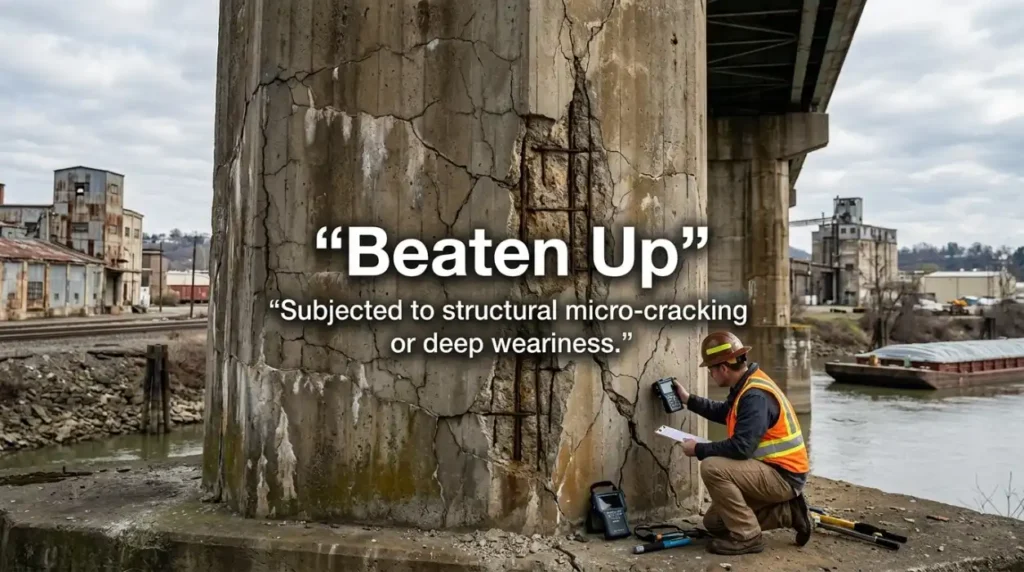
35. Fatigued (Adjective)
Meaning: Subjected to structural micro-cracking or deep weariness.
Tone/Register: Technical / Medical
Example 1: Ultrasonic scan detected fatigue-stressed aircraft wing spar cracks.
Example 2: Night-shift nurse felt ocular fatigue reading monitor data.
36. Drained (Adjective)
Meaning: Emptied of emotional patience, energy, or fluid reserve.
Tone/Register: Conversational / Psychological
Example 1: Four-hour strategy review left executive team feeling drained.
Example 2: Solar battery bank sat completely drained before sunrise.
37. Spent (Adjective)
Meaning: Having exhausted propulsive energy or structural resilience.
Tone/Register: Literary / Descriptive
Example 1: Surf wave broke spent across shallow estuary sandbar.
Example 2: Runner crossed finish line looking completely spent.
38. Shattered (Adjective)
Meaning: Fragmented into tiny pieces or emotionally prostrate
Tone/Register: Dramatic / Intense
Example 1: Frost-split terra cotta pot sat shattered on patio tiles.
Example 2: Actor felt shattered reading harsh morning review notices.
39. Demolished (Adjective)
Meaning: Levelled purposefully or dismantled down to the foundation.
Tone/Register: Formal / Action
Example 1: An excavator cleared bricks from a demolished corner grocery.
Example 2: Debate team felt the opposing thesis got demolished point-by-point.
40. Destroyed (Adjective)
Meaning: Ruined utterly beyond any reconstruction possibility.
Tone/Register: Strong / Universal
Example 1: Lightning strike left old oak tree core destroyed.
Example 2: Water leak left archive cardboard storage boxes destroyed.
41. Knocked-about (Adjective)
Meaning: Showing affectionate patina from rugged travel use.
Tone/Register: British-Leaning / Conversational
Example 1: Brass compass arrived in a knocked-about leather case.
Example 2: Writer carried a knocked-about field notebook everywhere.
42. Well-worn (Adjective)
Meaning: Cherished and softened pleasantly through loyal usage.
Tone/Register: Positive / Nostalgic
Example 1: Chef reached repeatedly for a well-worn carbon steel knife.
Example 2: Family sat reading books on a well-worn porch bench.
43. Scruffy (Adjective)
Meaning: Untidy in physical presentation or casual stubble growth.
Tone/Register: Informal / Descriptive
Example 1: The terrier sported a scruffy winter coat before grooming day.
Example 2: Painter wore scruffy canvas overalls splattered with white.
44. Dingy (Adjective)
Meaning: Darkened by accumulated grime or lack of daylight.
Tone/Register: Negative / Descriptive
Example 1: Janitor bleached dingy tile grout in basement hallway.
Example 2: Tenant painted over dingy yellow kitchen corner walls.
45. Mangy (Adjective)
Meaning: Squalid or patchy in appearance (literal or colloquial).
Tone/Register: Critical / Descriptive
Example 1: Stray raccoon hunted near mangy municipal trash bins.
Example 2: Yard shed stored a mangy assortment of rusted wire.
46. Rickety (Adjective)
Meaning: Wobbly and structurally suspect under light body weight.
Tone/Register: Playful / Descriptive
Example 1: Grandson climbed a rickety cherry tree branch slowly.
Example 2: Vintage projector sat balanced on a rickety wooden stand.
47. Crumbling (Adjective)
Meaning: Disintegrating gradually into mortar or stone dust.
Tone/Register: Historical / Descriptive
Example 1: Mason repointed crumbling limestone archway mortar joints.
Example 2: Cliffs showed crumbling edges after spring thaw rains.
48. Decaying (Adjective)
Meaning: Undergoing organic breakdown or structural rot.
Tone/Register: Scientific / Dark
Example 1: Forest floor nourished ferns above decaying log trunks.
Example 2: Marine archaeologists documented decaying wooden hull ribs.
49. Deteriorated (Adjective)
Meaning: Declined progressively in material quality or structural grade.
Tone/Register: Formal / Clinical
Example 1: Concrete bridge parapets showed deteriorated freeze-thaw scaling.
Example 2: Patient reported deteriorated knee cartilage mobility post-hike.
50. Impaired (Adjective)
Meaning: Functionally compromised relative to baseline performance standards.
Tone/Register: Medical / Technical
Example 1: Foggy lens optics left security camera view impaired.
Example 2: Driver tested impaired vision parameters during renewal check.
51. Flawed (Adjective)
Meaning: Containing a structural blemish or logical weakness.
Tone/Register: Analytical / Standard
Example 1: Appraiser discounted ring featuring a flawed center diamond.
Example 2: Auditor spotted flawed logic in expense reimbursement model.
52. Marred (Adjective)
Meaning: Disfigured slightly by a surface scratch or blemish.
Tone/Register: Literary / Formal
Example 1: Gouge marred the polished walnut tabletop finish.
Example 2: Scandal marred the singer’s comeback concert premiere night.
53. Blemished (Adjective)
Meaning: Marked by minor skin or surface aesthetic imperfection.
Tone/Register: Descriptive / Formal
Example 1: Orchard sold blemished cooking apples at discount bins.
Example 2: Archival leather binding remained free of blemished spots.
54. Scarred (Adjective)
Meaning: Marked permanently by healed trauma or surface scoring.
Tone/Register: Emotional / Descriptive
Example 1: Ancient pine bark stayed scarred by a forest lightning strike.
Example 2: Workbench surface stayed scarred from wood chisel work.
55. Pockmarked (Adjective)
Meaning: Pitted thickly with small indentations or crater marks.
Tone/Register: Descriptive / Specific
Example 1: Desert track remained pockmarked by heavy monsoon runoff.
Example 2: Cast iron skillet base stayed pockmarked from age.
56. Pitiful (Adjective)
Meaning: Evoking sorrow due to a neglected, wrecked physical state.
Tone/Register: Critical / Emotional
Example 1: Abandoned garden looked pitiful, choked by bindweed vines.
Example 2: Stray kitten let out a pitiful mew from the alley.
57. Sad (Adjective)
Meaning: Appearing neglected, melancholic, or structurally forlorn.
Tone/Register: Casual / Emotional
Example 1: Houseplants sat looking sad after three unwatered weeks.
Example 2: Driver sold a sad little commuter hatchback online.
58. Sorry (Adjective)
Meaning: Wretched, neglected, or lamentably substandard in condition.
Tone/Register: Idiomatic / Descriptive
Example 1: Fence paint peeled into a sorry flaking patchwork.
Example 2: Traveler slept in a sorry roadside motel annex room.
59. Beat (Adjective)
Meaning: Colloquially fatigued or showing minor surface wear.
Tone/Register: Informal / Slang
Example 1: Cyclist arrived home completely beat after hill climb.
Example 2: Musician gigged with a beat-up acoustic parlor guitar.
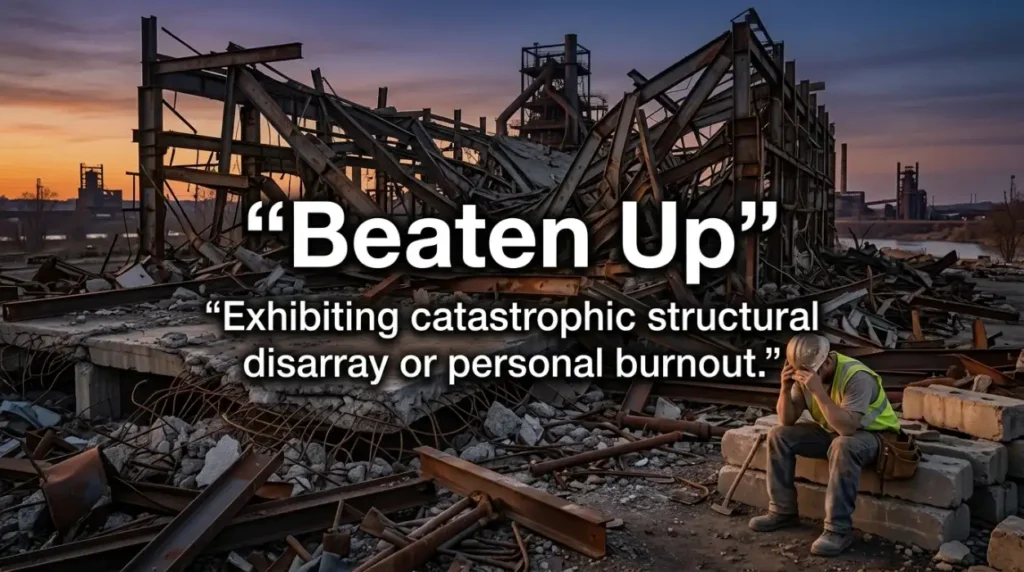
60. Wreck (Noun/Adjective hybrid)
Meaning: Exhibiting catastrophic structural disarray or personal burnout.
Tone/Register: Conversational / Dramatic
Example 1: Attic corner held a total wreck of a clock movement.
Example 2: After auditing week, my schedule felt like a wreck.
Synonyms by Tone
Tone governance separates affectionate vintage charm from clinical asset write-offs or emotional exhaustion.
| Tone Category | Synonyms for Beaten Up |
| Positive | Well-worn, Weathered, Knocked-about |
| Neutral | Worn, Damaged, Scuffed, Scratched, Faded |
| Negative | Dilapidated, Ruined, Trashed, Mangled, Decrepit |
| Playful / Informal | Busted, Beat, Shabby, Rickety |
Word choice governs reader empathy: calling an antique toolkit well-worn honors its history, while calling it trashed misinterprets character.
Positive Tone
- Well-worn
- Weathered
- Knocked-about
Neutral Tone
- Worn
- Damaged
- Scuffed
- Scratched
- Faded
Negative Tone
- Dilapidated
- Ruined
- Trashed
- Mangled
- Decrepit
Playful / Informal Tone
- Busted
- Beat
- Shabby
- Rickety
Mini Comparison: “Beaten Up” vs Close Alternatives
| Term | Core Meaning | Tone | Best Context To Use |
| Beaten up | Impact-damaged gear or physically exhausted people. | Conversational / Gritty | Storytelling, casual reviews, character profiles. |
| Dilapidated | Structural collapse specifically caused by neglect/age. | Formal / Architectural | Real estate assessments, municipal reports, essays. |
| Exhausted | Drained completely of physiological energy reserves. | Standard / Medical-Human | Wellness logs, project burnout retros, narratives. |
Context-Based Usage
Daily Conversation
Speakers swap lengthy physical descriptions for punchy markers like beat, busted, or scuffed.
Example: “My commuter pedals feel totally beat after winter.”
Writing or Blogging
Storytellers deploy sensory decay verbs like weathered, threadbare, or pockmarked.
Example: “Sailor gripped a weathered oak tiller in gale spray.”
Professional or Academic Tone
Analysts replace colloquial slang with audit-ready terms like damaged, deteriorated, or impaired.
Example: “Sensor housing showed severe salt-spray deterioration.”
Creative or Informal Use
Fiction dialog captures grit or fatigue via wrecked, ragged, or ramshackle.
Example: “Mechanic emerged from beneath a ramshackle chassis covered in grease.”
Common Mistakes & Native Usage
Misuse Scenarios
- Confusing Human vs Structure: Never call a tired employee dilapidated; reserve dilapidated for aging masonry or timber frames.
- Overusing Slang in Formal Audits: Writing “the turbine bearing was totally trashed” lowers technical authority where impaired or fatigued-stressed belongs.
Register Notes
- Formal Written English: Prefer deteriorated, impaired, dilapidated, and fatigued.
- Spoken Informal English: Opt for beat, busted, scuffed, and run-down.
- Tip: Match physical severity strictly to visual evidenc.
Real-Life Mini Scenarios
Workplace
Fleet supervisor noted delivery truck bumper arrived scuffed rather than structurally damaged.
Social Situations
Weekend hikers agreed their aging knee joints felt beat following ridge descents.
Media / Pop Culture
Survival documentary highlighted explorers crossing a ramshackle suspension bridge.
Writing & Storytelling
Novel chapter opened describing a detective’s knocked-about leather briefcase resting on slate desks.
Conclusion
Expanding your vocabulary with these alternatives can make everyday conversations more vivid and engaging. Whether you are describing a vintage book, a damaged car, or an exhausted friend, the right word helps you communicate the exact condition with greater clarity.
Using precise language also makes your writing easier for readers to understand. Bloggers, students, authors, and professionals can all benefit from replacing repetitive expressions with descriptive alternatives that add detail without making sentences complicated.
Learning synonyms for beaten up also helps you notice subtle differences between words. Some describe physical damage, while others suggest age, neglect, exhaustion, or affectionate wear. Understanding these distinctions allows you to choose vocabulary that fits each situation naturally.
Try using one or two new descriptive words in your next email, conversation, essay, or story. Regular practice strengthens vocabulary, improves expression, and gradually builds a more confident communication style.
Practice Exercise
Test your understanding of these synonyms in real-life contexts.
1. Which word best describes an old house falling apart from neglect?
A) Fatigued
B) Bruised
C) Dilapidated
D) Busted
2. If a glass falls off a table and breaks into tiny pieces, it is:
A) Smashed
B) Threadbare
C) Scuffed
D) Exhausted
3. Which term refers to clothes that are worn so thin you can see the strings?
A) Pummeled
B) Defaced
C) Mangled
D) Threadbare
4. What is the best word for a person who just ran a marathon?
A) Decrepit
B) Exhausted
C) Ramshackle
D) Trashed
5. A wooden table with beautiful aging from the sun is:
A) Weathered
B) Busted
C) Mangy
D) Defaced
6. Which word means purposefully vandalizing a monument?
A) Spent
B) Chipped
C) Defaced
D) Scuffed
7. A slightly marked leather shoe is:
A) Shattered
B) Scuffed
C) Mangled
D) Dilapidated
8. Which word carries a mostly positive, affectionate tone?
A) Broken
B) Mangy
C) Trashed
D) Well-worn
9. A car involved in a severe, twisting accident is:
A) Mangled
B) Faded
C) Chipped
D) Scratched
10. Which word fits a professional or medical report best?
A) Trashed
B) Busted
C) Impaired
D) Beat
Answer Key:
1:B | 2:B | 3:A | 4:C | 5:B | 6:A | 7:B | 8:B | 9:B | 10:C
Application Task:
Think of an old object in your house that you love. Write one sentence describing it using the word weathered, well-worn, or threadbare.
FAQs
1. What is a professional synonym for beaten up?
When writing professionally, use words like damaged, deteriorated, or impaired. These terms remove emotional slang and provide a factual description of an item’s poor physical condition.
2. Can you use beaten up to describe a person?
Yes. In conversational English, calling someone “beaten up” or “beat” means they are physically or emotionally exhausted. Alternatively, use words like exhausted, fatigued, or drained for clarity.
3. What is the difference between broken and dilapidated?
Broken means an item has snapped or stopped functioning, like a toy or a phone. Dilapidated specifically refers to buildings or structures falling into ruin because of age and neglect.
4. How do I describe old, damaged clothes?
The best synonyms for damaged clothing are threadbare, tattered, frayed, or ragged. These words perfectly capture the look of fabric that has been overused and worn thin over time.
5. Is the word “battered” positive or negative?
Battered usually carries a negative connotation, implying heavy damage from physical blows. However, in cooking (like battered fish) or describing vintage items (a battered old hat), it can be neutral.

Jameel Hassan is the founder and lead writer at SynonymsCloud.com, a trusted online platform dedicated to English vocabulary and effective communication. He is passionate about helping students, writers, professionals, and lifelong learners discover the right words to express their ideas with clarity, precision, and confidence.
At SynonymsCloud.com, every article is thoroughly researched and carefully written to provide accurate, practical, and easy-to-understand guidance on synonyms, antonyms, word meanings, idioms, and vocabulary. With a strong commitment to quality, real-world usage, and clear explanations, the website helps readers expand their vocabulary, improve their writing, and communicate more effectively in both academic and professional settings.